



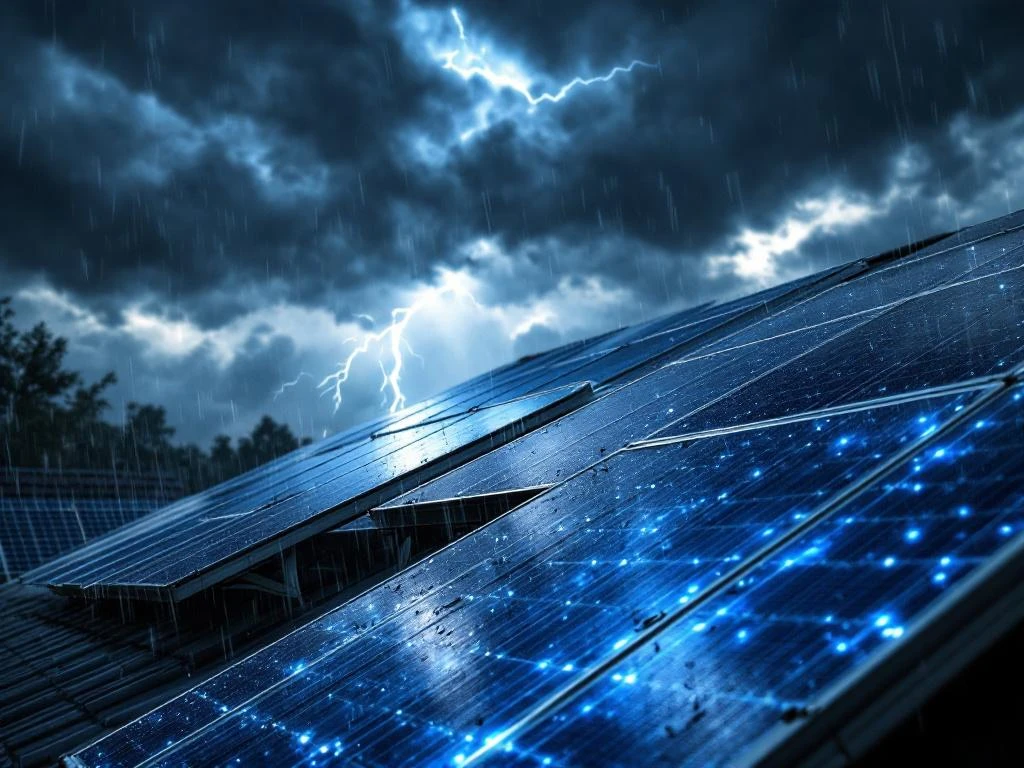
What happens to solar panels during a storm?
Solar panels face various challenges during storms, but they’re built to withstand most severe weather conditions. Modern commercial solar installations are engineered with weather-resistance ratings and mounting systems designed to handle high winds, hail, and heavy rain. However, extreme storms can still cause damage through debris impacts, flooding, or structural failures. Understanding these solar panel risks helps businesses prepare for and protect their renewable energy investments effectively.
How are solar panels designed to handle extreme weather?
Solar panels undergo rigorous testing to meet international weather-resistance standards. They’re typically rated to withstand winds of up to 140 mph and hail impacts of up to 25 mm in diameter at high velocities. The tempered glass surface and aluminum frames provide structural integrity against most weather conditions.
Manufacturing standards require panels to pass multiple stress tests, including thermal cycling, humidity-freeze testing, and mechanical load assessments. These tests simulate decades of weather exposure to ensure long-term durability. The mounting systems also play a vital role, using engineered brackets and rails that distribute wind loads across the roof structure.
For commercial installations, additional considerations include proper spacing between panel rows to reduce wind uplift and the use of ballasted mounting systems on flat roofs. Quality installations follow local building codes that account for regional weather patterns and historical storm data.
What types of storm damage can actually affect solar panels?
Despite their robust construction, solar panels remain vulnerable to specific types of storm damage. Large hail exceeding design specifications can crack the protective glass surface, while flying debris during high winds poses the greatest risk to panel integrity.
Wind uplift becomes problematic when mounting systems aren’t properly secured or when panels are installed too close to roof edges, where wind speeds increase. Flooding can damage electrical components, inverters, and connection points, even if the panels themselves remain intact.
Lightning strikes, while rare, can cause electrical surges that damage inverters and monitoring systems. Tree branches and other projectiles during storms create puncture risks that compromise panel weatherproofing. Understanding these actual vulnerabilities helps separate realistic concerns from common misconceptions about solar panel fragility.
How do solar panels perform during hurricanes and severe storms?
Solar panels have demonstrated remarkable resilience during major hurricanes and severe weather events. Properly installed commercial systems often remain operational even after experiencing sustained winds above their rated specifications, though performance may temporarily decrease during the storm itself.
The key factor in storm survival is the quality of the mounting system and the precision of the installation. Well-engineered mounting solutions distribute loads effectively, preventing individual panel failures that could cascade into larger system damage. Panels installed with adequate edge setbacks and proper spacing typically fare better than those installed too close to roof perimeters.
Production naturally drops during storms due to reduced sunlight, but systems typically resume normal operation once the weather clears. Modern monitoring systems help identify any performance issues that might indicate hidden damage requiring professional assessment.
What should you do to protect your solar panels before a storm?
Pre-storm preparation involves systematic inspection and securing of loose components around your solar installation. Check mounting hardware and electrical connections, and ensure all access panels are properly sealed against water intrusion.
Remove any loose objects from the roof area that could become projectiles during high winds. Trim overhanging tree branches that might fall onto the array during storms. Document your system’s current condition with photographs for insurance purposes.
For commercial installations, consider temporary shutdown procedures if extremely severe weather is forecast. Ensure your monitoring system is functioning properly so you can track system status remotely during and after the storm. Professional pre-storm inspections are valuable for large installations where solar panel risks could result in significant financial exposure.
How do you assess solar panel damage after a storm?
Post-storm assessment should begin with a visual inspection from ground level, looking for obvious damage such as cracked panels, displaced mounting hardware, or debris accumulation. Never attempt roof access immediately after severe weather due to potential structural damage and safety hazards.
Check your monitoring system for performance anomalies that might indicate hidden damage. Significant drops in power production could signal electrical issues or panel damage not visible from ground level. Document any visible damage with clear photographs, noting the date and time.
Professional inspection becomes necessary when you observe physical damage or performance issues, or if your installation experienced conditions exceeding its design specifications. Electrical components require particular attention, as water intrusion can create safety hazards and long-term reliability issues.
How Solarif helps with storm damage assessment and protection
We provide comprehensive risk management inspections that protect your solar investment before, during, and after severe weather events. Our approach combines proactive inspection services with responsive damage evaluation and insurance support.
Our services include:
- Scios Scope 12 inspections required by insurers for commercial installations
- Scios Scope 8 inspections to identify technical vulnerabilities and improve system resilience
- Scios Scope 10 inspections for comprehensive system assessment
- Factory inspections to ensure quality control standards
- Batch inspections for consistent quality verification
- Drone inspections for efficient and thorough system evaluation
- Insurance brokerage connecting you with specialized coverage for storm damage and business interruption
- Post-storm damage assessment by certified professionals who understand both technical and insurance requirements
- Claims support to ensure proper documentation and maximize coverage benefits
As an insurance broker specializing in renewable energy projects, we understand that storm damage can jeopardize your investment and disrupt operations. Our tailored all-risks insurance policies cover material damage, theft, and production losses, helping ensure your solar project remains financially secure.
Ready to protect your solar investment? Contact our experts today for a comprehensive inspection assessment and a customized insurance solution that safeguards your renewable energy project against storm damage and other unforeseen events.
Insurance and inspection needs for your BESS?
Contact us today if you want to know more about the possibilities in BESS insurance and Scope inspections.
📧 Email: support@solarif.com
☎️ Phone: +31 (0)26 711 5050