


What certifications should solar panels have?
Solar panel certifications are official quality and safety verifications that ensure photovoltaic modules meet international standards for performance, durability, and electrical safety. These certifications protect commercial solar investments by verifying that panels can withstand environmental conditions, operate safely, and perform reliably over their expected lifespan. Proper certifications also impact insurance coverage, warranty validity, and project financing for commercial solar installations.
What are solar panel certifications and why do they matter?
Solar panel certifications are standardised quality verification systems that test photovoltaic modules against rigorous performance, safety, and durability requirements. These certifications verify that solar panels can operate safely under various environmental conditions while maintaining expected power output over their operational lifetime.
For commercial solar projects, certifications serve multiple purposes beyond basic quality assurance. They provide documented proof that panels meet electrical safety standards, reducing fire and shock hazards during installation and operation. Certifications also verify mechanical durability, ensuring panels can withstand structural loads, hail impact, and thermal cycling without degrading performance.
Insurance providers require proper certifications for commercial solar installations. Scope 12 inspections, while not legally mandatory, are required by insurers for commercial solar projects to verify proper installation and certification compliance. Without proper certifications, insurers may refuse coverage or impose significantly higher premiums, directly impacting project economics and financing options.
Which international standards do solar panels need to meet?
IEC 61215 represents the primary international standard for crystalline silicon solar panel performance testing, while IEC 61730 covers safety qualification requirements. These International Electrotechnical Commission standards ensure panels perform reliably across different climates and operating conditions worldwide.
IEC 61215 subjects panels to comprehensive performance testing, including thermal cycling, humidity-freeze testing, damp-heat exposure, and mechanical load testing. This standard verifies that panels maintain at least 90% of their initial power output after 1,000 hours of testing under accelerated ageing conditions.
IEC 61730 focuses on safety qualification, testing panels for electrical safety, fire resistance, and mechanical integrity. This standard includes wet leakage current testing, hot-spot endurance testing, and bypass diode thermal testing to prevent electrical hazards during operation.
Additional relevant standards include IEC 61701 for salt mist corrosion testing in coastal environments and IEC 62716 for ammonia corrosion testing in agricultural applications. These specialised standards ensure panels perform reliably in specific environmental conditions.
What’s the difference between IEC and UL certifications for solar panels?
IEC standards are globally recognised international certifications, while UL 1703 represents Underwriters Laboratories standards primarily used in North American markets. IEC certifications focus on performance and safety testing using internationally agreed protocols, whereas UL standards emphasise electrical safety requirements specific to North American electrical codes.
UL 1703 specifically addresses flat-plate photovoltaic modules and panels, testing for electrical safety, fire resistance, and mechanical durability under North American conditions. This standard includes specific requirements for grounding, overcurrent protection, and electrical insulation that align with National Electrical Code requirements.
Many commercial solar projects require both certifications. International projects typically mandate IEC certifications, while North American installations require UL 1703 compliance. Some manufacturers obtain both certifications to serve global markets, though this increases testing costs and certification timeframes.
The testing protocols differ between standards. IEC testing uses metric measurements and international environmental conditions, while UL testing incorporates imperial measurements and North American climate data. These differences can result in varying performance ratings for identical panels tested under different standards.
How do you verify that solar panels have proper certifications?
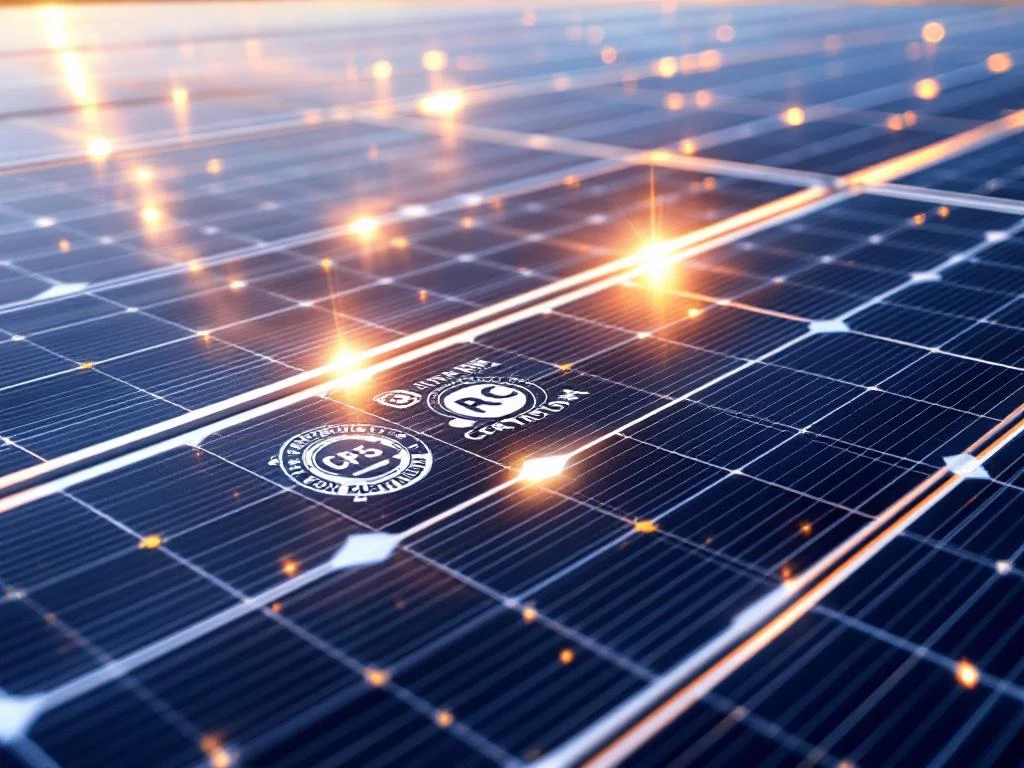
Verification begins with examining certification labels physically attached to each solar panel. These labels display certification marks, testing laboratory logos, and certificate numbers that can be cross-referenced with issuing organisations. Legitimate certifications include clear identification of the testing laboratory and the specific standards met.
Request complete certification documentation from suppliers, including test reports, certificate copies, and factory inspection records. Reputable manufacturers provide comprehensive documentation showing compliance with relevant standards. This documentation should match the specific panel models and manufacturing locations for your project.
Verify certificates directly with testing laboratories using certificate numbers and manufacturer details. Major testing laboratories maintain online databases where certificates can be validated. This verification confirms that certificates are current, authentic, and applicable to the specific panels being purchased.
Professional inspection services can verify certification compliance during project development. These inspections confirm that delivered panels match certified specifications and that installation practices maintain certification validity. Quality inspections provide additional assurance that panels meet both certification requirements and project specifications.
What happens if you install solar panels without proper certifications?
Installing uncertified solar panels creates significant insurance coverage issues for commercial projects. Insurers typically refuse to provide coverage for installations using non-certified equipment, or they impose substantial premium increases that can make projects financially unviable. This insurance gap exposes project owners to full liability for equipment failures, fire damage, or electrical accidents.
Warranty problems arise when manufacturers cannot demonstrate compliance with international quality standards. Without proper certifications, warranty claims may be rejected, leaving project owners responsible for replacement costs and lost production revenue. Financial institutions also view uncertified installations as higher risk, potentially affecting loan terms or project financing approval.
Building code violations can result from using uncertified equipment, as most jurisdictions require compliance with recognised safety standards. These violations can halt construction, require expensive retrofitting, or prevent project commissioning until compliance is achieved.
Performance and longevity issues increase significantly with uncertified panels. Without standardised testing verification, panels may degrade faster than expected, fail prematurely, or operate below rated capacity. These performance issues directly impact project returns and long-term viability, highlighting the importance of proper inspection and assessment services.
How Solarif helps with solar panel certification verification
We provide comprehensive certification verification services through our quality inspection programmes, ensuring your commercial solar project uses properly certified equipment that meets international standards and insurance requirements. Our technical expertise helps identify potential certification issues before they impact project development or financing.
Our certification verification services include:
- Factory inspection programmes that verify manufacturing quality control and certification compliance
- Scope 12 inspections required by insurers for commercial solar installations
- Documentation review to confirm that proper certifications match delivered equipment
- Technical assessments combining quality evaluation of panel manufacturers
- Insurance coordination ensuring certification compliance meets insurer requirements
Through our Solarif Certified programme, we conduct rigorous factory inspections that combine financial stability assessment with technical quality verification. This comprehensive approach provides additional assurance beyond standard certifications, helping secure better insurance terms and financing conditions for your solar projects.
Plan een risicoscan in to verify your solar panel certifications and ensure full compliance with insurance and financing requirements.
Insurance and inspection needs for your BESS?
Contact us today if you want to know more about the possibilities in BESS insurance and Scope inspections.
📧 Email: support@solarif.com
☎️ Phone: +31 (0)26 711 5050