



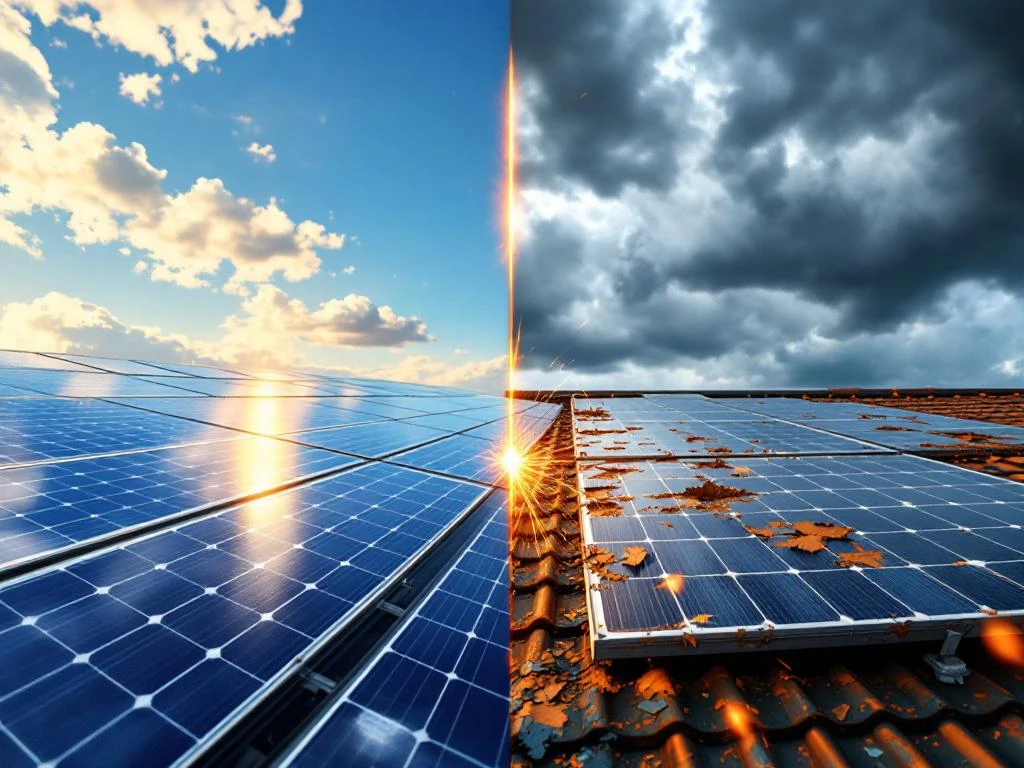
What are the consequences of poor solar panel quality?
Poor solar panel quality can devastate your commercial renewable energy investment through reduced energy output, safety hazards, frequent breakdowns, and significant financial losses. Quality issues range from manufacturing defects and material failures to installation problems that compound over time. Understanding these risks helps you protect your solar project investment and ensure reliable long-term returns.
What happens when you install poor-quality solar panels?
Poor-quality solar panels create immediate performance issues and long-term financial problems for your commercial solar investment. You’ll experience reduced energy output from day one, with panels often producing 10–20% less electricity than specifications promise. Safety hazards emerge quickly, including potential fire risks from faulty wiring or overheating components.
The immediate consequences include inconsistent power generation that affects your energy cost calculations and return-on-investment projections. Poor-quality panels often fail to meet their rated capacity, meaning your solar project underperforms against business case expectations from the start.
Long-term consequences prove even more costly. Frequent maintenance becomes necessary as components degrade faster than expected. You’ll face mounting repair costs, replacement expenses, and lost production during downtime. Insurance complications arise when panels don’t meet industry standards, potentially voiding coverage or increasing premiums significantly.
Solar project quality issues multiply when control fails during manufacturing or installation. Poor-quality installations can damage your facility’s electrical systems or create liability issues that extend far beyond the solar system itself.
How do you spot low-quality solar panels before installation?
Visual inspection reveals many quality issues before installation begins. Look for uneven cell colours, visible cracks in the glass surface, or poor frame construction with gaps or misaligned edges. Check for proper labelling with clear manufacturer information, certification marks, and serial numbers that can be verified.
Certification verification protects your investment significantly. Quality panels carry IEC 61215 and IEC 61730 certifications for performance and safety standards. Verify these certifications directly with testing laboratories rather than relying on manufacturer claims alone.
Research manufacturers thoroughly before committing to any solar panel purchase. Established manufacturers with long track records provide better warranty support and more consistent quality. Check their financial stability, as bankrupt manufacturers cannot honour warranties or provide ongoing support.
Warning signs include prices significantly below market rates, lack of proper documentation, missing certifications, or reluctance to provide detailed technical specifications. Manufacturers who cannot provide independent test results or quality control documentation should raise immediate concerns about their panel reliability.
Why do some solar panels fail faster than others?
Manufacturing defects cause the majority of premature solar panel failures in commercial installations. Poor quality control during production creates microcracks in solar cells, inadequate soldering connections, or substandard materials that degrade rapidly under normal operating conditions.
Material quality variations significantly impact panel lifespan. Low-grade silicon, inferior backing materials, or cheap encapsulants break down faster when exposed to UV radiation, temperature cycling, and moisture. These material failures often appear within the first few years of operation rather than after decades of use.
Installation practices directly influence panel longevity and performance. Improper mounting, inadequate grounding, or poor cable management create stress points that accelerate component failure. Even high-quality panels fail prematurely when installation standards are compromised.
Environmental factors affect different panel qualities unequally. High-quality panels withstand extreme temperatures, humidity, and weather conditions better than budget alternatives. Poor-quality panels show rapid degradation in challenging environments, while quality panels maintain performance for decades under similar conditions.
What are the hidden costs of cheap solar panels?
Replacement expenses from cheap solar panels often exceed the initial savings within five years of installation. When panels fail prematurely, you face complete system replacement costs, including new panels, labour, and potential structural modifications to accommodate different panel specifications.
Lost energy production represents the largest hidden cost over time. Underperforming panels reduce your energy savings and extend payback periods significantly. A 20% performance reduction can double your return-on-investment timeline while reducing total project profitability.
Maintenance costs escalate quickly with poor-quality installations. Frequent repairs, component replacements, and system downtime create ongoing expenses that quality panels avoid. These maintenance interruptions also disrupt your facility’s energy planning and cost management.
Insurance complications arise when panels don’t meet industry standards or certification requirements. Insurers may refuse coverage, charge higher premiums, or exclude solar-related claims from policies. Some insurers require Scope 12 inspections for commercial installations to verify quality standards before providing coverage.
Property value is also affected when poor-quality solar installations create liability concerns or require expensive remediation. Quality installations enhance property value, while problematic systems become costly burdens that affect marketability and financing options.
How does poor solar panel quality affect your investment returns?
Investment returns suffer immediately when poor-quality panels underperform against projected energy generation. Reduced energy output extends payback periods from a planned 7–10 years to 15–20 years or longer, fundamentally changing project economics and profitability calculations.
Shortened system lifespan devastates long-term returns. Quality panels operate effectively for 25–30 years, while poor-quality alternatives may require replacement after 10–15 years. This shortened lifespan eliminates the most profitable years of solar system operation.
Warranty complications create additional financial concerns when manufacturers cannot honour commitments. Bankrupt manufacturers leave you without recourse for defective panels, transferring all replacement costs to your organisation. Quality manufacturers with strong financial backing provide reliable warranty protection.
Comparing quality versus budget options over time reveals the true cost difference. Quality panels with higher upfront costs typically provide better returns through consistent performance, longer lifespan, and reliable warranty support. Budget panels often cost more over their shortened lifetime when replacement and maintenance expenses are included.
Financing implications affect project viability when lenders require quality standards for solar project loans. Banks and investors prefer projects with certified panels and comprehensive insurance coverage, making quality installations more attractive for financing and investment purposes.
How does Solarif help with solar panel quality assurance?
We provide comprehensive quality inspection services that protect your solar investment from manufacturing defects and performance issues. Our factory inspections and batch inspections ensure panels meet strict quality standards before installation, preventing costly problems and ensuring reliable long-term performance.
Our quality assurance services include:
- Factory inspections with financial and technical assessments
- Batch inspections during production with comprehensive testing
- Electroluminescence (EL) reviews to identify hidden defects
- Independent certification through our Solarif Certified quality mark
- Access to Inherent Defect Coverage for certified panels
We work with A-rated insurers to provide comprehensive coverage for quality solar installations, including protection against manufacturer bankruptcy and warranty failures. Our insurance solutions ensure your solar investment remains protected throughout its operational lifetime.
As an insurance broker specialising in renewable energy projects, we understand the critical importance of quality control in solar installations. Our CQI IRCA-accredited auditors bring extensive experience in solar panel factory operations and quality management systems through comprehensive risk management inspections.
Protect your solar investment with professional quality assurance. Contact Solarif today to discuss how our inspection services and insurance solutions can secure your renewable energy project’s success and profitability.
Insurance and inspection needs for your BESS?
Contact us today if you want to know more about the possibilities in BESS insurance and Scope inspections.
📧 Email: support@solarif.com
☎️ Phone: +31 (0)26 711 5050