


How do you test solar panel efficiency?
Testing solar panel efficiency involves measuring how well your panels convert sunlight into electricity. You can perform basic testing using a multimeter and monitoring systems, while professional testing uses advanced equipment like I‑V curve analyzers and thermal imaging. Regular efficiency testing helps identify performance issues early, ensuring maximum energy output and protecting your solar investment.
What is solar panel efficiency and why does it matter?
Solar panel efficiency measures the percentage of sunlight that is converted into usable electricity. Most commercial solar panels achieve efficiency ratings between 15–22%, meaning they convert that portion of available solar energy into power.
Understanding efficiency matters because it directly impacts your energy production and return on investment. Higher-efficiency panels generate more electricity from the same amount of sunlight, which is particularly important for commercial solar installations with limited roof space. Efficiency also affects insurance considerations, as insurers often require documentation of panel performance to assess risk and determine coverage terms.
For solar project investors and developers, efficiency ratings help predict long-term energy yields and financial returns. Panels that maintain their efficiency over time provide more stable revenue streams and better project economics.
How do you measure solar panel efficiency at home?
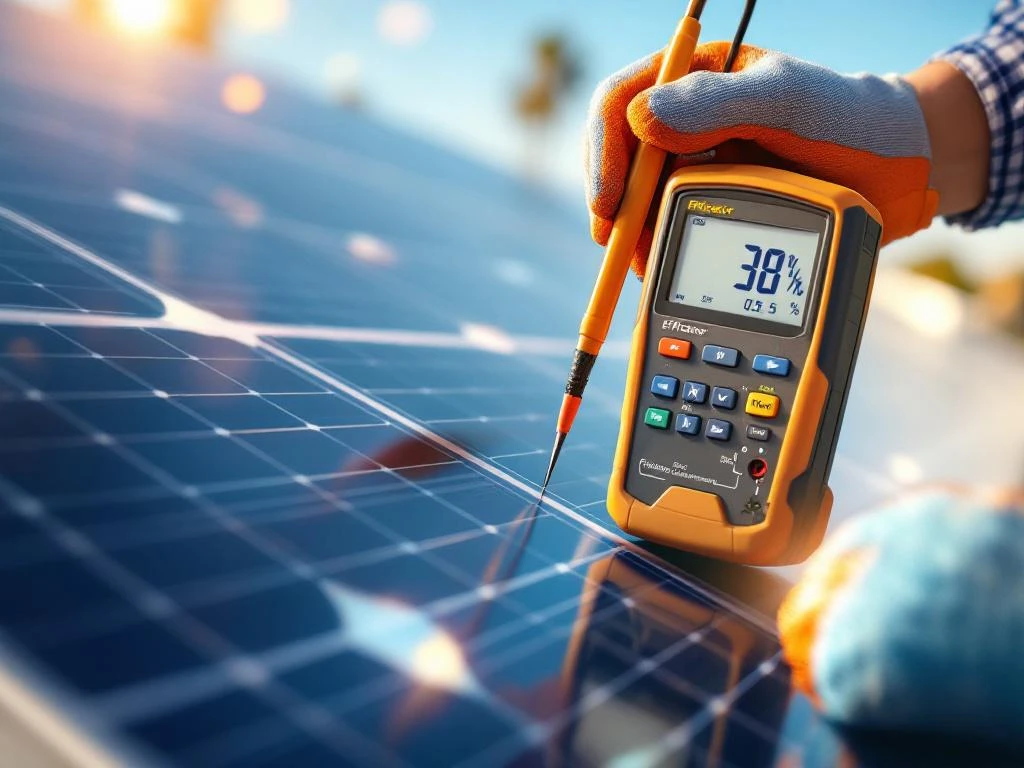
Basic solar panel efficiency testing requires a digital multimeter, an irradiance meter, and your panel’s specification sheet. Measure the panel’s actual power output under current conditions and compare it to the rated capacity adjusted for available sunlight.
Start by checking your monitoring system’s data for unusual drops in energy production. Use a multimeter to measure voltage and current output during peak sunlight hours. Calculate actual power (voltage × current) and compare it to expected output based on irradiance levels.
Visual inspection can also reveal efficiency problems. Look for physical damage, dirt accumulation, shading issues, or discoloration that could reduce performance. Check all electrical connections for corrosion or looseness that might cause power losses.
What professional testing methods give the most accurate results?
Professional solar panel efficiency testing uses I‑V curve analysis, thermal imaging, and electroluminescence (EL) imaging to provide comprehensive performance assessments. These methods detect issues that basic testing cannot identify.
I‑V measurement tests evaluate critical parameters including open-circuit voltage (Voc), short-circuit current (Isc), maximum power output (Pmax), and voltage at maximum power (Vmax). This testing uses calibrated solar simulators under Standard Test Conditions to ensure accurate results.
Thermal imaging identifies hot spots and uneven heating patterns that indicate cell defects or connection problems. EL imaging reveals structural defects such as cell cracks, microcracks, and snail trails that are not visible during standard inspections. These advanced techniques provide detailed analysis of panel condition and remaining operational life.
What factors affect solar panel performance and efficiency?
Environmental conditions significantly impact solar panel efficiency, with temperature, shading, and soiling being the primary factors. Panel output decreases as temperatures rise above optimal operating conditions, typically around 25 °C.
Installation factors include panel orientation, tilt angle, and spacing between arrays. Poor installation can reduce efficiency by limiting airflow or creating shading patterns. Age-related degradation typically reduces panel efficiency by 0.5–0.8% annually, though high-quality panels maintain performance better over time.
Maintenance issues such as dirt accumulation, bird droppings, or vegetation growth can substantially reduce output. Even partial shading on one panel can affect the performance of an entire string in some system configurations. Weather conditions, including cloud cover and seasonal variations, also influence daily and annual energy production.
When should you get your solar panels professionally tested?
Schedule professional solar panel testing annually for commercial installations, or immediately when monitoring systems show performance drops exceeding 5% of expected output. Regular testing helps maintain optimal efficiency and satisfies insurance requirements.
Warning signs that indicate an immediate need for testing include visible panel damage, unusual hot spots, significant drops in energy production, or electrical system faults. After severe weather events such as hailstorms or high winds, professional inspection ensures panels have not sustained hidden damage.
For insurance purposes, many commercial solar projects require periodic professional inspections to maintain coverage. Testing documentation helps support warranty claims and provides evidence of proper maintenance for insurance providers. Our specialized risk management inspections help protect both your investment and insurance coverage through thorough assessment of panel performance and condition.
How Solarif helps with solar panel efficiency testing
We provide comprehensive solar panel efficiency testing services that protect your renewable energy investments through rigorous quality assessments. Our testing protocols ensure your panels meet performance standards and insurance requirements.
Our professional testing services include:
- I‑V measurement testing with calibrated equipment under Standard Test Conditions
- Visual inspections to identify physical defects and performance issues
- EL imaging to detect structural defects such as cell cracks and microcracks
- Thermal imaging analysis for hot-spot detection and thermal performance assessment
- Comprehensive reporting that satisfies insurance documentation requirements
As an insurance broker specializing in renewable energy projects, we understand how testing results impact coverage decisions and premium calculations. Our detailed assessments help you maintain optimal panel performance while meeting insurer requirements for commercial solar installations.
Ready to ensure your solar panels are performing at peak efficiency? Contact our testing specialists at Solarif today to schedule a comprehensive solar panel efficiency assessment and protect your renewable energy investment.
Insurance and inspection needs for your BESS?
Contact us today if you want to know more about the possibilities in BESS insurance and Scope inspections.
📧 Email: support@solarif.com
☎️ Phone: +31 (0)26 711 5050