



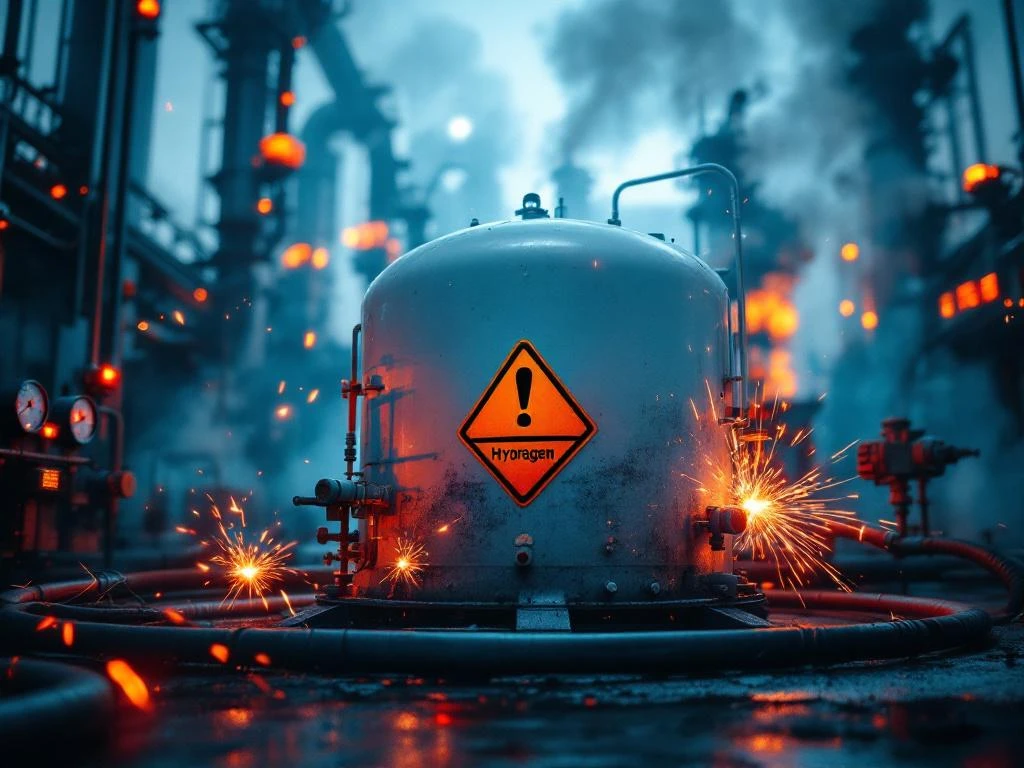
What is the explosion risk of hydrogen systems?
Hydrogen systems carry significant explosion risks due to hydrogen’s unique properties as the lightest and one of the most reactive gases. Hydrogen has an extremely wide flammability range of 4–75% in air, requires minimal ignition energy, and burns with an almost invisible flame that makes detection difficult. Understanding these risks helps renewable energy companies, industrial facilities, and project developers implement proper safety measures and inspection strategies for hydrogen infrastructure projects.
What makes hydrogen potentially dangerous compared to other gases?
Hydrogen poses unique safety challenges due to its molecular structure and physical properties. Unlike natural gas or propane, hydrogen has one of the widest flammability ranges of any fuel gas – it can ignite at concentrations between 4% and 75% in air, compared to natural gas, which ignites between 5% and 15%.
The gas requires extremely low ignition energy – as little as 0.02 millijoules can trigger combustion, which is about ten times less energy than methane needs. This means static electricity, hot surfaces, or even friction can easily ignite hydrogen leaks.
Hydrogen’s nearly invisible flame creates additional detection problems. You often cannot see hydrogen burning in daylight, making leak identification and fire suppression more challenging. The gas also has one of the highest diffusion rates of any element, allowing it to spread rapidly and accumulate in confined spaces where explosion risks increase dramatically.
How do hydrogen systems actually explode and what triggers it?
Hydrogen explosions occur when the gas concentration reaches its flammability range and encounters an ignition source. Two types of explosive events can occur: deflagration (subsonic flame propagation) and detonation (supersonic shock waves), the latter causing far more destructive damage.
Deflagration happens when hydrogen burns at normal flame speeds, creating pressure waves that can damage equipment and structures. Detonation occurs under specific conditions – usually in confined spaces with obstacles that accelerate flame speed – creating shock waves that travel faster than sound and cause catastrophic destruction.
Common ignition sources include electrical equipment, hot surfaces above 560°C, static electricity discharges, and mechanical sparks. Even seemingly harmless activities like opening valves or moving equipment can generate enough energy to trigger ignition if hydrogen has accumulated in the area.
What safety measures prevent hydrogen explosions in real-world applications?
Effective hydrogen safety systems combine multiple layers of protection to prevent dangerous gas accumulation and ignition sources. Ventilation systems represent the primary defence, using natural or forced air circulation to keep hydrogen concentrations well below the 4% lower flammability limit.
Gas detection equipment provides continuous monitoring with sensors placed at potential leak points and accumulation areas. These systems trigger alarms and automatic safety responses when hydrogen concentrations approach dangerous levels.
Flame arresters prevent flame propagation through piping systems, while explosion-proof electrical equipment eliminates ignition sources. Proper grounding and bonding systems control static electricity buildup, and hot work permits ensure welding or cutting activities maintain safe distances from hydrogen systems.
Design standards like those found in PGS 37 require specific safety distances, emergency shutdown systems, and fire suppression capabilities to contain incidents when they occur.
Which industries face the highest hydrogen explosion risks?
Renewable energy storage facilities using hydrogen face significant risks due to large-scale gas handling and storage requirements. Hybrid parks combining solar energy with battery storage systems that incorporate hydrogen backup power must manage both hydrogen fire hazards and potential toxic fume exposure during incidents.
Fuel cell manufacturing presents concentrated risks from hydrogen processing, purification, and testing operations. Chemical processing facilities using hydrogen for hydrogenation reactions handle the gas at high pressures and temperatures, increasing explosion potential.
Transportation applications, including hydrogen refuelling stations and fuel cell vehicles, create mobile risk scenarios where traditional fixed safety systems cannot provide protection. Industrial facilities using hydrogen for metal processing, glass manufacturing, or electronics production face ongoing exposure from routine operations.
Each sector requires tailored safety approaches based on specific operational conditions, storage volumes, and handling procedures that influence overall risk profiles.
How do you assess and manage hydrogen explosion risks in projects?
Risk assessment begins with detailed hazard identification covering all hydrogen sources, storage locations, transfer points, and potential accumulation areas. Quantitative risk analysis examines failure frequencies, consequence modelling, and safety system effectiveness to determine overall project risk levels.
Safety audits evaluate existing systems against recognised standards, identifying gaps in detection, ventilation, or emergency response capabilities. Regular inspection programmes monitor equipment integrity, particularly focusing on seals, joints, and pressure vessels where leaks commonly develop.
Compliance requirements vary by jurisdiction but typically include fire detection systems, emergency plans, and notification procedures for local authorities. Ongoing monitoring strategies combine automated gas detection with routine visual inspections and maintenance schedules.
Documentation requirements include detailed system designs, safety protocols, emergency procedures, and training records that demonstrate comprehensive oversight throughout the project lifecycle.
How Solarif helps with hydrogen system inspections and assessments
We provide specialised inspection services for hydrogen and renewable energy projects, combining insurance expertise with practical safety assessment capabilities. Our approach addresses the unique challenges hydrogen systems present to project developers and operators.
Our services include:
- Specialised insurance solutions for hydrogen infrastructure projects, covering operational risks and construction phases
- Quality inspections using certified assessors who understand hydrogen safety requirements and compliance standards
- Factory inspections that evaluate manufacturing processes and quality control systems for hydrogen equipment
- Project brokerage connecting hydrogen projects with qualified insurers who understand renewable energy sector risks
We work with A-rated insurers who recognise that proper inspection protocols can significantly reduce hydrogen explosion risks through comprehensive safety systems and ongoing monitoring. Our international network ensures you receive expert support regardless of project location.
Ready to protect your hydrogen project investment? Contact our renewable energy insurance specialists today for a comprehensive inspection assessment and a tailored insurance solution that addresses your specific hydrogen safety requirements.
Insurance and inspection needs for your BESS?
Contact us today if you want to know more about the possibilities in BESS insurance and Scope inspections.
📧 Email: support@solarif.com
☎️ Phone: +31 (0)26 711 5050