



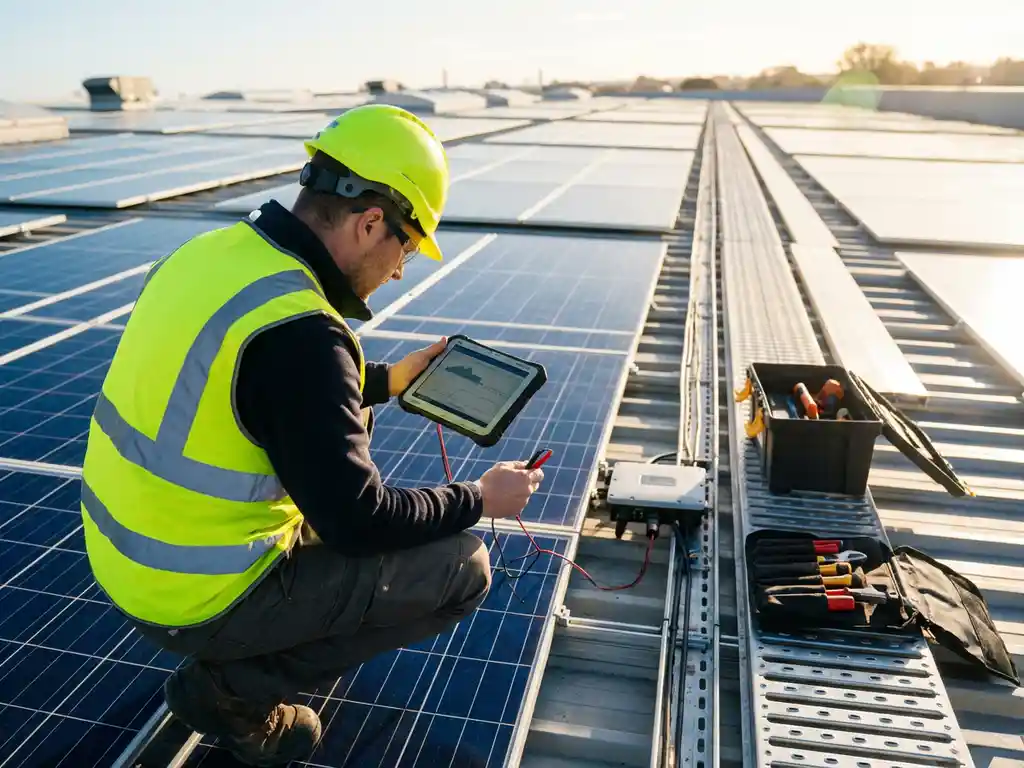
What role does O&M play in solar project bankability?
Operations and maintenance (O&M) strategies significantly influence whether solar projects secure financing and attract investment. Banks, investors, and insurers evaluate O&M plans as a critical factor in determining project bankability, as proper maintenance directly affects long-term performance, risk mitigation, and return on investment.
Understanding the relationship between O&M and solar project bankability helps developers, investors, and EPC contractors structure projects that meet financing requirements while ensuring sustainable operations throughout the project lifecycle.
What is O&M, and why does it matter for solar project bankability?
Operations and maintenance (O&M) encompasses all activities required to keep solar installations operating at optimal performance throughout their lifecycle, including preventive maintenance, monitoring, repairs, and performance optimization. For solar project bankability, O&M matters because it directly affects project risk profiles, performance guarantees, and the long-term revenue predictability that financiers require.
Solar O&M includes several critical components that impact bankability. Preventive maintenance involves regular cleaning, electrical inspections, and component replacements to prevent failures. Performance monitoring tracks energy output against projections to identify underperformance early. Corrective maintenance addresses equipment failures and system faults that could affect revenue generation.
The quality of O&M strategies influences how banks and investors perceive project risks. Well-structured O&M plans demonstrate professional project management and reduce technical risks that could threaten loan repayment or investment returns. Projects with comprehensive O&M strategies typically receive more favorable financing terms and attract institutional investors seeking stable, long-term returns.
How does O&M affect solar project financing decisions?
O&M strategies directly influence financing decisions by affecting project risk assessment, performance guarantees, and long-term cash flow projections that lenders and investors use to evaluate project viability. Comprehensive O&M plans reduce technical and operational risks, making projects more attractive to financial institutions.
Banks evaluate O&M plans to assess several key risk factors. Technical risks include equipment failures, performance degradation, and safety incidents that could affect project operations. Financial risks involve unexpected maintenance costs, performance shortfalls, and insurance claims that could affect debt service coverage ratios.
Lenders often require specific O&M provisions as loan conditions. These may include mandatory performance monitoring systems, contracts with qualified O&M providers, and maintenance reserve accounts to cover unexpected repairs. Projects that proactively address these requirements through robust O&M strategies typically secure financing more quickly and on better terms.
Insurance requirements also connect O&M to financing decisions. Many insurers require regular safety inspections and maintenance protocols before providing coverage. Projects without proper O&M plans may face higher insurance premiums or coverage exclusions that make financing more difficult or expensive.
What O&M strategies make solar projects more bankable?
Bankable O&M strategies include comprehensive monitoring systems, contracts with qualified service providers, predictive maintenance programs, and detailed performance guarantees that demonstrate professional project management and risk management to financiers and investors.
Effective monitoring systems form the foundation of bankable O&M strategies. Real-time performance monitoring allows early detection of issues before they affect revenue generation. Advanced monitoring platforms track individual component performance, weather conditions, and grid-connection status to optimize operations and identify maintenance needs.
Selecting a qualified O&M provider significantly impacts bankability. Experienced providers with proven track records, appropriate certifications, and financial stability give lenders confidence in long-term project operations. Long-term O&M contracts with performance guarantees provide additional security for financing arrangements.
Predictive maintenance programs enhance bankability by preventing costly failures and optimizing component lifecycles. These programs use data analytics and component monitoring to schedule maintenance activities before failures occur, reducing downtime and extending equipment life while controlling costs.
Documentation and reporting protocols also contribute to bankability. Regular performance reports, maintenance logs, and compliance documentation demonstrate professional management and provide the transparency that financiers value when evaluating ongoing project performance.
How do O&M costs impact solar project economics?
O&M costs typically represent 1% to 3% of total project capital expenditure annually and directly affect project economics by influencing operating expenses, cash flow projections, and overall return on investment calculations that determine project viability and financing attractiveness.
O&M cost structures vary significantly based on project size, technology, and service scope. Larger utility-scale projects often achieve economies of scale in O&M costs per megawatt, while smaller commercial projects may face proportionally higher costs. Remote locations typically incur higher O&M expenses due to travel time and logistical challenges.
Proper O&M cost planning affects project economics in multiple ways. Accurate cost projections ensure realistic financial models that support financing decisions. Underestimating O&M costs can lead to cash flow shortfalls that threaten debt service payments or investor returns.
The relationship between O&M investment and performance optimization creates opportunities to improve project economics. Higher-quality O&M services may cost more initially but can deliver superior performance, extended equipment life, and reduced insurance premiums that improve overall project returns.
Cost-control strategies also affect long-term economics. Fixed-price O&M contracts provide cost certainty that financiers value, while performance-based contracts align O&M provider incentives with project performance goals.
What role do O&M providers play in project bankability?
O&M providers play a crucial role in project bankability by serving as technical operators, risk mitigators, and performance guarantors whose qualifications, track records, and contractual commitments directly influence how financiers assess project risks and viability.
Provider qualifications significantly affect bankability assessments. Lenders evaluate O&M providers based on technical expertise, industry experience, financial stability, and certification credentials. Providers with strong track records and appropriate insurance coverage reduce project risk profiles and improve financing prospects.
Contractual arrangements between project owners and O&M providers affect bankability through risk allocation and performance guarantees. Long-term contracts provide operational stability that financiers value, while performance guarantees transfer operational risks from project owners to qualified service providers.
O&M providers also contribute to bankability through their relationships with equipment manufacturers and suppliers. Established providers often have preferential access to spare parts, technical support, and warranty services that can reduce maintenance costs and improve system reliability.
The financial strength of O&M providers matters for long-term project viability. Financially stable providers are more likely to honor long-term contracts and maintain service quality throughout the project lifecycle, reducing counterparty risks that concern lenders and investors.
How Solarif helps with solar project bankability
We understand that proper risk management and insurance coverage are essential components of bankable solar projects. Our specialized approach to solar project insurance and risk assessment helps improve project bankability by addressing the concerns that financiers and investors have about operational risks.
Our services support solar project bankability through:
- Comprehensive risk insurance solutions that protect against equipment failures, performance shortfalls, and operational disruptions
- Scope 12 inspections that verify installation quality and safety standards required by many insurers and lenders
- Customized insurance packages that address specific project risks and financing requirements
- Expert risk assessment that identifies potential issues before they affect project operations or financing
With over 15 years of experience in solar project insurance and 3.8 GW of insured capacity, we help developers, investors, and EPC contractors structure comprehensive risk management strategies that enhance project bankability. Contact our specialists today to discuss how our insurance solutions can support your solar project financing goals.
Insurance and inspection needs for your BESS?
Contact us today if you want to know more about the possibilities in BESS insurance and Scope inspections.
📧 Email: support@solarif.com
☎️ Phone: +31 (0)26 711 5050