



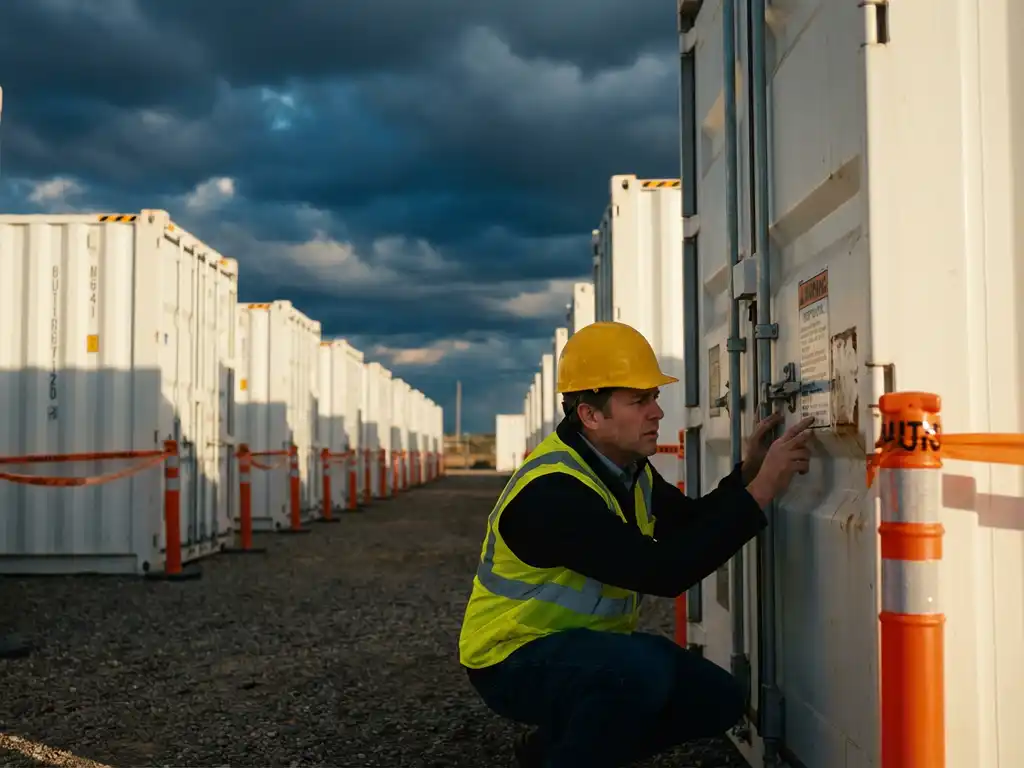
What are the biggest insurance challenges for battery storage?
Battery storage systems are transforming the renewable energy landscape, enabling solar projects to store excess energy and provide grid-stability services. However, these sophisticated systems introduce unique insurance challenges that traditional energy coverage simply was not designed to handle. From thermal runaway risks to performance guarantee complexities, battery storage insurance requires specialized expertise and tailored coverage approaches.
As Battery Energy Storage Systems (BESS) become increasingly critical to renewable energy projects, developers and investors must navigate a complex insurance landscape marked by coverage gaps, evolving technologies, and unprecedented risk profiles. Understanding these challenges is essential to protecting investments and ensuring project viability.
What makes battery storage insurance different from traditional energy coverage?
Battery storage insurance differs fundamentally from traditional energy coverage because it must address unique electrochemical risks, rapid technological evolution, and complex operating patterns that conventional power generation systems do not face. Traditional energy insurance focuses primarily on mechanical failures and weather-related damage, whereas battery storage requires coverage for thermal runaway, toxic-material exposure, and performance degradation over thousands of charge cycles.
The core distinction lies in the complexity of the risk profile. Traditional solar installations have relatively predictable failure modes and well-established performance baselines. Battery systems, however, involve chemical processes that can create cascading failures, require sophisticated thermal management, and operate under variable charge-and-discharge patterns that affect longevity and safety.
Environmental liability coverage becomes particularly critical for battery storage projects. General liability policies typically exclude pollution coverage through pollution exclusions, creating significant gaps when battery systems leak toxic materials or contaminate soil and groundwater. This requires specialized environmental liability coverage that addresses gradual pollution events and regulatory compliance costs specific to battery-chemistry hazards.
Performance guarantees also operate differently in battery storage insurance. While solar panels have predictable degradation curves over 25-year periods, battery performance depends on usage patterns, temperature management, and cycling frequency. Insurers must evaluate dynamic performance metrics rather than static output measurements, requiring new actuarial models and risk-assessment approaches.
What are the biggest fire and safety risks in battery storage systems?
The biggest fire and safety risks in battery storage systems center on thermal runaway events, in which individual battery cells overheat and trigger cascading failures throughout the system. This phenomenon can occur due to manufacturing defects, physical damage, overcharging, or exposure to extreme temperatures, potentially leading to toxic gas emissions, explosions, and fires that are difficult to extinguish using conventional firefighting methods.
Thermal runaway presents unique challenges because it can spread rapidly between cells and modules. When one cell reaches a critical temperature, it releases heat and potentially toxic gases that can cause adjacent cells to fail. This chain reaction can compromise entire battery racks or containers, creating intense fires that burn at extremely high temperatures and release dangerous fumes.
Different battery chemistries present varying risk levels. NMC (nickel manganese cobalt) batteries generally carry higher thermal-runaway risks due to their energy density and chemical composition, while LFP (lithium iron phosphate) systems are considered more thermally stable but still require careful safety management. The choice of battery chemistry significantly affects insurance premiums and coverage requirements.
Firefighting complications add another layer of risk complexity. Water can worsen battery fires due to electrical conductivity and the spread of electrolytes, but it is currently the most widely recommended method for cooling and de-escalation. This creates challenges for emergency responders and requires specialized training and equipment—factors that insurers must consider when evaluating site safety protocols.
Gas emissions during thermal events pose serious health and environmental risks. Battery fires can release hydrogen fluoride, carbon monoxide, and other toxic compounds that require evacuation protocols and specialized containment measures. These factors influence both safety-related insurance requirements and environmental liability coverage needs.
How do performance guarantees complicate battery storage insurance?
Performance guarantees complicate battery storage insurance because battery degradation depends on multiple variable factors, including charge cycles, temperature exposure, and operating patterns, making it extremely difficult to predict and guarantee specific performance levels over extended periods. Unlike solar panels, which have relatively predictable linear degradation, batteries experience non-linear capacity loss that can accelerate under certain conditions, creating complex actuarial challenges for insurers.
The fundamental issue lies in defining measurable performance standards. Solar performance guarantees typically focus on power output under standard test conditions, but battery performance involves multiple metrics, including capacity retention, round-trip efficiency, and cycle life. Each metric responds differently to operational stresses, making comprehensive guarantees mathematically complex and financially risky for insurers.
Operational variability significantly affects guarantee validity. A battery system used primarily for peak shaving with shallow discharge cycles will perform differently from one providing frequency regulation services with rapid charge-and-discharge patterns. Insurers must account for these usage variations when structuring performance coverage, often requiring detailed operational monitoring and reporting.
Temperature management becomes critical for performance-guarantee claims. Battery systems operating in extreme climates or with inadequate cooling systems will degrade faster than those maintained within optimal temperature ranges. This can create disputes over whether performance degradation results from covered risks or operational negligence, complicating claims handling and coverage determinations.
The interconnected nature of battery systems adds another layer of complexity. Performance guarantees must address whether coverage applies to individual cells, modules, racks, or entire systems. A small number of failed cells can affect overall system performance, but determining coverage responsibility requires sophisticated monitoring and diagnostic capabilities that many projects lack.
What coverage gaps exist in current battery storage insurance policies?
Current battery storage insurance policies contain significant coverage gaps in environmental liability, cybersecurity risks, and protection against technological obsolescence. Most general liability policies exclude pollution coverage, leaving projects vulnerable to cleanup costs, regulatory fines, and third-party claims related to toxic-material releases from battery systems. Meanwhile, emerging cyber threats targeting energy storage management systems often fall outside traditional coverage frameworks.
Environmental liability represents the most critical coverage gap. Battery systems contain hazardous materials that can contaminate soil and groundwater through gradual pollution events or acute releases. Standard property insurance typically excludes these environmental risks, requiring specialized environmental liability coverage that many projects overlook during initial insurance planning.
Cybersecurity vulnerabilities create additional coverage gaps as battery storage systems become increasingly connected and automated. Energy management systems that control battery operations can be targets for cyberattacks that could cause physical damage, operational disruption, or safety hazards. Traditional cyber insurance may not cover physical damage resulting from cyber incidents, while property insurance may exclude cyber-related losses.
Technological obsolescence poses a unique challenge for long-term projects. As battery technology evolves rapidly, replacement parts for older systems may become unavailable or prohibitively expensive. Most insurance policies do not address technological obsolescence, leaving project owners responsible for costly system upgrades or replacements when original components fail.
Business interruption coverage often contains gaps specific to battery storage operations. Standard policies may not adequately address revenue losses from grid-services contracts or energy-arbitrage opportunities that battery systems provide. The complex revenue streams from battery operations require specialized business interruption coverage that many insurers have not fully developed.
Regulatory compliance costs represent another significant gap. As battery storage regulations evolve, projects may face unexpected compliance expenses for safety upgrades, monitoring systems, or operational modifications. Few insurance policies specifically address the impacts of regulatory change, leaving project owners exposed to substantial unforeseen costs.
How does battery technology evolution affect insurance coverage?
Battery technology evolution affects insurance coverage by continually changing risk profiles, requiring insurers to update their actuarial models and coverage frameworks as new chemistries, safety systems, and operating capabilities emerge. This rapid technological advancement makes it difficult to establish long-term coverage terms and pricing, because yesterday’s risk assessments may not apply to tomorrow’s battery technologies.
New battery chemistries introduce unknown risk factors that insurers struggle to quantify. As manufacturers develop alternative chemistries beyond traditional lithium-ion systems, insurers lack historical data to accurately assess fire risks, environmental impacts, and performance characteristics. This uncertainty often results in higher premiums or coverage exclusions for newer technologies until sufficient operating data becomes available.
Safety system improvements can positively affect insurance coverage and costs. Advanced thermal management systems, early-warning detection, and automatic fire-suppression technologies reduce risk exposure and may qualify projects for lower premiums. As an insurance broker specializing in renewable energy projects, we see that insurers sometimes offer lower premiums for BESS installations with comprehensive thermal-runaway prevention systems—or may decline to insure systems that lack them altogether.
Software and control system evolution creates new coverage considerations. Advanced energy management systems enable more sophisticated operating strategies but also introduce cybersecurity vulnerabilities and software-related failure modes. Insurers must evaluate both the risk-reduction benefits of smart controls and the new risks they introduce.
Modular system designs affect coverage structure and claims handling. Newer battery systems often feature modular architectures that allow partial system replacement or upgrades. This modularity can reduce claim costs by limiting the scope of damage, but it complicates coverage determinations and replacement-value calculations.
The integration of artificial intelligence and predictive maintenance capabilities influences risk assessment and coverage terms. AI-driven monitoring systems can predict failures and optimize operations, potentially reducing insurance risk. However, these systems also create dependencies on software performance and data accuracy that insurers must consider in their coverage frameworks.
What should developers know about battery storage insurance costs?
Battery storage insurance costs typically range from 0.3% to 1.2% of project value annually, depending on battery chemistry, safety systems, operating profile, and coverage scope. Developers should expect higher premiums for new technologies, complex operating strategies, and comprehensive coverage packages, while projects with proven safety systems and conservative operating profiles can achieve lower rates.
Several key factors significantly influence insurance costs. Battery chemistry selection affects premiums substantially, with LFP systems generally commanding lower rates than NMC systems due to improved thermal stability. Safety system implementation—including fire suppression, thermal monitoring, and emergency response capabilities—can reduce premiums by demonstrating proactive risk management.
Operating profile affects insurance pricing through risk-exposure assessment. Systems used for simple peak shaving with predictable charge-and-discharge patterns typically receive better rates than those providing multiple grid services with variable operating demands. Insurers evaluate cycle frequency, depth of discharge, and operational complexity when determining premiums.
Coverage scope selection allows developers to balance protection needs with cost considerations. Basic property coverage costs less than comprehensive packages that include environmental liability, performance guarantees, and business interruption protection. Developers should carefully evaluate their risk tolerance and project financing requirements when selecting coverage levels.
Geographic location influences insurance costs through local risk factors, including weather patterns, seismic activity, and emergency response capabilities. Projects in areas with extreme weather or limited emergency services may face higher premiums or require additional safety measures to achieve acceptable coverage terms.
Project scale affects insurance economics through risk distribution and administrative efficiency. Larger projects may achieve better rates through economies of scale, while smaller installations might face minimum premium requirements that increase relative costs. Portfolio approaches that combine multiple projects can sometimes improve overall insurance economics.
How Solarif helps with battery storage insurance challenges
We specialize in navigating the complex battery storage insurance landscape, leveraging our 15 years of renewable energy expertise to secure comprehensive coverage for BESS projects. Our specialized knowledge of battery technologies, safety systems, and operational risks enables us to work with A-rated insurers to develop tailored insurance solutions that address the unique challenges of energy storage projects.
Our comprehensive approach to battery storage insurance includes:
- Risk assessment and mitigation strategies specific to battery chemistry and operating profile
- Environmental liability coverage design addressing toxic-material risks and regulatory compliance
- Performance guarantee structuring that accounts for battery degradation patterns and usage variables
- Cybersecurity coverage integration for energy management systems and grid-connected operations
- Business interruption protection covering complex revenue streams from grid services and energy arbitrage
With our extensive network of specialized insurers and deep understanding of battery storage technologies, we ensure your energy storage investment receives appropriate protection at competitive rates. Contact our renewable energy insurance experts today to discuss your battery storage insurance requirements and secure comprehensive coverage for your project.
Insurance and inspection needs for your BESS?
Contact us today if you want to know more about the possibilities in BESS insurance and Scope inspections.
📧 Email: support@solarif.com
☎️ Phone: +31 (0)26 711 5050