



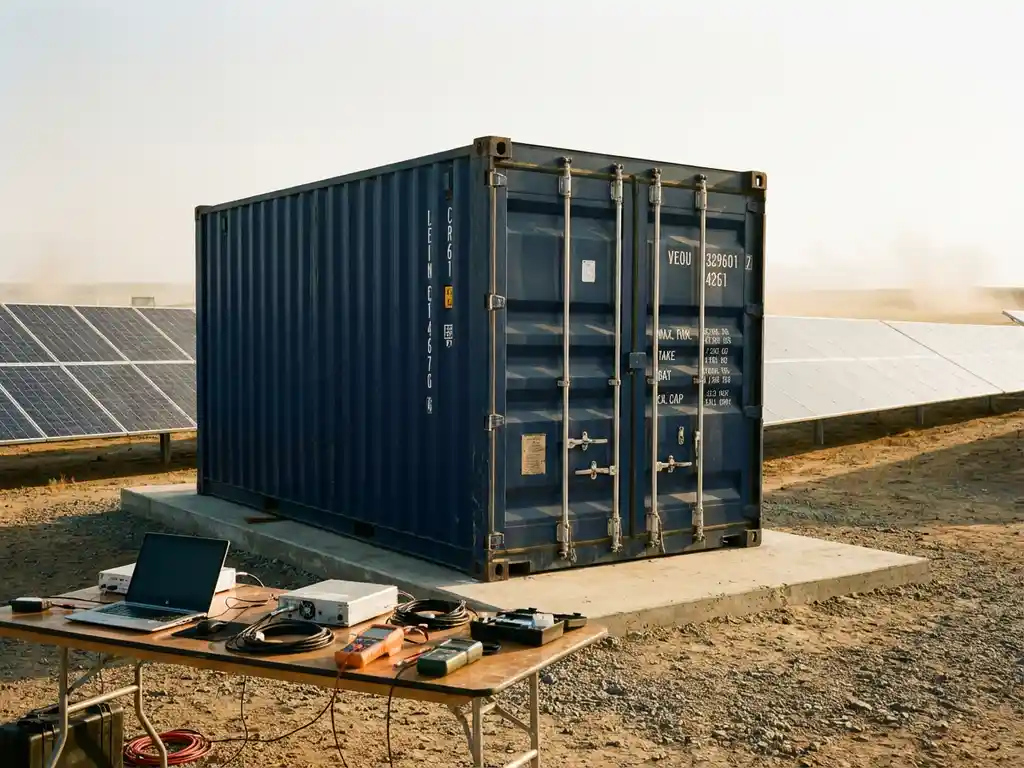
What technical standards must BESS meet for financing?
Battery Energy Storage Systems (BESS) have become essential infrastructure for renewable energy projects, but securing financing requires meeting stringent technical standards. Lenders and investors demand proof that BESS installations comply with safety protocols, performance benchmarks, and grid integration requirements before committing capital.
The technical standards for BESS financing encompass multiple layers of certification, from individual battery components to complete system integration. Understanding these requirements helps project developers prepare comprehensive documentation and avoid costly delays in the financing process.
What are the core technical standards required for BESS financing?
BESS financing requires compliance with the IEC 62933 series for electrical safety, UL 9540 certification for fire safety, and IEEE 1547 for grid interconnection. These core standards demonstrate that the battery system meets international safety benchmarks and can operate reliably within electrical grid parameters.
The IEC 62933 series specifically addresses electrical safety requirements for grid-connected energy storage systems. This standard covers protection systems, earthing arrangements, and electrical isolation requirements that prevent dangerous electrical faults. Financiers view IEC 62933 compliance as essential because it reduces the risk of electrical accidents that could damage equipment or harm personnel.
UL 9540 certification addresses fire safety concerns that are particularly relevant for lithium-ion battery systems. This standard evaluates thermal runaway propagation, fire suppression system effectiveness, and emergency response procedures. Given the potential for battery fires to cause significant property damage, UL 9540 certification has become a non-negotiable requirement for most BESS financing arrangements.
IEEE 1547 governs how distributed energy resources connect to the electrical grid. For BESS projects, this includes voltage regulation capabilities, frequency response characteristics, and anti-islanding protection. Grid operators require IEEE 1547 compliance to ensure that battery systems enhance, rather than destabilize, grid operations.
How do safety certifications impact BESS project financing?
Safety certifications directly influence financing terms by reducing insurance premiums and enabling access to lower-cost capital. Projects with comprehensive safety certifications typically receive financing rates 50–100 basis points lower than uncertified systems, as lenders view them as significantly lower-risk investments.
The Battery Management System (BMS) requires certification to demonstrate its ability to continuously monitor cell voltage, temperature, and current flow. A certified BMS prevents overcharging, deep discharge, and thermal runaway conditions that could lead to fires or explosions. Financiers specifically look for BMS certifications that include redundant safety systems and fail-safe mechanisms.
Fire suppression system certification has become increasingly important as thermal runaway incidents have highlighted the risks of battery storage. Systems must demonstrate effective detection and suppression capabilities for electrical fires, which behave differently from conventional fires. Water-based suppression systems, while commonly used, require special consideration because water can worsen battery fires due to electrical conductivity and electrolyte dispersion.
Environmental enclosure certifications ensure that BESS installations can withstand local weather conditions without compromising safety or performance. These certifications cover ingress protection ratings, seismic resistance, and temperature management capabilities that directly impact system longevity and insurance coverage.
What performance metrics must BESS demonstrate for investors?
BESS projects must demonstrate round-trip efficiency above 85%, a cycle life exceeding 6,000 cycles at 80% depth of discharge, and response times under 100 milliseconds for grid services. These performance metrics directly impact revenue generation and determine the project’s ability to meet financial projections over its operational lifetime.
Round-trip efficiency measures how much energy can be recovered from the battery compared to the energy used to charge it. Higher efficiency translates directly to better economics, as less energy is lost during the storage and discharge process. Investors typically require detailed efficiency curves showing performance across different operating conditions and state-of-charge levels.
Cycle life specifications determine how many charge-discharge cycles the battery can complete before capacity degrades to 80% of its original rating. This metric directly impacts the project’s revenue-generating lifespan and replacement costs. Investors require warranty guarantees that align with project financing terms, typically 15–20 years for utility-scale installations.
Response time capabilities determine which grid services the BESS can provide and the associated revenue streams. Frequency regulation services require response times under 100 milliseconds, while energy arbitrage applications can tolerate slower response times. Faster response capabilities enable participation in higher-value ancillary service markets.
Capacity degradation rates must be predictable and within acceptable limits to maintain revenue projections. Investors require detailed modeling of how battery capacity will decline over time under different operating scenarios, including temperature variations and cycling patterns specific to the project’s intended use.
Which grid connection standards are mandatory for BESS financing?
Grid connection standards require compliance with local transmission system operator codes, IEEE 1547 interconnection requirements, and specific power quality requirements, including voltage regulation and harmonic distortion limits. These standards ensure the BESS can provide grid services without compromising electrical system stability.
Transmission system operator codes vary by region but typically specify requirements for voltage support, frequency response, and fault ride-through capabilities. In Europe, network codes require BESS installations to provide reactive power support and maintain operation during grid disturbances. These capabilities directly impact the revenue potential from grid services.
Power quality standards limit harmonic distortion and voltage fluctuations that could interfere with other grid-connected equipment. The Power Conversion System (PCS) must meet these requirements while converting between DC battery storage and AC grid connection. Advanced filtering and control systems may be required to achieve compliance.
Anti-islanding protection prevents the BESS from continuing to energize grid sections during outages, which could endanger maintenance workers. This protection must be certified and tested to ensure reliable operation under various fault conditions. Grid operators require detailed testing documentation before approving interconnection agreements.
Grid code compliance testing must be performed by accredited laboratories using standardized procedures. The test results become part of the financing documentation and demonstrate that the BESS can fulfill its intended grid support functions throughout its operational life.
How do environmental standards affect BESS financing decisions?
Environmental standards influence BESS financing through regulatory compliance requirements, sustainability reporting obligations, and end-of-life recycling provisions that can add 2–5% to total project costs. Projects must demonstrate compliance with battery waste management regulations and obtain environmental permits before securing financing.
Battery recycling requirements are becoming increasingly stringent as regulators focus on the environmental impact of lithium-ion battery disposal. Financing agreements now commonly include provisions for end-of-life battery management costs, which can represent a significant financial obligation. Projects must demonstrate clear recycling pathways and associated cost provisions.
Environmental impact assessments may be required for large-scale BESS installations, particularly those located near sensitive ecosystems or residential areas. These assessments can identify potential issues with noise, electromagnetic interference, or soil contamination that could affect project viability and financing terms.
Sustainability reporting standards increasingly require disclosure of the BESS project’s carbon footprint, including manufacturing emissions and transportation impacts. Investors with ESG mandates may require detailed life-cycle assessments demonstrating net positive environmental benefits compared to alternative energy storage solutions.
Thermal management systems must comply with refrigerant regulations and energy efficiency standards that vary by jurisdiction. These requirements can influence system design choices and operating costs, affecting the overall project economics that underpin financing decisions.
How Solarif helps with BESS financing technical standards
We provide comprehensive risk management and insurance solutions specifically designed for BESS projects navigating complex technical standards requirements. Our specialized expertise in renewable energy storage helps developers secure appropriate coverage while meeting financier requirements for technical compliance.
- Technical risk assessments covering safety certifications, performance warranties, and grid compliance requirements
- Insurance solutions tailored to BESS-specific risks, including thermal runaway, performance degradation, and grid interconnection issues
- Compliance verification services ensuring projects meet all necessary technical standards before financing closes
- Ongoing risk management support throughout project development and operational phases
Our team understands how technical standards directly impact insurance coverage and financing terms, helping you optimize both risk management and project economics. Contact our BESS specialists today to ensure your battery storage project meets all technical requirements for successful financing.
Insurance and inspection needs for your BESS?
Contact us today if you want to know more about the possibilities in BESS insurance and Scope inspections.
📧 Email: support@solarif.com
☎️ Phone: +31 (0)26 711 5050