



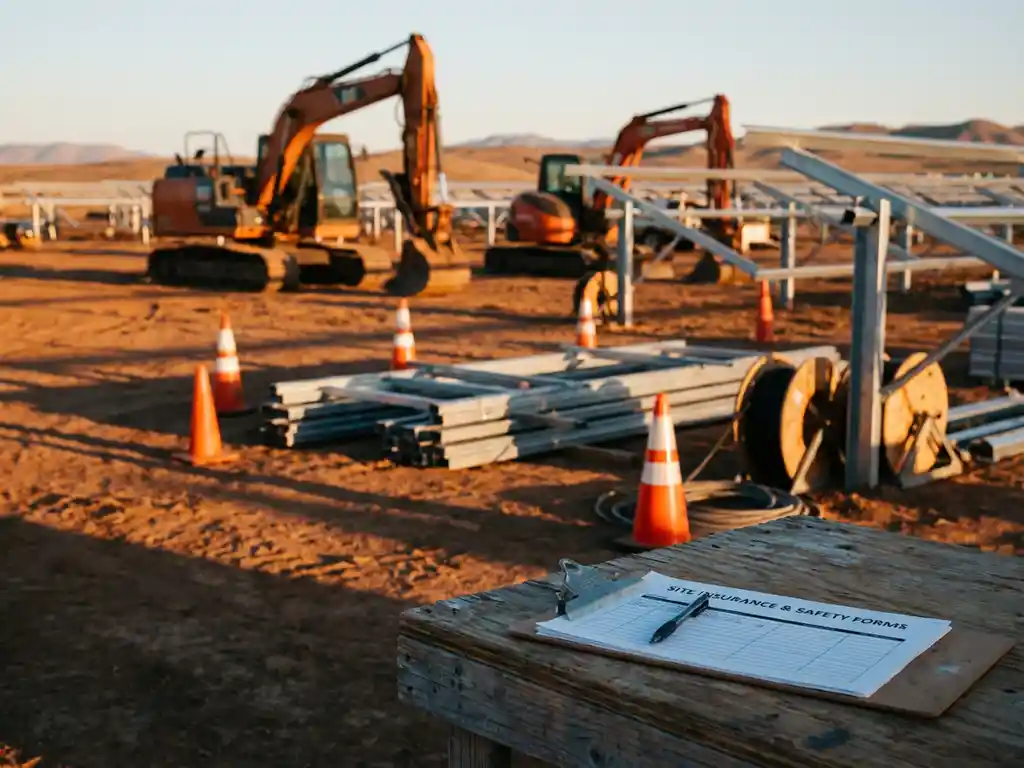
How do you handle liability for renewable energy project delays?
Renewable energy project delays can create significant financial and legal challenges for developers, investors, and contractors. When projects fall behind schedule, the ripple effects extend far beyond missed deadlines, potentially triggering liability claims, contract penalties, and insurance disputes that can cost millions.
Understanding how to manage liability for renewable energy project delays requires a comprehensive approach to risk management, proper insurance coverage, and strategic contract structuring. From weather-related setbacks to equipment failures, each type of delay carries unique liability implications that must be carefully managed to protect your investment and business relationships.
What Types of Liability Arise From Renewable Energy Project Delays?
Renewable energy project delays can trigger multiple types of liability, including liquidated damages owed to offtakers, lost revenue claims from investors, and breach-of-contract penalties. The most common types of liability include contractual penalties for missing commercial operation dates, third-party claims from power purchase agreement holders, and increased project costs that exceed budget allocations.
Contractual liability represents the most immediate concern for project developers. Power purchase agreements typically include substantial liquidated damages clauses that apply when projects fail to meet their commercial operation deadlines. These penalties can range from thousands to millions of dollars, depending on project size and contract terms.
Performance-based liability can also arise when delays affect guaranteed energy output commitments. Investors and lenders often require specific performance metrics, and delays that impact these guarantees can result in financial penalties or forced project restructuring. Additionally, construction delays may trigger liability to equipment suppliers, subcontractors, and other project stakeholders who face their own downstream impacts.
Professional liability can arise when delays result from design errors, inadequate project management, or failure to meet industry standards. EPC contractors face particular exposure here, as they typically guarantee project completion within specified timeframes and performance parameters.
How Does Delay in Start-Up Insurance Protect Against Project Delays?
Delay in start-up insurance provides financial protection by covering lost revenue and additional expenses when insured events prevent a renewable energy project from achieving commercial operation on schedule. This coverage typically compensates for the gross profit that would have been earned during the delay period, helping maintain cash flow and meet financial obligations.
The insurance coverage applies when covered perils cause project delays beyond a predetermined waiting period, usually 30 to 90 days. Covered events commonly include equipment breakdown, natural disasters, supply chain disruptions, and construction accidents. The policy calculates compensation based on projected revenue streams from power purchase agreements and energy sales.
Coverage typically includes both direct revenue losses and additional expenses incurred during the delay period. This might encompass extended equipment rental costs, additional labor expenses, and increased financing charges. Some policies also cover liquidated damages owed to power purchase agreement counterparties, though this requires specific policy language.
The insurance usually excludes delays caused by design defects, regulatory changes, or normal construction variations. Policy limits and deductibles vary significantly based on project size and risk profile, making careful policy structuring essential for adequate protection.
Who Is Responsible When Weather Causes Renewable Project Delays?
Weather-related delays typically fall under force majeure provisions in renewable energy contracts, potentially releasing parties from liability if the weather events meet specific contractual criteria. However, responsibility depends on the contract language, the severity and duration of the weather events, and whether reasonable precautions were taken to minimize weather-related risks.
Standard construction contracts often include weather allowances that account for typical seasonal conditions. Delays beyond these allowances may qualify for schedule extensions without penalty, but only if the weather events exceed historical norms for the project location. Contractors must typically demonstrate that weather conditions were genuinely unforeseeable and unavoidable.
The distinction between normal and extraordinary weather events becomes crucial in determining liability. While occasional rain delays might be considered normal construction risks, extended periods of severe weather, hurricanes, or unseasonable conditions may qualify for force majeure protection. Documentation requirements are typically stringent, requiring detailed weather records and impact assessments.
Insurance coverage for weather delays varies significantly between policies. Some delay in start-up policies exclude normal weather variations while covering extraordinary weather events. Project teams should carefully review both contract terms and insurance coverage to understand their exposure to weather-related delay liability.
What Should You Include in Contracts to Limit Delay Liability?
Effective renewable energy contracts should include clear force majeure clauses, reasonable schedule buffers, and defined procedures for handling delays to limit liability exposure. Key provisions include liquidated damages caps, notification requirements for delay events, and specific criteria for qualifying delay causes that excuse performance obligations.
Force majeure clauses should specifically enumerate events that excuse performance, including natural disasters, regulatory changes, labor strikes, and supply chain disruptions. The language should clearly define notification timelines, mitigation requirements, and documentation standards for claiming force majeure protection. Including pandemic-related disruptions has become increasingly important following recent global events.
Schedule provisions should incorporate realistic timelines with appropriate weather allowances and buffer periods for typical project risks. Contracts should distinguish between excusable delays that extend the schedule without penalty and compensable delays that may trigger additional payments. Clear milestone definitions help prevent disputes over project progress and completion criteria.
Liability limitation clauses can cap exposure to liquidated damages and exclude consequential damages from delay claims. These provisions should be carefully balanced to maintain enforceability while providing meaningful protection. Insurance requirements should align with liability allocations to ensure adequate coverage for retained risks.
How Do You Document and Manage Delay Claims?
Proper delay claim documentation requires maintaining detailed project schedules, daily progress reports, and comprehensive records of delay-causing events with supporting evidence. Successful claim management involves immediate notification to relevant parties, thorough impact analysis, and systematic documentation that clearly establishes causation between events and project delays.
Contemporaneous record-keeping forms the foundation of effective delay claim management. Project teams should maintain daily logs documenting weather conditions, workforce levels, equipment status, and any events that impact progress. Photographic evidence, correspondence records, and third-party reports strengthen documentation quality and support claim validity.
Critical path analysis helps demonstrate how specific events affected overall project timelines. Updated project schedules should show the impact of delay events on subsequent activities and final completion dates. This analysis becomes essential for quantifying damages and supporting compensation claims under insurance policies or contract provisions.
Notification procedures must be followed precisely according to contract and insurance policy requirements. Delayed notifications can void coverage or contract protections, making prompt communication essential. Claims should include detailed impact assessments, mitigation efforts undertaken, and revised completion projections to support the validity of the claim.
When Should You Involve Legal Counsel for Project Delays?
Legal counsel should be engaged immediately when project delays trigger significant contractual penalties, insurance disputes, or potential litigation exposure. Early legal involvement becomes critical when delays exceed force majeure thresholds, when multiple parties dispute liability allocation, or when delay claims involve complex causation analysis requiring expert testimony.
Complex delay scenarios often require legal expertise to navigate competing contract interpretations and liability theories. When delays result from multiple concurrent causes, determining primary responsibility and proportional liability allocation requires careful legal analysis. Legal counsel can help evaluate contract terms, assess liability exposure, and develop strategies for minimizing financial impact.
Insurance claim disputes frequently benefit from legal involvement, particularly when insurers challenge coverage or delay compensation calculations. Legal counsel can help interpret policy language, prepare comprehensive claim presentations, and negotiate with insurance carriers to maximize recovery under available coverage.
Preventive legal consultation during contract negotiation and project planning can help identify potential delay liability exposures before they materialize. Legal review of contract terms, insurance requirements, and risk allocation provisions helps ensure adequate protection and clear procedures for managing delay events when they occur.
How Solarif Helps with Renewable Energy Project Delay Liability
We specialize in comprehensive insurance solutions that protect renewable energy projects against delay-related liability and financial losses. Our expertise in the renewable energy sector enables us to structure coverage that addresses the unique delay risks facing solar and battery storage projects throughout their development and construction phases.
Our delay in start-up insurance solutions provide essential protection for your renewable energy investments:
- Customized coverage for lost revenue during delay periods caused by insured events
- Comprehensive risk assessment to identify potential delay exposures and coverage gaps
- Expert claims support to maximize recovery under your delay insurance policies
- Integrated coverage solutions that coordinate delay insurance with other project insurance requirements
With over 15 years of experience and 3.8 GW of insured capacity, we understand the financial impact that project delays can have on your investment returns and stakeholder relationships. Our specialized knowledge of renewable energy project risks ensures that your delay insurance coverage provides meaningful protection when you need it most.
Contact our renewable energy insurance experts today to discuss comprehensive delay liability protection for your next project.
Insurance and inspection needs for your BESS?
Contact us today if you want to know more about the possibilities in BESS insurance and Scope inspections.
📧 Email: support@solarif.com
☎️ Phone: +31 (0)26 711 5050