


How do you assess solar installation quality?
Ensuring solar installation quality is crucial to project performance, safety, and insurability. Poor workmanship can lead to reduced energy output, safety hazards, and difficulties obtaining insurance coverage. Professional quality assessment involves systematic inspections, performance testing, and compliance verification to identify potential issues before they become costly problems.
Understanding how to evaluate solar installation quality helps project developers, investors, and EPC contractors protect their investments and ensure long-term project success. From initial visual inspections to comprehensive technical assessments, multiple methods can be used to verify that installations meet industry standards and performance expectations.
What are the key indicators of solar installation quality?
Key indicators of solar installation quality include proper mounting system installation, correct electrical connections, appropriate cable management, and compliance with safety standards. A visual inspection should show mounting rails correctly aligned, panels securely fastened without gaps or misalignment, and weatherproofing materials properly installed around penetrations.
Electrical quality indicators include secure DC and AC connections, proper grounding systems, and correctly sized conductors. Cable management should show organized routing with appropriate protection from weather and mechanical damage. Inverter installation must follow manufacturer specifications, with adequate ventilation and clearances.
Performance indicators include consistent power output across panel strings, minimal shading impacts, and proper system commissioning documentation. Quality installations demonstrate attention to detail in component selection, adherence to electrical codes, and clean work areas throughout construction.
How do professional solar inspections work?
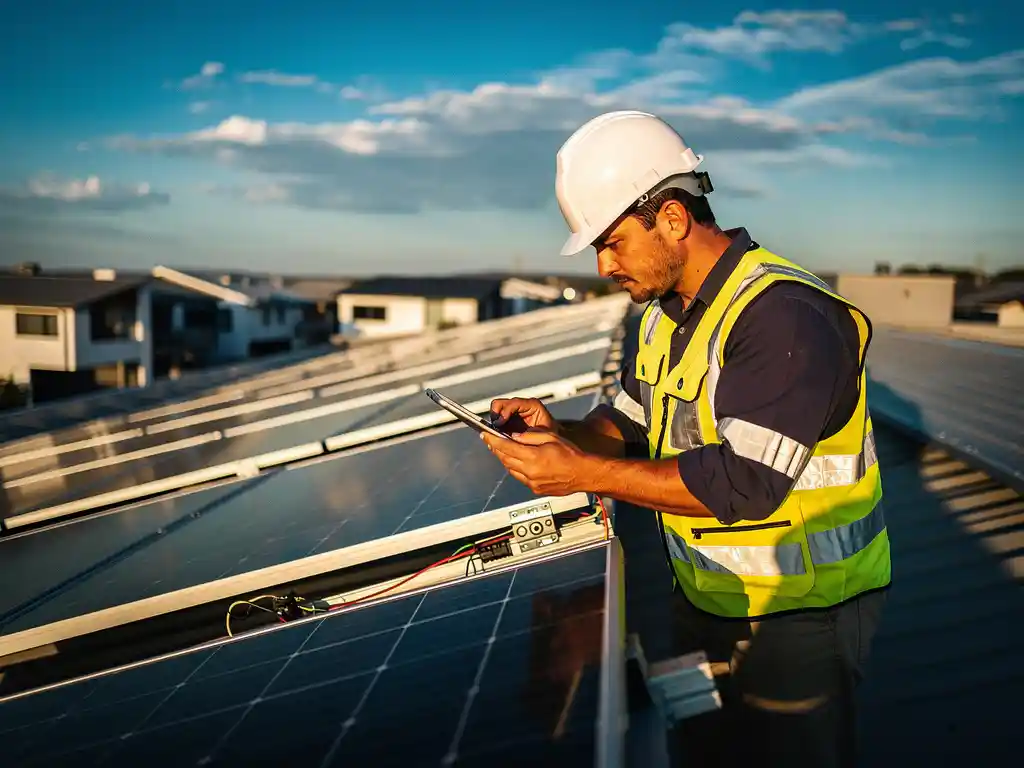
Professional solar inspections follow systematic protocols to evaluate installation safety, quality, and performance through visual assessment, electrical testing, and documentation review. Certified inspectors examine mounting systems, electrical connections, grounding, and compliance with applicable codes and standards.
The inspection process typically begins with a documentation review, including system design drawings, component specifications, and installation permits. The visual inspection covers structural mounting, panel alignment, cable routing, and weatherproofing. Electrical testing involves measuring voltages, currents, and resistances to verify proper system operation.
Inspectors use specialized equipment, including thermal imaging cameras to detect hot spots, insulation resistance testers to verify electrical safety, and irradiance meters for performance assessment. The final inspection report documents findings, identifies deficiencies, and provides recommendations for corrective actions when necessary.
What’s the difference between Scope 8, 10, and 12 solar inspections?
Scope 8, 10, and 12 inspections represent different levels of solar system assessment, with Scope 12 being the most comprehensive evaluation, covering safety, performance, and insurability requirements. Scope 8 focuses on a basic visual inspection, Scope 10 adds electrical testing, and Scope 12 includes detailed performance analysis and compliance verification.
Scope 8 inspections provide a fundamental visual assessment of installation quality, checking mounting systems, panel condition, and obvious defects. This level identifies visible issues but does not include electrical testing or performance verification.
Scope 10 inspections expand beyond visual assessment to include electrical measurements and safety testing. Inspectors verify grounding systems, measure electrical parameters, and assess compliance with electrical codes.
Scope 12 inspections represent the gold standard for commercial solar installations, combining visual, electrical, and performance testing with a comprehensive documentation review. While not legally required in the Netherlands, most insurers require Scope 12 inspections before providing coverage for commercial photovoltaic installations. These inspections ensure installations are safe, properly functioning, and meet insurability requirements.
What testing methods reveal solar system performance issues?
Performance testing methods for solar systems include electrical measurements, thermal imaging, and irradiance correlation analysis to identify underperforming components and system inefficiencies. These methods detect issues ranging from faulty panels to inverter problems and shading impacts.
Electrical testing measures string voltages and currents to identify mismatched or failing panels. Current-voltage curve tracing reveals panel degradation and connection problems. Power output measurements compared to expected values based on irradiance conditions indicate system efficiency.
Thermal imaging detects hot spots in panels, indicating potential cell damage or connection issues. Ground fault detection identifies insulation problems that could pose safety risks. Performance ratio analysis compares actual energy production to theoretical output, accounting for environmental conditions.
Advanced testing includes electroluminescence imaging for detailed panel analysis and drone-based thermal surveys for large installations. These methods provide comprehensive performance assessment and help prioritize maintenance activities.
How can you identify poor solar installation workmanship?
Poor solar installation workmanship manifests through visible defects, including misaligned panels, inadequate weatherproofing, improper cable management, and substandard mounting system installation. These issues often indicate broader quality problems that can affect system performance and safety.
Common workmanship problems include uneven panel spacing, loose mounting hardware, exposed or damaged cables, and inadequate grounding connections. Poor weatherproofing around roof penetrations can lead to water damage, while improper cable routing may cause mechanical damage or create safety hazards.
Electrical workmanship issues include loose connections, incorrect wire sizing, and inadequate protection from environmental factors. Inverter installation problems, such as inadequate ventilation or improper mounting, can reduce equipment lifespan and performance.
Documentation deficiencies often accompany poor workmanship, including missing commissioning reports, incomplete system drawings, or a lack of proper permits. Quality installations maintain detailed records and follow established procedures throughout construction.
When should you hire an independent solar quality inspector?
Independent solar quality inspectors should be hired at critical project milestones, including pre-commissioning, substantial completion, and before warranty periods expire. Independent inspections provide an objective assessment, free from potential conflicts of interest that may exist with installer-provided inspections.
Pre-commissioning inspections identify issues before system energization, allowing corrections without operational downtime. Substantial completion inspections verify that installations meet contract specifications and performance requirements before final acceptance.
Insurance requirements often mandate independent inspections, particularly Scope 12 assessments for commercial installations. Independent inspectors provide the credibility and expertise that insurers require for coverage decisions.
Post-installation inspections help identify warranty claims before coverage expires and provide baseline documentation for ongoing maintenance programs. Independent assessment is particularly valuable for large commercial projects, where installation quality directly impacts investment returns and requires comprehensive risk management strategies.
How Solarif helps with solar installation quality assessment
We provide comprehensive solar quality assessment services through our certified inspection team and specialized risk management expertise. Our SCIOS-certified inspectors conduct thorough Scope 12 inspections to ensure your solar installation meets safety standards and insurability requirements.
Our quality assessment services include:
- Professional Scope 12 inspections by certified experts
- Comprehensive safety and performance evaluations
- Clear reporting that demonstrates installation quality to insurers
- Risk identification and mitigation recommendations
- Solarif-certified panel verification for enhanced coverage options
With over 15 years of experience and 521 completed Scope 12 inspections, we understand what insurers require and how to protect your solar investment. Our inspections provide the documentation needed for insurance coverage while identifying potential issues before they become costly problems.
Ready to ensure your solar installation meets the highest quality standards? Contact our inspection experts today to schedule your professional solar quality assessment.
Insurance and inspection needs for your BESS?
Contact us today if you want to know more about the possibilities in BESS insurance and Scope inspections.
📧 Email: support@solarif.com
☎️ Phone: +31 (0)26 711 5050