



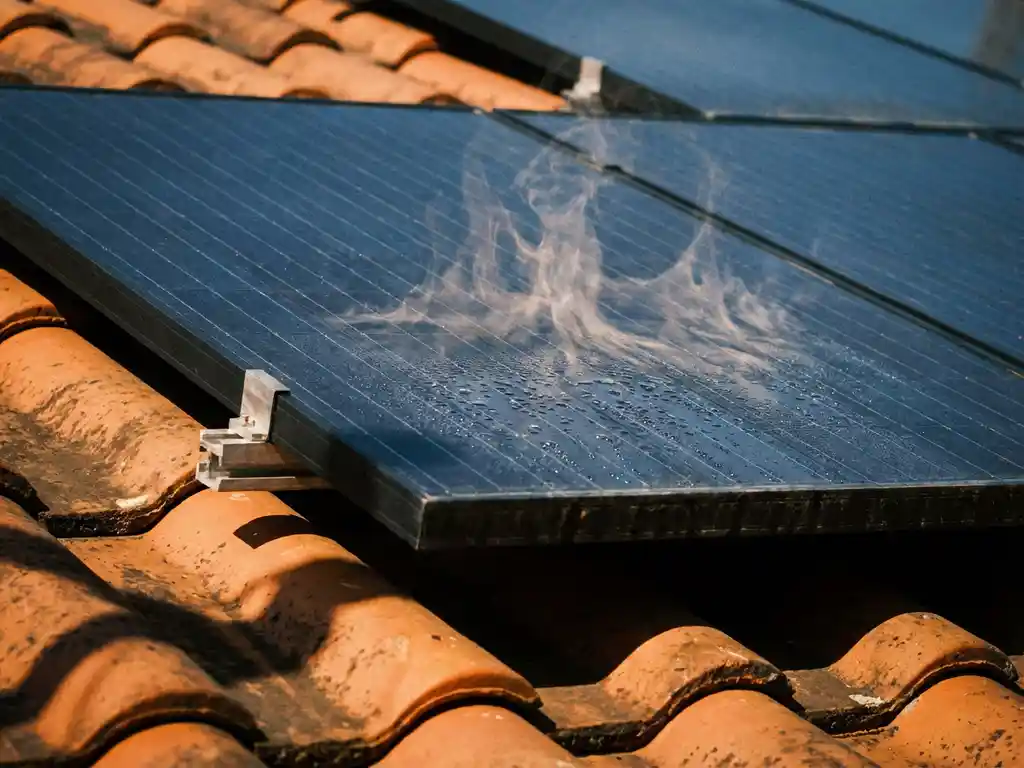
What happens when solar panels overheat?
Solar panels are designed to harness the sun’s energy, but excessive heat can become their greatest enemy. While these systems are built to withstand high temperatures, solar panel overheating can significantly reduce efficiency, cause permanent damage, and create serious safety risks for commercial installations. Understanding when and why solar panels overheat is crucial to protecting your investment and maintaining optimal performance.
For businesses operating large-scale solar installations, overheating issues can lead to substantial financial losses through reduced energy output, equipment damage, and potential safety incidents. Proper thermal management isn’t just about efficiency—it’s about ensuring your solar investment remains profitable and insurable throughout its entire lifespan.
What happens when solar panels get too hot?
When solar panels overheat, their electrical efficiency drops dramatically, and the photovoltaic cells begin to degrade faster than normal. High temperatures cause the semiconductor materials in solar cells to become less effective at converting sunlight into electricity, resulting in immediate power-output losses that can reach 10–25% during extreme heat events.
The immediate effects of overheating include reduced voltage output and decreased current generation. As cell temperatures rise above their optimal operating range of 77°F (25°C), each additional degree of heat typically reduces efficiency by 0.4–0.5%. This means that on a scorching 104°F (40°C) day, panels operating at 158°F (70°C) could suffer significant performance losses compared with cooler conditions.
Beyond efficiency losses, overheating triggers accelerated aging processes within the solar cells. Heat causes thermal expansion and contraction cycles that stress solder joints, interconnects, and cell structures. This mechanical stress can lead to microcracks in the silicon cells, creating permanent weak points that continue to worsen over time.
Hot spots represent another critical concern when panels overheat. These occur when individual cells or sections become significantly hotter than surrounding areas, often due to shading, soiling, or manufacturing defects. Hot spots can reach temperatures exceeding 200°F (93°C), potentially causing permanent cell damage, delamination of protective layers, or even fire risk in extreme cases.
At what temperature do solar panels start overheating?
Solar panels begin experiencing performance degradation when cell temperatures exceed 77°F (25°C), with significant overheating concerns arising when temperatures reach 158–176°F (70–80°C). Most commercial solar panels are rated for maximum operating temperatures between 176–194°F (80–90°C), beyond which permanent damage becomes likely.
The relationship between ambient air temperature and actual panel temperature is crucial to understand. Solar panels typically operate 36–45°F (20–25°C) hotter than the surrounding air temperature due to solar irradiance and limited heat dissipation. This means that on a 95°F (35°C) day, panel temperatures can easily reach 140°F (60°C) or higher.
Different panel technologies have varying temperature tolerances. Monocrystalline silicon panels generally handle heat better than polycrystalline panels, while thin-film technologies often perform more consistently at higher temperatures. However, all photovoltaic technologies experience reduced efficiency as temperatures climb above their optimal operating range.
Installation factors significantly influence when overheating occurs. Panels mounted close to roofs without adequate airflow, installations in hot climates with poor ventilation design, or systems with reflective surfaces nearby can reach critical temperatures much earlier than well-designed installations with proper spacing and cooling considerations.
How does overheating damage solar panels permanently?
Overheating causes permanent damage to solar panels through thermal-cycling stress, solder-joint degradation, encapsulant breakdown, and accelerated corrosion of electrical components. These processes create irreversible changes in panel structure and electrical properties that reduce long-term performance and reliability.
Thermal cycling represents one of the most destructive aspects of overheating. Repeated expansion and contraction of materials with different thermal coefficients creates mechanical stress throughout the panel structure. This stress concentrates at solder joints connecting solar cells, causing fatigue cracks that increase electrical resistance and create permanent power losses.
The encapsulant material, typically EVA (ethylene vinyl acetate), begins to degrade when exposed to sustained high temperatures. This degradation process, called browning or yellowing, reduces light transmission to the solar cells and creates permanent efficiency losses. Once encapsulant browning occurs, it continues to worsen over time, even under normal operating conditions.
Backsheet materials also suffer permanent damage from overheating. High temperatures can cause delamination, in which the protective backsheet separates from the panel structure, exposing electrical components to moisture and environmental contamination. This damage compromises the panel’s weatherproofing and can lead to ground faults or electrical safety issues.
Hot-spot damage creates some of the most severe permanent effects. When localized overheating occurs, it can cause cell cracking, metallization failure, or even burn marks on the panel surface. These damaged areas become permanent weak points that continue to generate heat and reduce overall panel performance, even after the initial cause of overheating is resolved.
Why do some solar panels overheat more than others?
Solar panels overheat differently depending on their cell technology, installation design, environmental conditions, and manufacturing quality. Panels with poor heat-dissipation characteristics, inadequate installation spacing, or manufacturing defects are significantly more prone to overheating than well-designed systems with proper thermal management.
Cell technology plays a fundamental role in heat tolerance. Monocrystalline panels typically have better temperature coefficients than polycrystalline panels, meaning they lose less efficiency per degree of temperature increase. Thin-film technologies often perform more consistently at high temperatures but may have lower overall efficiency ratings.
Installation design critically affects panel temperatures. Systems mounted with an insufficient air gap beneath panels trap heat and reduce natural convection cooling. Panels installed on metal roofs, in confined spaces, or with poor ventilation design consistently operate at higher temperatures than those with proper airflow considerations.
Environmental factors create significant variations in overheating susceptibility. Panels in desert climates, areas with high ambient temperatures, or locations with intense solar irradiance face greater thermal stress. Additionally, panels exposed to reflected heat from nearby surfaces, such as white roofs or water bodies, can experience elevated operating temperatures.
Manufacturing quality and design differences also influence overheating tendencies. Panels with better heat-dissipation features, such as improved backsheet materials or enhanced cell-interconnect designs, handle thermal stress more effectively. Conversely, panels with manufacturing defects, poor solder joints, or substandard materials are more likely to develop hot spots and thermal issues.
How can you prevent solar panels from overheating?
Preventing solar panel overheating requires proper installation design with adequate ventilation, regular maintenance to ensure optimal heat dissipation, and strategic system design that accounts for local climate conditions. Effective prevention focuses on maximizing airflow, minimizing heat absorption, and maintaining clean, unobstructed panel surfaces.
Installation design is the most critical prevention strategy. Panels should be mounted with sufficient spacing beneath and around them to allow natural convection cooling. Ground-mounted systems should maintain at least 6–12 inches of clearance, while roof-mounted installations benefit from standoff heights that promote airflow. Avoiding installation over heat-absorbing surfaces and ensuring adequate spacing between panel rows helps prevent heat buildup.
Regular cleaning and maintenance help prevent overheating by ensuring optimal heat transfer and reducing the likelihood of hot-spot formation. Dust, debris, and soiling reduce both electrical output and heat-dissipation capability. Cleaning schedules should be intensified during hot-weather periods, when thermal stress is highest.
System design considerations include selecting panels with better temperature coefficients for hot climates and incorporating cooling technologies where appropriate. Some commercial installations benefit from active cooling systems, such as water cooling or forced-air circulation, particularly in extreme climates or high-value applications.
Monitoring and early-detection systems help prevent overheating damage by identifying thermal issues before they cause permanent harm. Thermal-imaging inspections, electrical monitoring systems, and regular performance assessments can detect developing hot spots or efficiency losses that indicate thermal problems.
How do you know if your solar panels are overheating?
Signs of solar panel overheating include decreased energy production during peak sun hours, visible discoloration or hot spots on panel surfaces, electrical monitoring alerts showing unusual temperature readings, and physical damage such as warped frames or delaminated materials. Professional thermal-imaging inspections provide the most accurate assessment of panel temperature distribution.
Performance monitoring is the most accessible method for detecting overheating issues. Solar panels experiencing thermal stress typically show reduced power output during the hottest parts of the day, when production should theoretically be highest. Comparing current performance with historical data or manufacturer specifications can reveal efficiency losses consistent with overheating.
Visual inspection can identify obvious signs of thermal damage. Look for discoloration, browning, or yellowing of panel surfaces, which indicates encapsulant degradation from heat exposure. Hot spots may appear as darker areas on the panel surface, while severe overheating can cause visible warping of frames or separation of panel layers.
Electrical monitoring systems provide real-time temperature and performance data that can identify overheating conditions as they develop. These systems can alert operators to unusual temperature spikes, efficiency drops, or electrical anomalies that suggest thermal issues requiring immediate attention.
Professional thermal-imaging inspections offer the most comprehensive assessment of panel thermal behavior. Infrared cameras can detect temperature variations across panel surfaces, identify developing hot spots, and assess overall thermal performance under operating conditions. These inspections should be conducted during peak sun hours for accurate results.
How Solarif helps with solar panel overheating risks
At Solarif, we understand that thermal management is crucial to protecting your commercial solar investment. As an experienced insurance broker specializing in renewable energy projects, we help businesses mitigate overheating risks through comprehensive risk assessments and tailored insurance solutions that address thermal-related damage and performance losses.
Our services specifically address solar panel overheating concerns through:
- Scope 12 inspections that identify thermal risks and installation issues before they cause costly damage or void insurance coverage
- Risk insurance solutions that protect against fire damage, equipment failure, and business interruption caused by overheating incidents
- Performance insurance that provides financial protection when thermal issues reduce your system’s energy output below expected levels
- Expert risk assessment that evaluates your installation’s thermal-management design and identifies potential improvement opportunities
With over 15 years of experience and 3.8 GW of insured solar capacity, we know that effective thermal-risk management is essential for any commercial solar project. Our SCIOS-certified inspectors can assess your installation’s overheating risks and ensure your system meets insurers’ requirements for comprehensive coverage.
Protect your solar investment from thermal risks. Contact our renewable energy insurance experts today to discuss how we can safeguard your project against overheating damage and ensure optimal long-term performance.
Insurance and inspection needs for your BESS?
Contact us today if you want to know more about the possibilities in BESS insurance and Scope inspections.
📧 Email: support@solarif.com
☎️ Phone: +31 (0)26 711 5050