


What quality control measures ensure solar safety?
Solar energy projects represent significant investments that require robust safety measures and quality control to protect both financial returns and operational integrity. While solar technology has proven reliable across millions of installations worldwide, proper quality control measures are essential to prevent equipment failures, safety hazards, and insurance coverage issues that could jeopardize project success.
From initial installation through decades of operation, comprehensive quality control encompasses multiple inspection types, safety protocols, and ongoing monitoring systems. Understanding these measures helps project stakeholders make informed decisions about risk management and ensures compliance with insurers’ requirements for commercial solar installations.
What are the main safety risks in solar projects?
Solar projects face several critical safety risks, including electrical hazards, fires, structural failures, and equipment malfunctions that can cause injury, property damage, or significant production losses. These risks span both the installation and operational phases and require proactive management strategies.
Electrical hazards represent the most immediate safety concern in solar installations. High-voltage DC systems can cause severe injuries or fatalities during installation, maintenance, or emergency situations. Improper grounding, damaged cables, or faulty connections create electrocution risks for workers and emergency responders. Arc faults in DC circuits can generate temperatures exceeding 3,000 degrees Fahrenheit, leading to equipment damage and fire hazards.
Fire risks emerge from multiple sources, including electrical faults, overheating components, and external factors. Inverter failures, combiner-box malfunctions, or damaged wiring can ignite fires that spread rapidly across installations. Poor installation practices, such as inadequate spacing between panels or improper cable management, increase the risk of fire spread.
Structural safety concerns involve roof integrity, mounting-system failures, and wind-loading issues. Inadequate structural assessments can lead to roof collapses under the panels’ weight, while improperly installed mounting systems may fail during severe weather events. Ground-mounted systems face additional risks from soil instability and foundation settlement.
Theft and vandalism pose security risks that can compromise system safety. Damaged components from theft attempts may create electrical hazards, while unauthorized access increases injury risks for intruders and creates liability concerns for system owners.
How do quality inspections prevent solar project failures?
Quality inspections identify potential failures before they occur by systematically examining installation workmanship, component integrity, and system performance against industry standards. These proactive assessments prevent costly repairs, safety incidents, and insurance-claim disputes while ensuring optimal system performance.
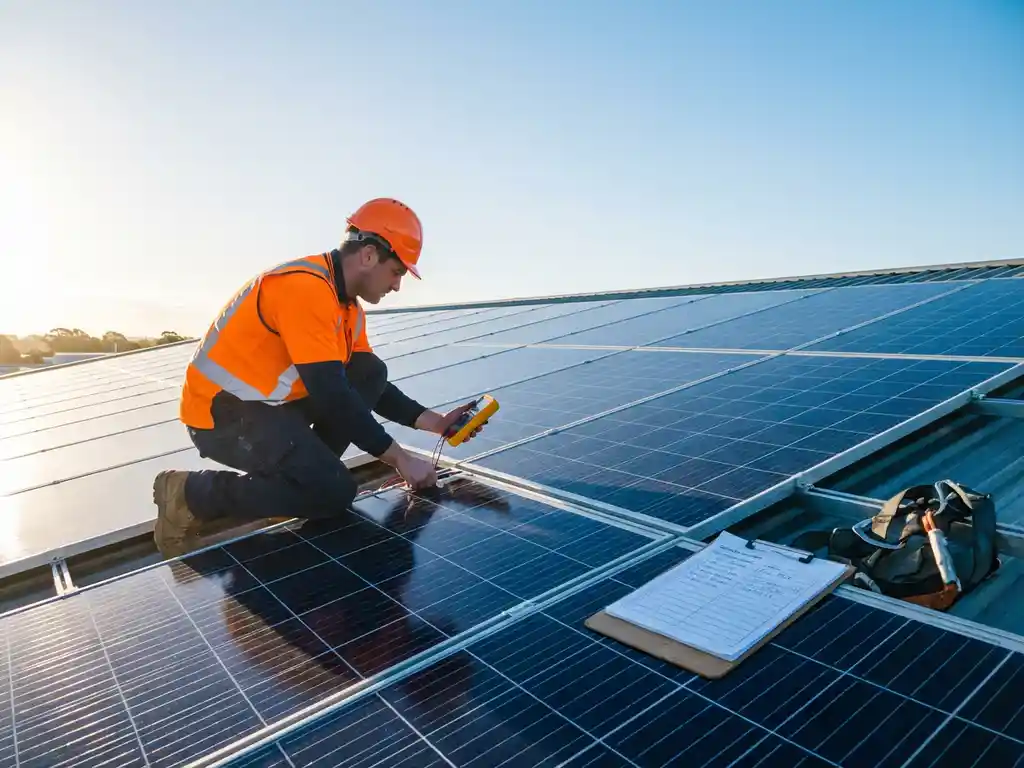
Pre-commissioning inspections catch installation errors that could lead to immediate or future failures. Inspectors verify proper cable routing, connection integrity, grounding systems, and component specifications. Identifying these issues during installation allows for immediate correction at minimal cost, preventing expensive retrofits or system replacements later.
Thermal imaging inspections detect hot spots and electrical anomalies that are invisible to visual inspection. Overheating components, loose connections, and failing bypass diodes generate heat signatures that indicate impending failures. Early detection through thermal analysis prevents catastrophic failures that could damage multiple components or create fire hazards.
Performance testing validates that systems operate according to design specifications and contractual requirements. Inspectors measure voltage, current, and power output under various conditions to identify underperforming components or system design issues. This testing ensures that investors receive expected returns and helps maintain warranty coverage.
Documentation from quality inspections provides essential evidence for insurance claims and warranty disputes. Detailed inspection reports establish baseline conditions and demonstrate proper installation practices, supporting coverage decisions and manufacturer warranty claims when issues arise.
What’s the difference between Scope 8, 10, and 12 solar inspections?
Scope 8, 10, and 12 inspections represent different phases and depths of solar system assessment, with Scope 12 being the most comprehensive post-installation inspection required by most commercial insurers. Each scope addresses specific project phases and inspection requirements.
Scope 8 inspections occur during the construction phase and focus on installation quality and compliance with design specifications. These inspections verify proper component installation, cable management, and safety procedures while work progresses. Scope 8 assessments help identify and correct issues immediately rather than discovering problems after project completion.
Scope 10 inspections are performed on completed installations but are not mandatory for solar panel systems. Unlike some other renewable energy technologies, solar installations do not require Scope 10 inspections by law. However, some project stakeholders may request Scope 10 assessments for additional quality assurance or to meet specific contractual requirements.
Scope 12 inspections provide a comprehensive assessment of completed commercial solar installations and are required by most insurers before providing coverage. While not legally mandatory, these SCIOS-certified inspections examine all system components, safety systems, documentation, and performance characteristics. The inspection covers electrical systems, structural integrity, fire safety measures, and compliance with relevant standards.
We have performed 521 Scope 12 inspections, providing detailed reports that demonstrate installation safety and functionality. These inspections typically produce clear documentation that satisfies insurer requirements and gives system owners confidence in their installation quality.
Who should perform quality control inspections on solar installations?
Quality inspections should be performed by certified professionals with specific training in photovoltaic systems, electrical safety, and relevant inspection standards. For commercial installations requiring insurance coverage, SCIOS-certified inspectors provide the credibility and expertise insurers demand.
SCIOS certification ensures inspectors have received standardized training in solar inspection methodologies, safety protocols, and reporting requirements. These certified professionals understand the technical requirements for different system types and can identify potential issues that uncertified inspectors might miss. Their reports carry the credibility needed for insurance approval and warranty validation.
Independent inspection companies offer objectivity that internal inspections cannot provide. Third-party inspectors have no financial interest in overlooking problems and can provide unbiased assessments that satisfy insurers, investors, and project stakeholders. This independence becomes particularly important when inspection results affect insurance coverage or warranty claims.
Electrical engineers and licensed electricians bring specialized knowledge of electrical systems and safety codes to solar inspections. Their expertise in high-voltage systems, grounding requirements, and electrical-code compliance ensures a comprehensive assessment of the most critical safety aspects of solar installations.
Our SCIOS-certified inspectors combine technical expertise with extensive experience in solar system assessment. We provide thorough inspections that meet insurer requirements while delivering practical insights that help system owners maintain safe, efficient operations throughout the project lifecycle.
How often should solar systems undergo safety inspections?
Commercial solar systems should undergo comprehensive safety inspections annually, with additional targeted inspections following severe weather events, equipment modifications, or when performance monitoring indicates potential issues. Regular inspection schedules help maintain insurance coverage and prevent small problems from becoming major failures.
Annual inspections provide a systematic assessment of system condition and performance trends. These scheduled inspections allow for preventive maintenance planning and help identify aging components before they fail. Many insurance policies require annual inspections to maintain coverage, making regular assessments both a safety and contractual necessity.
Post-storm inspections become critical after severe weather events, including hail, high winds, or flooding. These targeted assessments identify damage that may not be immediately visible but could compromise system safety or performance. Prompt post-storm inspections support insurance claims and prevent secondary damage from undetected issues.
Performance-based inspection triggers help identify problems through monitoring-data analysis. Significant drops in energy production, unusual electrical readings, or monitoring-system alerts may indicate the need for immediate inspection regardless of the regular schedule. This responsive approach prevents minor issues from escalating into major problems.
Warranty and insurance requirements often dictate inspection frequency for commercial installations. Many manufacturers require regular inspections to maintain warranty coverage, while insurers may specify annual or biennial inspection requirements. Compliance with these requirements ensures continued protection and validates system operation according to specifications.
How Solarif helps with solar safety and quality control
As an insurance broker specializing in renewable energy projects, we provide comprehensive risk management solutions that protect your solar investments through expert quality inspections and tailored insurance coverage. Our integrated approach ensures your projects meet safety standards while securing optimal insurance protection.
- SCIOS-certified Scope 12 inspections performed by experienced professionals who understand insurer requirements and industry best practices
- Customized insurance solutions that complement quality control measures and provide comprehensive coverage for identified risks
- Risk assessment services that identify potential safety issues and recommend preventive measures before problems occur
- Ongoing support throughout project lifecycles, from development through operations, ensuring continuous protection
With over 15 years of experience and 3.8 GW of insured capacity, we understand the critical importance of quality control in solar project success. Our expertise helps you navigate complex safety requirements while securing insurance coverage that truly protects your investment.
Ready to protect your solar project with expert quality control and comprehensive insurance coverage? Contact our specialists today to discuss your specific safety and risk management needs.
Insurance and inspection needs for your BESS?
Contact us today if you want to know more about the possibilities in BESS insurance and Scope inspections.
📧 Email: support@solarif.com
☎️ Phone: +31 (0)26 711 5050