


What are the consequences of skipping solar inspections?
Solar energy projects represent significant investments that require careful attention to quality and safety standards. When project developers or investors choose to skip professional inspections, they expose themselves to substantial financial, operational, and safety risks that can compromise the entire project’s viability. Understanding these consequences is crucial to making informed decisions about solar project development and management.
Professional solar inspections serve as a critical safeguard against hidden defects, safety hazards, and performance issues that could otherwise remain undetected until they cause serious problems. The cost of prevention through proper inspections is minimal compared to the potential losses from overlooking these essential quality-control measures.
What happens when solar projects skip quality inspections?
Solar projects that skip quality inspections face an increased risk of undetected defects, safety hazards, denied insurance coverage, and potential system failures that can result in significant financial losses and operational disruptions. Without professional oversight, critical issues can remain hidden until they manifest as costly problems.
When solar installations proceed without proper inspections, several immediate and long-term consequences emerge. Installation errors, component defects, and safety violations can go unnoticed, creating a foundation for future problems. These issues compound over time, often becoming more expensive to address than they would have been if caught early through systematic inspection processes.
The absence of inspection documentation also creates compliance gaps that can affect project financing, insurance coverage, and regulatory approval. Many stakeholders require verified quality standards before committing to solar projects, making inspection reports essential to project credibility and market acceptance.
How much money can you lose by avoiding solar inspections?
Avoiding solar inspections can result in losses ranging from thousands to millions of dollars, depending on project size. Major consequences include denied insurance claims, reduced system performance, emergency repairs, legal liabilities, and, in severe cases, complete system replacement.
The financial impact varies significantly based on the scale and type of installation. Commercial solar projects face particularly high exposure due to their size and complexity. Undetected wiring issues can lead to arc faults that require extensive rewiring. Improper mounting systems may necessitate complete reinstallation to prevent structural damage or safety hazards.
Performance losses from poor installation quality compound over time, reducing energy output and revenue generation throughout the system’s operational life. A solar installation operating at even 10% below capacity due to preventable issues can result in substantial lost income over a 25-year period.
Insurance complications represent another significant cost factor. When claims arise from uninspected installations, insurers may deny coverage due to inadequate quality documentation, leaving project owners responsible for the full cost of repairs or replacement.
What safety risks emerge from uninspected solar installations?
Uninspected solar installations pose serious safety risks, including electrical fires, electrocution hazards, structural failures, and toxic exposure from damaged components. These risks threaten both personnel safety and property, potentially resulting in injuries, fatalities, and extensive property damage.
Electrical hazards represent the most immediate safety concern in uninspected installations. Improper wiring, inadequate grounding, and faulty connections can create arc faults that ignite fires or cause electrical shock. These issues are particularly dangerous because they may not manifest immediately, creating hidden risks that persist throughout the system’s operation.
Structural safety issues arise when mounting systems are improperly installed or when roof conditions are inadequately assessed. Panel arrays that aren’t properly secured can become projectiles during severe weather, endangering people and property. Additionally, excessive structural loads from poorly planned installations can compromise building integrity.
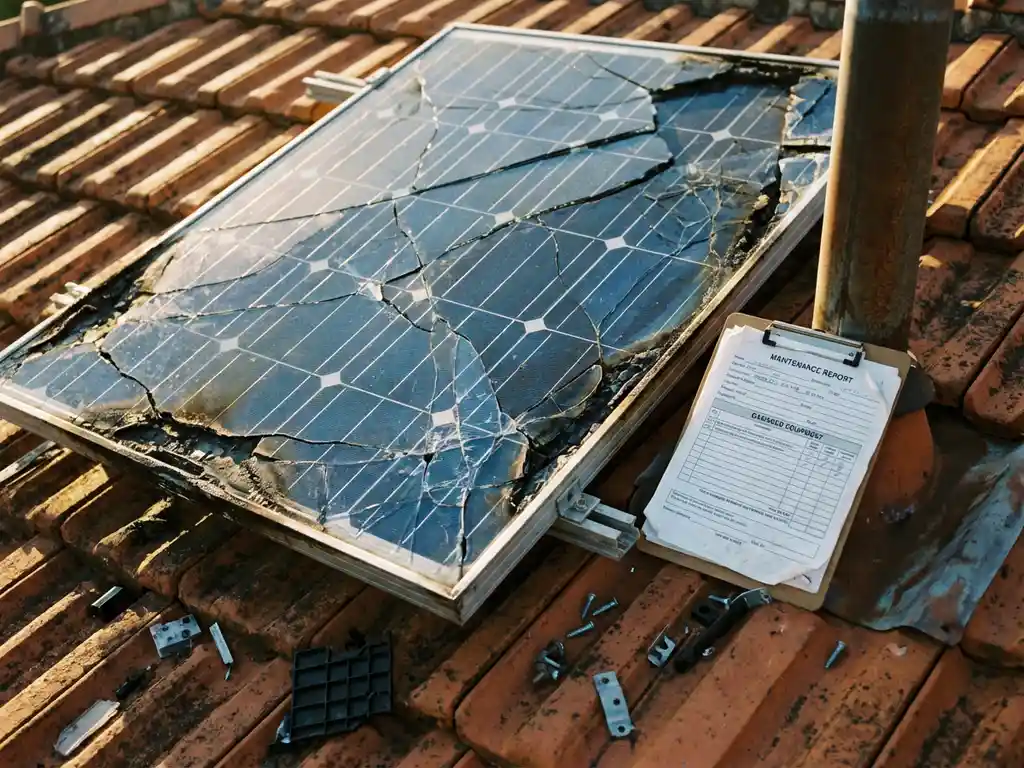
Chemical and environmental hazards emerge when solar panels are damaged without proper assessment. Broken panels may release toxic materials, while damaged electrical components can create ongoing safety risks that require specialized handling and remediation.
Why do insurance companies require solar inspections?
Insurance companies require solar inspections to assess and minimize risk exposure before providing coverage. These inspections verify that installations meet safety standards, comply with regulations, and demonstrate proper workmanship, enabling insurers to price coverage accurately and reduce claim frequency.
From an insurer’s perspective, uninspected solar installations represent unknown risk profiles that could result in significant claims. Scope 12 inspections, while not legally required in the Netherlands, are required by most insurers before they provide coverage for commercial solar installations. These inspections provide documented evidence that systems are safe and functioning properly.
The inspection requirement also serves as a quality-control mechanism that benefits both insurers and policyholders. By ensuring installations meet established standards before coverage begins, insurers can offer more competitive premiums, while project owners gain confidence in their system’s reliability and safety.
Insurance companies use inspection reports to identify potential risk factors and adjust coverage terms accordingly. Installations that demonstrate superior quality through comprehensive inspections may qualify for better coverage terms, while those lacking proper documentation may face coverage limitations or higher premiums.
How do undetected defects affect solar system performance?
Undetected defects can significantly reduce solar system performance through decreased energy output, accelerated component degradation, and increased maintenance requirements. These issues compound over time, resulting in substantial revenue losses and a shortened system lifespan that can undermine project economics.
Performance degradation from undetected defects manifests in various ways, depending on the specific issues present. Wiring problems can create resistance that reduces power-transmission efficiency. Shading issues from improperly positioned panels or obstructions can limit energy generation during peak production periods.
Component-level defects can accelerate normal wear, leading to premature failures that require costly replacements. Manufacturing defects in panels, inverters, or other critical components may not be apparent during initial installation but can cause significant performance losses over time.
Monitoring systems may not detect all performance issues, particularly those that develop gradually or affect only portions of the installation. Without comprehensive inspection documentation, it becomes difficult to distinguish between normal degradation and defect-related performance losses, complicating maintenance planning and warranty claims.
What problems are commonly missed without professional inspections?
Professional inspections commonly identify wiring errors, improper grounding, structural mounting issues, component defects, shading problems, and code-compliance violations that untrained observers typically miss. These hidden problems can compromise safety, performance, and regulatory compliance.
Electrical issues represent the most frequently overlooked problems in uninspected installations. Improper wire sizing, inadequate grounding systems, and incorrect connection methods create safety hazards and performance issues that require specialized knowledge to identify. These problems often remain hidden until they cause system failures or safety incidents.
Structural and mounting defects frequently escape notice without professional assessment. Inadequate roof-condition evaluation, improper load calculations, and substandard mounting-hardware installation can create long-term stability issues that threaten both system integrity and building safety.
Component quality issues, including manufacturing defects and damage from improper handling, often go undetected without systematic inspection protocols. Professional inspectors use specialized equipment and expertise to identify problems that may not be visible during casual observation but can significantly affect system performance and longevity.
How Solarif helps with solar inspection and risk management
As a specialized solar insurance broker for renewable energy projects, we provide comprehensive risk management solutions that protect solar investments from the consequences of inadequate quality control. Our SCIOS-certified inspectors conduct thorough Scope 12 inspections to ensure installation safety, quality, and insurability, while providing the documentation required by most commercial insurers.
Our inspection and risk-management services include:
- Professional Scope 12 inspections by SCIOS-certified inspectors
- Comprehensive quality assessments that identify potential defects and safety issues
- Detailed reporting that demonstrates compliance with safety standards and insurance requirements
- Risk-management consultation to minimize exposure and optimize project protection
- Insurance placement services that leverage inspection documentation to secure optimal coverage terms
With over 15 years of experience and 521 completed Scope 12 inspections covering 3.8 GW of capacity, we understand the critical importance of proper quality control to solar project success. Ready to protect your solar investment with professional inspection and comprehensive risk management? Contact our risk-management experts today to discuss how we can safeguard your project’s performance, safety, and insurability.
Insurance and inspection needs for your BESS?
Contact us today if you want to know more about the possibilities in BESS insurance and Scope inspections.
📧 Email: support@solarif.com
☎️ Phone: +31 (0)26 711 5050