



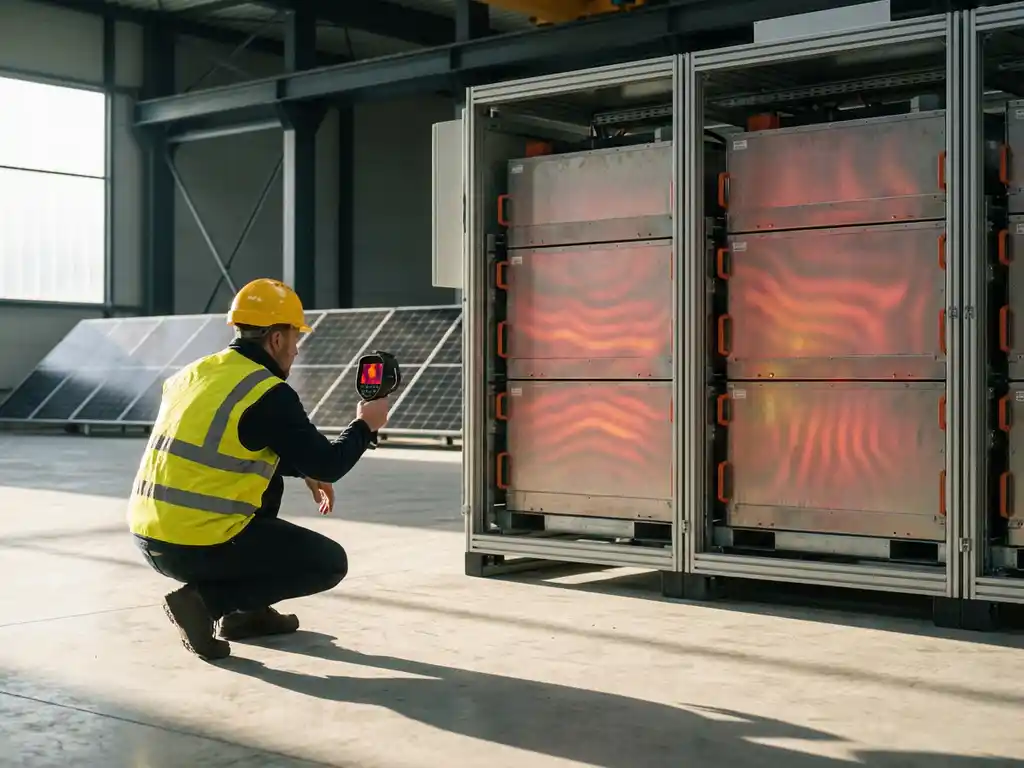
How do you assess fire risks in battery storage?
Battery Energy Storage Systems (BESS) have become critical infrastructure for renewable energy projects, but they introduce unique fire safety challenges that require specialized assessment approaches. Understanding and mitigating fire risks in battery storage is essential for project developers, facility operators, and insurance professionals working in the energy storage sector.
Fire risk assessment for battery storage goes beyond traditional electrical safety protocols and requires deep knowledge of thermal runaway phenomena, specialized detection systems, and advanced suppression technologies. As energy storage installations continue to scale globally, comprehensive fire risk evaluation has become a cornerstone of safe, insurable battery storage operations.
What Are the Main Fire Risks in Battery Storage Systems?
The primary fire risks in battery storage systems stem from thermal runaway events, electrical faults, and external factors that can trigger cascading failures throughout the installation. These risks are particularly severe in lithium-ion battery systems, which dominate commercial energy storage applications.
Thermal runaway represents the most significant fire hazard in battery storage. It occurs when a battery cell overheats and enters a self-sustaining chemical reaction that generates additional heat, potentially spreading to adjacent cells. The process can release toxic gases and create fires that are extremely difficult to extinguish using conventional methods.
Electrical system failures pose another major risk category. Poor connections, insulation breakdown, or overcurrent conditions can generate arcs and sparks that ignite battery components or surrounding materials. The high-voltage DC systems in large Battery Energy Storage Systems create particular challenges, as DC arcs are more persistent than AC arcs and harder to interrupt.
External factors compound these inherent risks. Physical damage from impacts, extreme weather conditions, or improper maintenance can compromise battery integrity and safety systems. Additionally, cybersecurity breaches affecting Battery Management System (BMS) controls could potentially disable safety protocols or create unsafe operating conditions.
How Does Thermal Runaway Occur in Energy Storage Systems?
Thermal runaway in energy storage systems begins when a battery cell reaches a critical temperature threshold—typically around 130–150°C for lithium-ion batteries—triggering irreversible chemical reactions that generate heat faster than it can be dissipated. This creates a self-perpetuating cycle that can spread to neighboring cells if not properly contained.
The thermal runaway process follows a predictable sequence. Initially, the battery cell experiences an internal short circuit, overcharging, physical damage, or exposure to external heat. As the cell temperature rises, the electrolyte begins to decompose, releasing flammable gases and generating additional heat. Once the critical temperature is reached, the separator between the electrodes breaks down, causing direct contact between positive and negative materials.
Different battery chemistries exhibit varying thermal runaway characteristics. NMC (Nickel Manganese Cobalt) batteries typically have lower thermal runaway thresholds and can release more energy during an event than LFP (Lithium Iron Phosphate) batteries. LFP batteries are more thermally stable and less prone to thermal runaway, making them increasingly popular for stationary energy storage applications where safety is paramount.
Prevention relies heavily on robust Battery Management Systems that continuously monitor cell temperatures, voltages, and currents. Proper thermal management through cooling systems and adequate spacing between battery modules helps prevent the spread of thermal events. Early detection systems can identify temperature anomalies before they reach critical thresholds, allowing for preventive shutdowns or isolation of affected sections.
What Fire Detection Methods Work Best for Battery Storage?
Multi-sensor detection systems combining thermal, smoke, and gas sensors provide the most effective fire detection for battery storage installations. These systems must detect the early stages of thermal runaway before visible flames appear, as traditional smoke detectors may not activate quickly enough to prevent catastrophic failure.
Thermal detection represents the first line of defense against battery fires. Advanced thermal cameras and distributed temperature sensing systems can identify temperature anomalies at the cell or module level. These systems typically trigger alerts when temperatures exceed predetermined thresholds, often set 20–30°C below thermal runaway temperatures to allow time for intervention.
Gas detection sensors monitor for specific gases released during thermal runaway, including hydrogen fluoride, carbon monoxide, and various organic compounds. These sensors can detect thermal runaway events even before significant temperature rises occur, providing the earliest possible warning. However, gas sensors require careful calibration and regular maintenance to ensure reliability.
Integrated detection systems combine multiple sensor types with advanced analytics to reduce false alarms while maintaining high sensitivity. These systems use machine learning algorithms to identify patterns indicating potential thermal runaway events, distinguishing between normal operational variations and genuine safety threats. Integration with Energy Management Systems (EMS) allows for automated responses, including system shutdowns and activation of suppression systems.
How Do You Conduct a Fire Risk Assessment for ESS Installations?
A comprehensive fire risk assessment for Energy Storage Systems begins with evaluating the specific battery technology, installation design, and operational environment to identify potential ignition sources and failure modes. The assessment must consider both the probability and the consequences of various fire scenarios throughout the system’s lifecycle.
The assessment process starts with a detailed analysis of the battery technology and system architecture. This includes evaluating the thermal stability characteristics of the chosen battery chemistry, reviewing Battery Management System capabilities, and assessing the adequacy of thermal management systems. The physical layout of battery modules, spacing between units, and compartmentalization features all influence fire spread potential.
Environmental factors require careful evaluation during the assessment. Site-specific conditions such as ambient temperature ranges, humidity levels, seismic activity, and exposure to extreme weather events can influence fire risk. Proximity to other infrastructure, emergency response capabilities, and site accessibility for firefighting operations are also critical considerations.
Operational risk factors must be thoroughly analyzed. This includes maintenance procedures, staff training levels, cybersecurity measures, and the robustness of safety protocols. The assessment should evaluate potential human error scenarios, equipment aging effects, and the adequacy of monitoring and control systems. Regular reassessment is essential as systems age and operating conditions change.
What Fire Suppression Systems Are Effective for Battery Storage?
Water-based suppression systems, despite initial concerns about electrical conductivity, are currently the most effective method for controlling and extinguishing battery storage fires. Modern water mist and deluge systems can cool burning batteries below thermal runaway temperatures while minimizing electrical hazards through proper system design and isolation procedures.
Water suppression systems work by providing continuous cooling to prevent thermal runaway propagation between battery modules. The cooling effect is more important than the extinguishing properties themselves, as lithium-ion battery fires can reignite even after apparent extinguishment. Properly designed water systems can reduce battery temperatures from over 800°C during thermal runaway to manageable levels within minutes.
Gaseous suppression systems using clean agents or inert gases face significant limitations in battery storage applications. While these systems can suppress flames, they cannot adequately cool batteries to prevent thermal runaway propagation. The large volumes of gas required for effective suppression in typical battery storage enclosures make these systems economically impractical for most installations.
Specialized suppression systems designed specifically for battery applications are emerging in the market. These include systems using specialized cooling agents or immersion-cooling technologies that can more effectively manage thermal runaway events. However, water-based systems remain the industry standard due to their proven effectiveness, reliability, and cost-effectiveness for large-scale installations.
How Do Insurance Companies Evaluate Battery Storage Fire Risks?
Insurance companies evaluate battery storage fire risks through comprehensive assessments that examine battery technology selection, safety system design, operational protocols, and site-specific factors. Insurers typically require detailed technical documentation and may mandate third-party risk assessments before providing coverage for energy storage installations.
Battery technology and system design form the foundation of insurance risk evaluation. Insurers favor LFP battery chemistries over NMC due to their superior thermal stability and lower fire risk profile. The presence of robust Battery Management Systems, adequate thermal management, and proper compartmentalization between battery modules significantly influence insurability and premium rates.
Safety system adequacy receives intense scrutiny during insurance evaluations. Insurers examine fire detection capabilities, suppression system design, emergency response procedures, and staff training programs. Integration between detection systems and automated response mechanisms is particularly important, as rapid response can prevent minor incidents from becoming major losses.
Operational factors and maintenance protocols heavily influence insurance assessments. Regular preventive maintenance programs, staff certification levels, and adherence to manufacturer guidelines all impact risk ratings. Insurers may require ongoing monitoring and reporting of system performance data, including temperature trends, alarm frequencies, and maintenance activities. Some insurers offer premium discounts for installations with comprehensive monitoring systems and proven operational excellence.
How Solarif Helps with Battery Storage Fire Risk Assessment
We provide specialized insurance solutions and risk management services for battery storage installations, combining deep technical expertise with comprehensive coverage options tailored to energy storage projects. Our approach addresses the unique challenges of insuring Battery Energy Storage Systems while supporting the safe deployment of this critical infrastructure.
Our battery storage insurance services include:
- Comprehensive fire risk assessments conducted by certified technical experts
- Customized insurance coverage addressing thermal runaway and related perils
- Technical due diligence support for investors and project developers
- Ongoing risk monitoring and safety system optimization recommendations
- Claims support with specialized knowledge of battery storage technologies
With over 15 years of experience in renewable energy insurance and risk management, we understand the evolving challenges of battery storage safety. Our technical inspection capabilities and strong relationships with specialized insurers enable us to provide both competitive coverage and valuable risk mitigation guidance for energy storage projects of all scales.
Contact our energy storage insurance specialists at Solarif today to discuss comprehensive fire risk assessment and insurance solutions for your battery storage project.
Insurance and inspection needs for your BESS?
Contact us today if you want to know more about the possibilities in BESS insurance and Scope inspections.
📧 Email: support@solarif.com
☎️ Phone: +31 (0)26 711 5050