



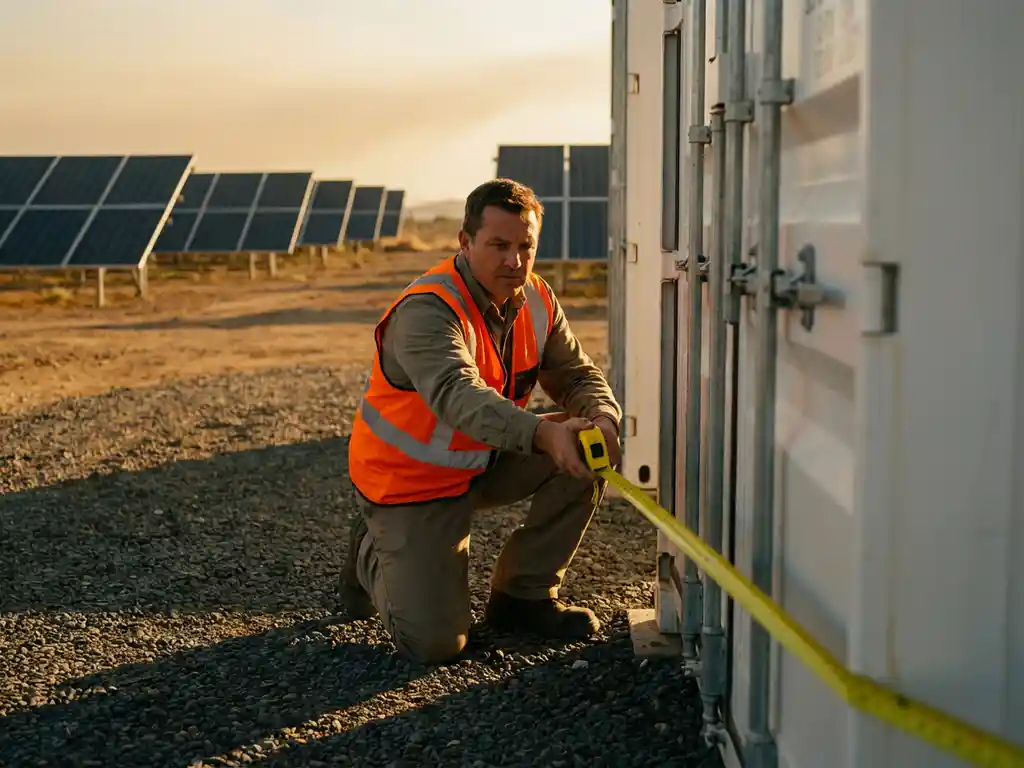
How do you establish safe work zones around BESS?
Battery Energy Storage Systems (BESS) have become critical infrastructure in the renewable energy sector, but they present unique safety challenges that require careful planning and specialized protocols. Establishing proper safety zones around BESS installations is essential to protect workers, equipment, and surrounding areas from potential hazards, including thermal runaway, electrical risks, and toxic gas emissions.
As BESS technology continues to evolve and scale up, understanding how to create effective work zones becomes increasingly important for project developers, EPC companies, and facility operators. The complexity of these systems—which can range from small commercial installations to massive, grid-scale battery farms with hundreds of megawatt-hours of capacity—demands comprehensive risk management that addresses both routine maintenance activities and emergency response scenarios.
What Are the Main Safety Risks Around BESS?
BESS installations present several critical safety risks, including thermal runaway that can lead to fires and toxic gas emissions; electrical hazards from high-voltage DC and AC systems; explosion risks from hydrogen gas buildup; and mechanical hazards associated with heavy battery modules and containers. These risks require specialized safety protocols and equipment to manage effectively.
Thermal runaway represents the most significant concern in BESS safety planning. When lithium-ion battery cells overheat, they can trigger a chain reaction in which adjacent cells also fail, potentially leading to intense fires that burn at extremely high temperatures. These fires produce toxic gases, including hydrogen fluoride, carbon monoxide, and other hazardous compounds that pose serious health risks to anyone in the vicinity.
Electrical hazards in BESS installations are particularly complex because these systems operate with both high-voltage DC power from the battery modules and AC power through the Power Conversion System (PCS). Workers face risks from arc-flash incidents, electrocution, and energized equipment that may not be immediately obvious. The rapid switching capability of BESS technology means systems can transition from charging to discharging within fractions of a second, creating unpredictable electrical conditions.
Gas accumulation presents another serious risk, particularly hydrogen buildup that can occur during certain battery failure modes or overcharging conditions. Without proper ventilation and monitoring, these gases can reach explosive concentrations. Additionally, the massive weight of battery containers and modules creates mechanical hazards during installation, maintenance, and emergency response activities.
How Large Should BESS Safety Zones Be?
BESS safety zones typically require a minimum 25-foot perimeter around battery containers for routine work, with expanded zones of 100–150 feet for emergency scenarios involving thermal runaway or fire conditions. The exact dimensions depend on system capacity, battery technology, ventilation design, and local fire safety regulations.
For routine maintenance and inspection activities, the primary safety zone should extend at least 25 feet from all battery enclosures and electrical equipment. This distance provides adequate space for workers to evacuate safely if conditions change rapidly and allows emergency responders to approach with appropriate equipment. Within this zone, access should be strictly controlled with proper lockout/tagout procedures and continuous monitoring of atmospheric conditions.
Emergency safety zones require significantly larger clearances. During thermal runaway events, toxic gas clouds can extend well beyond the immediate battery area, particularly in confined spaces or areas with poor ventilation. Fire departments and emergency responders typically establish evacuation zones with a 100–150-foot radius around affected BESS installations, though this may expand based on wind conditions and the scale of the incident.
The size and configuration of safety zones must also account for the specific BESS layout and surrounding infrastructure. Large-scale battery farms with multiple container rows may require internal safety corridors between equipment sections, while rooftop installations need special consideration for evacuation routes and emergency access. Indoor BESS installations often require more restrictive safety zones due to limited ventilation and confined-space constraints.
What Equipment Is Required for BESS Work Zones?
Essential BESS work zone equipment includes gas-detection monitors for hydrogen fluoride and carbon monoxide, thermal imaging cameras for hotspot identification, electrical safety gear rated for high-voltage DC systems, fire-suppression equipment compatible with lithium-ion battery fires, and emergency communication systems with a direct connection to facility control rooms.
Gas-detection equipment represents the most critical safety tool for BESS work zones. Multi-gas monitors should continuously measure hydrogen fluoride, carbon monoxide, hydrogen, and oxygen levels, with both audible and visual alarms when dangerous concentrations are detected. These monitors must be calibrated regularly and positioned strategically around work areas to provide early warning of atmospheric hazards.
Thermal monitoring equipment helps identify potential thermal runaway conditions before they escalate. Infrared cameras allow workers to scan battery modules and electrical connections for abnormal heat signatures that may indicate developing problems. Some advanced BESS installations include integrated thermal monitoring systems, but portable equipment provides additional verification and coverage during maintenance activities.
Electrical safety equipment for BESS work zones must be specifically rated for the unique combination of high-voltage DC and AC systems present in these installations. This includes insulated tools, arc-rated personal protective equipment, voltage detectors capable of measuring both DC and AC, and specialized lockout/tagout devices designed for battery storage applications.
Fire-suppression equipment requires special consideration for lithium-ion battery fires. While water remains the most effective cooling agent for thermal runaway situations, specialized fire-suppression systems using inert gases or advanced cooling fluids may be integrated into BESS installations. Work zones should have readily accessible fire extinguishers rated for electrical fires, though water-based suppression may be necessary for large-scale thermal events.
How Do You Monitor BESS Safety During Work Activities?
BESS safety monitoring during work activities requires continuous atmospheric monitoring for toxic gases, real-time thermal surveillance of battery modules, constant communication between work teams and control room operators, and integration with the Battery Management System (BMS) to track system status and receive immediate alerts about abnormal conditions.
Atmospheric monitoring forms the foundation of BESS work zone safety. Gas-detection systems should provide continuous readings for hydrogen fluoride, carbon monoxide, hydrogen, and oxygen levels, with data transmitted to both local work teams and central monitoring stations. These systems must include both fixed monitoring points around the work area and portable detectors carried by individual workers.
The Battery Management System (BMS) provides critical real-time data on cell voltages, temperatures, and overall system health. Work teams must maintain constant communication with operators monitoring the BMS to receive immediate notification of any abnormal readings or system alarms. This integration allows for rapid response if battery conditions begin to deteriorate during work activities.
Thermal monitoring during work activities involves both automated systems and manual surveillance. Infrared cameras can provide continuous monitoring of battery module temperatures, while thermal imaging surveys should be conducted regularly during maintenance work to identify developing hotspots. Any temperature anomalies must trigger an immediate work stoppage and system evaluation.
Communication protocols must ensure that work teams can immediately contact emergency responders and facility operators. This includes both primary and backup communication systems, clear escalation procedures for different types of safety incidents, and regular check-ins between work teams and monitoring personnel to confirm ongoing safe conditions.
What Emergency Procedures Should Be in Place for BESS Work?
BESS emergency procedures must include immediate evacuation protocols for thermal runaway events, specialized fire-response procedures using water-based cooling methods, coordination with local fire departments trained in lithium-ion battery incidents, and systematic shutdown procedures that can be executed remotely to isolate affected battery sections while maintaining safe operation of unaffected areas.
Evacuation procedures for BESS work zones must account for the rapid escalation potential of thermal runaway events. Workers should have multiple predetermined evacuation routes leading to safe assembly areas well outside the potential gas-cloud zone. Emergency alarms must be clearly audible throughout the work area, and evacuation drills should be conducted regularly to ensure all personnel can respond quickly and safely.
Fire-response procedures require coordination between on-site personnel and professional fire departments. The initial response should focus on personnel safety and preventing fire spread to adjacent equipment or structures. While specialized fire-suppression systems may be integrated into BESS installations, large-scale thermal runaway events typically require massive water application to cool affected battery modules and prevent propagation to nearby cells.
System shutdown procedures must be clearly defined and executable both locally and remotely. The Energy Management System (EMS) and BMS should allow operators to isolate affected battery sections while maintaining operation of unaffected areas when possible. Emergency shutdown procedures should include steps to disconnect the system from the electrical grid, isolate battery sections, and activate any integrated fire-suppression systems.
Coordination with local emergency responders is essential for effective BESS emergency response. Fire departments should be familiar with the specific hazards of lithium-ion battery fires, including the potential for toxic gas emissions and the extended duration required for complete cooling. Pre-incident planning should include site familiarization tours, a review of facility emergency procedures, and the establishment of communication protocols between facility operators and emergency responders.
How Solarif Helps with BESS Safety and Risk Management
As an insurance broker specializing in renewable energy projects, we understand that proper BESS safety protocols are essential for both worker protection and insurance coverage. Our comprehensive approach to BESS safety and risk management includes:
- Specialized insurance solutions for BESS installations, with coverage for thermal runaway incidents and associated business interruption
- Risk assessment services that evaluate safety zone design, emergency procedures, and compliance with evolving BESS safety standards
- Quality inspections that verify proper installation of safety systems, monitoring equipment, and emergency response infrastructure
- Matchmaking services that connect project developers with EPC contractors experienced in BESS safety protocols and emergency planning
We work closely with insurers who recognize that comprehensive thermal runaway prevention systems and proper safety zone management can significantly reduce risk exposure. Our experience with more than 3.8 GW of renewable energy projects gives us unique insight into the safety challenges and insurance requirements specific to BESS installations.
Contact our renewable energy insurance experts today to ensure your BESS project has the comprehensive safety planning and insurance coverage needed for successful operation.
Insurance and inspection needs for your BESS?
Contact us today if you want to know more about the possibilities in BESS insurance and Scope inspections.
📧 Email: support@solarif.com
☎️ Phone: +31 (0)26 711 5050