



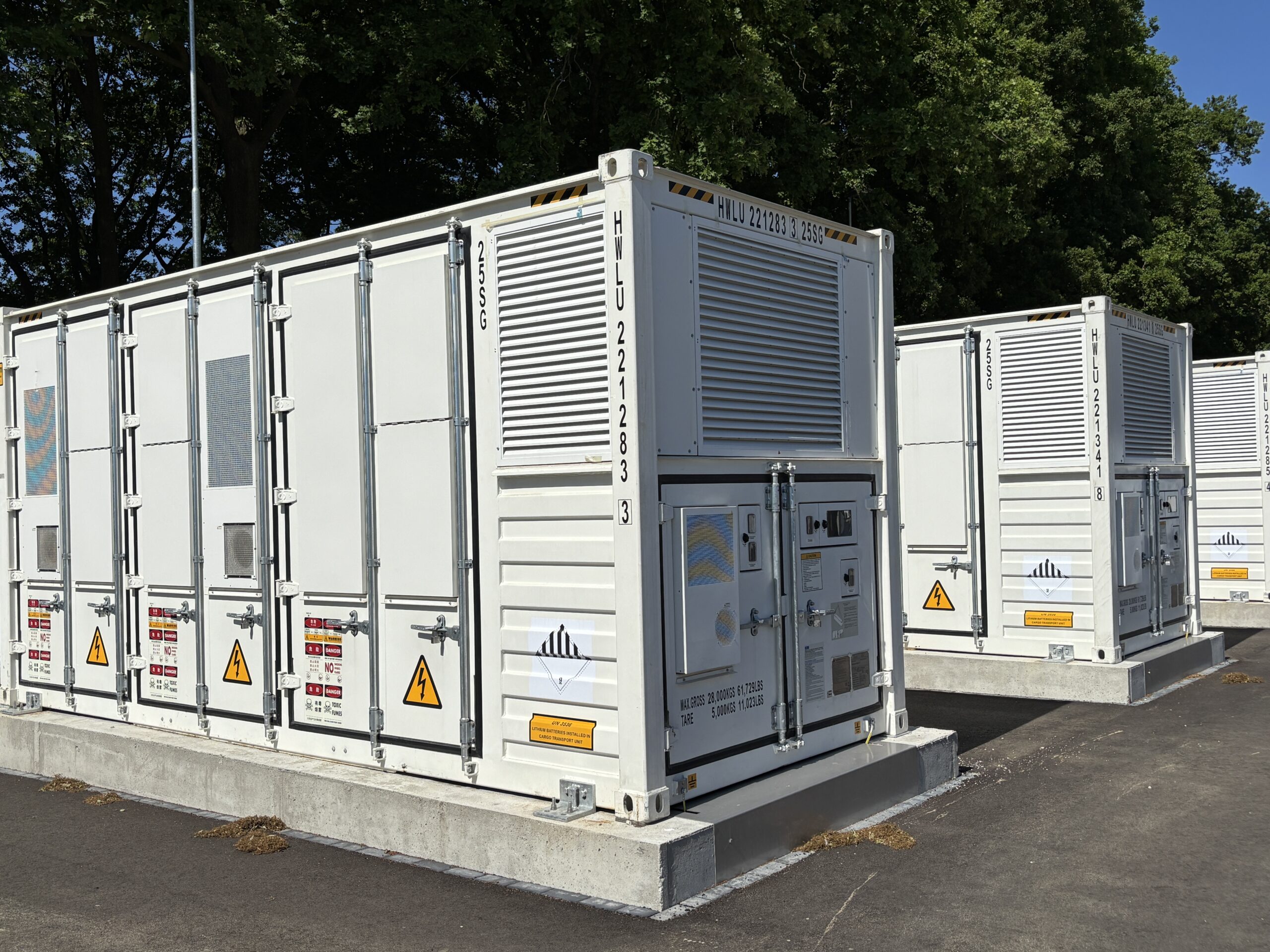
Batteries are a much-discussed topic in the energy world right now. Within energy cooperatives, the question is increasingly being asked: is a battery a valuable addition to our project? The answer to that is less simple than it sometimes seems. The ideal solution varies greatly per cooperative, per installation, and per local situation.
In this article, we list the most important considerations.
Why a Battery?
The idea for a battery often arises because it is expected to yield a financial advantage: better utilization of generation, optimizing feed-in tariffs, or offering flexibility services.
However, a battery is a substantial investment and brings new risks and obligations. Therefore, it is essential to determine in advance whether the cooperative can:
- Bear the investment and risks;
- Has sufficient support among its members;
- Can build a realistic business case.
A clear feasibility study is thus indispensable.
Existing Projects and New Conditions
For cooperatives, a battery is usually added to an existing energy project. This brings practical questions, such as:
- How will the battery be used? (peak shaving, storage for own use, trading on the market, congestion management…)
- Does the battery’s lifespan fit within the project’s duration?
- Is there space at the location, and what is the required safe distance for placement?
- Are safety guidelines such as PGS 37-1 met?
- Are there specific requirements from the municipality, grid operator, partners, financiers, or other involved parties?
In addition, it is sensible to consider insurability from the design and construction process onwards. Solarif supports cooperatives in this—from insuring the construction phase to testing the technical and organizational conditions required by insurers.
Unpredictable Market and Changing Business Models
The battery market is developing rapidly. Prices, regulations, compensation, and revenue models are changing continuously. This makes it difficult to provide hard guarantees about future revenues. Business cases that are valid today may be outdated tomorrow.
It is therefore wise for cooperatives to work with certainty through off-take contracts where possible. A multi-year contract with an off-taker ensures:
- Greater financial stability,
- Less reliance on market fluctuations,
- Better risk management for the cooperative and its members.
How Does Your Cooperative Approach This Effectively?
Solarif advises cooperatives to take at least the following steps:
- Technical analysis of the installation and location.
- Business case calculation with various scenarios.
- Risk and insurability assessment, including PGS 37-1 compliance and the construction phase.
- Assessing member support within the cooperative.
- Discussing requirements from partners and financiers.
- Finalizing off-take contract(s) for multi-year certainty.
By thoroughly completing these steps, a realistic picture of both the opportunities and the risks is created.
Conclusion
A battery can be a valuable addition but is not an obvious solution for every cooperative. The financial and technical feasibility, the risks, and the insurability play a major role in the ultimate success.
Solarif assists cooperatives in making these considerations and helps insure both the construction and operational phases. This allows you to make a well-informed decision on whether a battery fits within your project and within the cooperative’s objectives.
Email: support@solarif.com
Phone: +31 (0)26 711 5050