



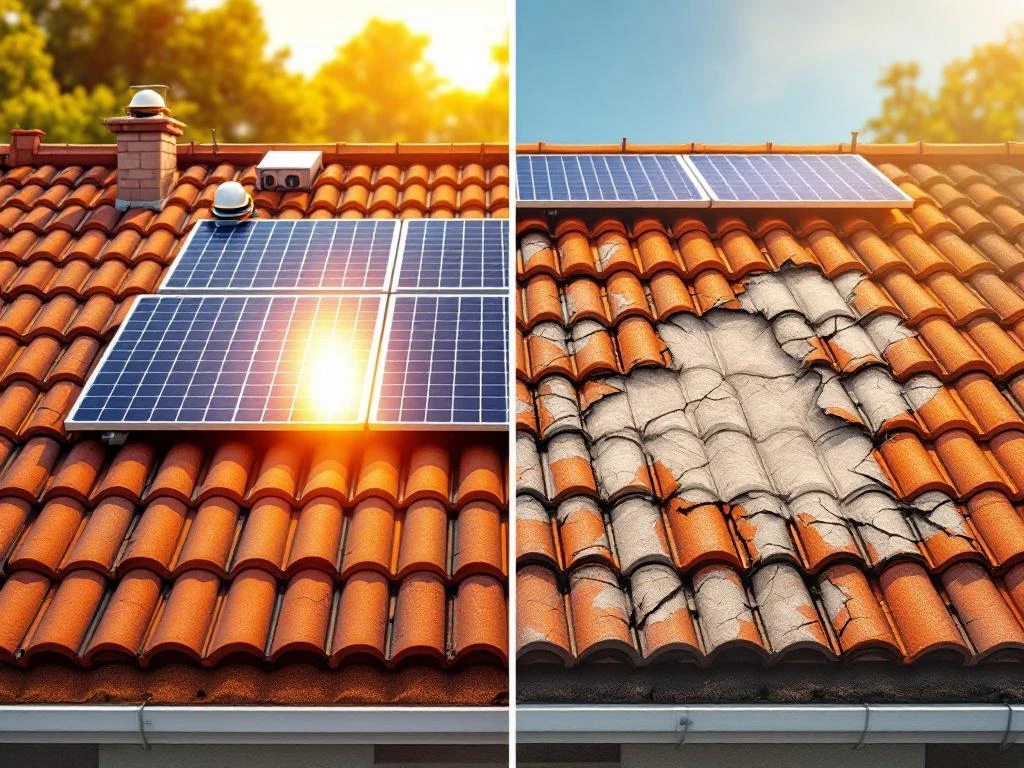
Can solar panels damage my roof?
Solar panels rarely damage roofs when they are installed properly by qualified professionals. Most solar panel risks to roofs come from poor installation practices, inadequate structural assessment, or working with unqualified installers. Professional installation with proper mounting techniques can actually protect your roof by creating a protective layer over the covered sections.
What actually causes roof damage during solar panel installation?
Roof damage during solar panel installation occurs primarily due to improper mounting techniques, inadequate structural assessment, and poor workmanship. The most common issues include drilling incorrectly sized holes, failing to properly seal penetrations, and installing mounting hardware without considering the roof’s load-bearing capacity.
Improper installation practices create several problems. Oversized mounting holes allow water infiltration that leads to rot and structural damage. Insufficient sealant application around penetrations creates leak points during heavy rain. Poor cable management can damage roofing materials through abrasion or create tripping hazards during maintenance.
Structural assessment failures represent another major cause of roof damage. Installers who skip load calculations may mount systems on roofs that cannot support the additional weight. This becomes particularly problematic with older roof structures or when combined with snow loads and weather-related stresses.
Professional installers prevent damage through systematic approaches. They conduct thorough structural assessments, use appropriate mounting hardware for each roof type, and follow manufacturer specifications for penetration sealing. Quality installers also coordinate with roofing professionals when repairs or reinforcements are needed before installation.
How do solar panels affect different types of roofing materials?
Solar panels interact differently with various roofing materials, requiring specific installation approaches for asphalt shingles, tile, metal, and flat roofs. Each material has unique considerations regarding mounting methods, weatherproofing, and long-term compatibility with solar systems.
Asphalt shingle roofs require careful penetration management to maintain water resistance. Installers must locate roof rafters for secure mounting and use appropriate flashing around each penetration point. The mounting hardware should distribute weight across multiple rafters to prevent localized stress points.
Tile roofs present unique challenges due to their fragile nature and curved surfaces. Professional installation often requires removing tiles around mounting points and using specialized hardware designed for tile roof applications. Proper reinstallation of tiles around mounting points prevents water infiltration and maintains the roof’s aesthetic appearance.
Metal roofs offer excellent compatibility with solar installations through standing seam clamps that require no roof penetrations. When penetrations are necessary on corrugated metal roofs, installers must use appropriate sealants and flashing designed for metal roofing expansion and contraction.
Flat roofs typically use ballasted mounting systems that require no penetrations, making them ideal for solar installations. However, installers must verify the roof’s structural capacity to handle the additional weight and ensure proper drainage around the mounting system.
What happens to your roof warranty when you install solar panels?
Installing solar panels can void your existing roof warranty if the installation involves penetrations or modifications not approved by the roofing manufacturer. Most roofing warranties contain clauses that exclude coverage for leaks or damage caused by third-party modifications or installations.
The warranty impact depends on your roofing manufacturer’s specific terms and the installation method used. Some manufacturers offer solar-friendly warranties that maintain coverage when installations follow their approved procedures. Others require pre-approval or the use of certified installers to preserve warranty protection.
You can protect both warranties through careful planning and documentation. Contact your roofing manufacturer before installation to understand their requirements for maintaining warranty coverage. Many manufacturers provide specific installation guidelines or approved installer lists that preserve warranty protection.
Professional solar installers often carry insurance that covers roof damage during installation, providing protection even when manufacturer warranties are affected. This insurance typically covers repair costs and related damages that might occur during the installation process.
Document everything throughout the installation process, including pre-installation roof condition photos, installer certifications, and evidence of compliance with manufacturer guidelines. This documentation becomes valuable if warranty claims arise later.
How do you choose installers who won’t damage your roof?
Choosing installers who won’t damage your roof requires evaluating their roof safety expertise, certifications, insurance coverage, and track record with similar roofing materials. Ask specific questions about their installation procedures and request references from recent projects on similar roof types.
Verify that installers carry comprehensive liability insurance that covers roof damage during installation. This insurance should include coverage for both immediate damage and problems that develop after installation. Request proof of insurance and confirm that coverage amounts are adequate for your project value.
Look for installers with relevant certifications from solar industry organizations and roofing manufacturer training programs. These certifications demonstrate knowledge of proper installation techniques and a commitment to industry standards. Some roofing manufacturers maintain lists of approved solar installers who can preserve warranty coverage.
Red flags include installers who cannot provide insurance documentation, refuse to discuss their installation procedures, or offer prices significantly below other quotes. Be wary of door-to-door sales approaches or high-pressure tactics that do not allow time for proper evaluation.
Request detailed installation plans that show mounting point locations, flashing details, and structural considerations specific to your roof. Quality installers provide comprehensive plans and welcome questions about their installation approach.
What roof inspections should you get before and after solar installation?
Pre-installation roof inspections should assess structural integrity, identify necessary repairs, and document existing conditions before solar work begins. Post-installation inspections verify proper installation quality and ensure that no damage occurred during the installation process.
Before installation, have a qualified roofer inspect for loose or damaged materials, adequate structural support, and proper ventilation. This inspection should identify any repairs needed before solar installation and confirm that the roof can support the additional weight. Document the roof’s condition with detailed photos for future reference.
Structural assessments may be necessary for older roofs or when installing heavy systems. These assessments verify that roof framing can handle solar panel weight plus additional loads from weather conditions and environmental stresses. Some insurers require structural assessments before approving coverage for commercial solar installations.
Post-installation inspections should verify that all penetrations are properly sealed, mounting hardware is correctly installed, and no roofing materials were damaged during installation. This inspection provides peace of mind and documentation that the installation was completed properly.
Schedule follow-up inspections after the first major weather event to ensure all seals and connections remain intact. Many installation problems become apparent only after exposure to rain, temperature changes, or other environmental conditions.
How Solarif protects your roof during solar projects
We protect your roof through comprehensive quality inspections, rigorous installer vetting, and specialized inspection services through our Risk Management team that focus on installation safety and roof integrity throughout the project lifecycle.
Our protection approach includes:
- Pre-installation roof assessments – We evaluate roof conditions and structural capacity before project approval.
- Scios Scope 12 inspections – Required by insurers for commercial solar installations, these inspections ensure safety standards are met and guarantee insurance coverage.
- Scios Scope 8 inspections – Factory inspections that verify component quality before installation.
- Scios Scope 10 inspections – Batch inspections ensuring consistent quality across installations.
- Installer certification verification – We work only with qualified installers who demonstrate proper roof safety expertise and carry adequate insurance.
- Post-installation quality verification – We conduct thorough inspections to ensure proper installation and roof protection.
Ready to protect your roof and solar investment? Contact our experts today to discuss comprehensive coverage options that safeguard your commercial solar project from start to finish.
Insurance and inspection needs for your BESS?
Contact us today if you want to know more about the possibilities in BESS insurance and Scope inspections.
📧 Email: support@solarif.com
☎️ Phone: +31 (0)26 711 5050