



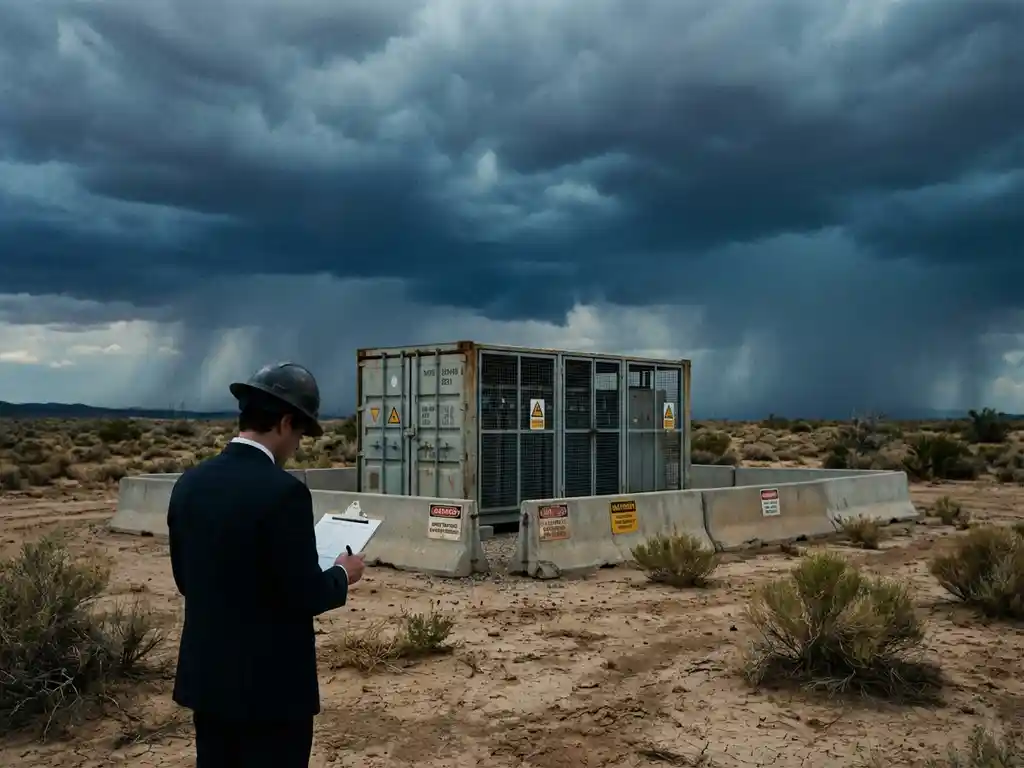
Can you get political risk insurance for BESS projects?
Battery Energy Storage Systems (BESS) are revolutionizing renewable energy infrastructure, but these high-value installations face unique political risks that traditional insurance may not cover. As governments worldwide implement new regulations, change energy policies, or experience political instability, BESS project investments can face significant threats that go beyond standard technical or commercial risks.
Political risk insurance for BESS projects provides crucial protection against government actions, policy changes, and political events that could affect project viability. Understanding these specialized coverage options is essential for investors, developers, and operators planning battery storage installations in emerging markets or politically volatile regions.
What is political risk insurance for BESS projects?
Political risk insurance for BESS projects is specialized coverage that protects battery storage investments against losses caused by government actions, policy changes, political violence, or sovereign defaults. This insurance covers risks that standard property and liability policies exclude, such as expropriation, currency inconvertibility, and breach of government contracts.
The coverage typically protects against several key political perils. Expropriation coverage applies when governments seize, nationalize, or confiscate BESS assets without adequate compensation. Currency inconvertibility coverage applies when local governments prevent the conversion of local currency into foreign currency, blocking profit repatriation. Political violence coverage protects against losses from war, terrorism, civil unrest, or sabotage with political motivations.
Contract frustration coverage is particularly relevant for BESS projects, as it protects against government breaches of power purchase agreements, grid connection contracts, or regulatory approvals. Some policies also include coverage for selective discrimination, where governments treat foreign investors differently from domestic ones through discriminatory regulations or tax policies.
What political risks do battery storage projects face?
Battery storage projects face several distinct political risks that can significantly affect project economics and operational viability. These risks range from direct government interference to broader policy shifts that affect market conditions and regulatory frameworks supporting energy storage development.
Regulatory risk represents one of the most significant threats to BESS projects. Governments may change energy storage regulations, alter grid codes, or modify market rules that affect how battery systems can participate in energy markets. Changes to renewable energy incentives, capacity payments, or ancillary service markets can dramatically affect project revenues and investment returns.
Expropriation risk occurs when governments seize private assets for public use, often without fair compensation. While outright nationalization is less common today, creeping expropriation through excessive regulation, discriminatory taxation, or forced local partnerships can effectively transfer project control to government entities.
Currency and transfer risks affect international BESS investments when governments restrict currency convertibility or block fund transfers. Projects financed in foreign currencies face additional exposure when local governments prevent debt service payments or profit repatriation to international investors.
Political violence poses direct physical threats to BESS installations. Civil unrest, terrorism, or armed conflict can damage expensive battery systems and disrupt operations. These risks are particularly relevant in emerging markets where political stability may be uncertain.
How much does political risk insurance cost for BESS projects?
Political risk insurance for BESS projects typically costs between 0.5% and 3% of the insured amount annually, depending on country risk ratings, coverage scope, and project characteristics. Premiums vary significantly based on the political stability of the host country, with stable markets commanding lower rates than emerging or frontier markets.
Several factors influence premium calculations for battery storage projects. Country risk assessment forms the foundation of pricing, with insurers evaluating political stability, the rule of law, regulatory predictability, and historical claims experience. Projects in countries with strong institutions and stable governments typically receive more favorable pricing.
Coverage scope directly affects costs, as comprehensive policies covering multiple perils cost more than limited coverage focused on specific risks. Expropriation coverage generally commands higher premiums than currency inconvertibility coverage due to higher claim frequencies and severities.
Project characteristics also affect pricing. Larger BESS installations may benefit from economies of scale in premium calculations, while projects with government offtake agreements or sovereign guarantees may receive preferential rates. The involvement of multilateral development banks or export credit agencies can also reduce premium costs through risk mitigation.
Policy terms influence pricing structures. Longer policy periods may offer rate stability but could include premium escalation clauses. Deductibles and coverage limits allow investors to balance premium costs with risk retention levels based on their risk appetite and financial capacity.
Which countries require political risk insurance for battery projects?
No countries specifically mandate political risk insurance for battery storage projects through direct legal requirements. However, lenders, development finance institutions, and international investors often require this coverage as a condition of financing BESS projects in emerging markets or countries with elevated political risk profiles.
Multilateral development banks frequently require political risk insurance for projects they finance in frontier markets across Africa, Asia, and Latin America. The International Finance Corporation, the Asian Development Bank, and other development lenders typically mandate this coverage for energy storage investments in countries with below-investment-grade sovereign ratings.
Export credit agencies from major economies often require political risk coverage when supporting domestic companies developing BESS projects abroad. These agencies assess country risk ratings and may mandate insurance for projects in markets they consider politically unstable or economically volatile.
Commercial lenders increasingly require political risk insurance for international BESS financing, particularly in markets with a recent history of policy reversals, regulatory uncertainty, or political instability. Countries experiencing rapid regulatory changes in their energy sectors may trigger lender requirements for this specialized coverage.
Some regions with active BESS development where political risk insurance is commonly required include sub-Saharan Africa, Southeast Asia, Eastern Europe, and parts of Latin America. The specific requirement depends more on individual country risk assessments than on regional mandates.
How do you get political risk insurance for energy storage projects?
Obtaining political risk insurance for energy storage projects involves working with specialized brokers and insurers who understand both political risk assessment and battery storage technology risks. The process typically begins 6 to 12 months before project financial close to allow adequate time for underwriting and policy negotiation.
The application process starts with comprehensive project documentation, including feasibility studies, financial models, government agreements, and environmental assessments. Insurers require detailed information about battery technology, the project timeline, the ownership structure, and risk management measures already in place.
Country risk assessment forms a critical component of underwriting. Insurers evaluate political stability, regulatory frameworks, the rule of law, and economic conditions in the host country. They may conduct site visits and engage local risk assessment firms to evaluate specific project locations and regional political dynamics.
Technical due diligence focuses on BESS-specific risks that could interact with political perils. Insurers assess battery safety systems, fire suppression capabilities, and operational procedures that could affect claim severity if political violence damages the installation.
Policy structuring involves negotiating coverage limits, deductibles, policy periods, and specific risk definitions. Insurers may offer modular coverage that allows investors to select specific perils based on their risk assessment and budget constraints. Some policies include waiting periods before coverage becomes effective or exclude certain types of government actions from coverage.
What’s the difference between political risk and standard BESS insurance?
Political risk insurance and standard BESS insurance cover fundamentally different categories of risks, with minimal overlap between the two types of coverage. Standard BESS insurance focuses on technical, operational, and commercial risks, while political risk insurance specifically addresses government actions and political events that could affect project viability.
Standard BESS insurance typically includes property coverage for physical damage to battery systems, business interruption coverage for lost revenue during repairs, and liability coverage for third-party damages. These policies cover risks such as equipment failure, fire, natural disasters, cyberattacks, and operational accidents that are common to industrial installations.
Political risk insurance covers perils that standard policies explicitly exclude, such as government expropriation, war, terrorism, civil unrest, currency inconvertibility, and breach of sovereign contracts. These exclusions in standard policies create coverage gaps that political risk insurance is designed to fill.
The claims processes differ significantly between the two insurance types. Standard BESS insurance claims typically involve technical assessments of equipment damage and business interruption calculations. Political risk claims require legal analysis of government actions, policy interpretations, and often involve diplomatic or arbitration proceedings.
Coverage triggers also distinguish the two insurance types. Standard BESS policies respond to physical damage or operational disruptions, while political risk policies may be triggered by government actions that do not cause immediate physical damage but impair project economics or operational rights.
Many BESS projects require both types of coverage to achieve comprehensive risk protection, as the risks they cover are complementary rather than overlapping. Investors typically structure insurance programs that combine standard property and liability coverage with political risk insurance to address the full spectrum of potential project threats.
How Solarif helps with political risk insurance for BESS projects
As a specialized insurance broker for renewable energy projects, Solarif helps BESS developers and investors navigate the complex landscape of political risk insurance. Our expertise in both battery storage technology and political risk assessment enables us to structure comprehensive coverage programs that protect your energy storage investments.
Our political risk insurance services for BESS projects include:
- Country risk assessment and insurance requirement analysis
- Policy structuring and coverage optimization for battery storage projects
- Insurer market access and competitive premium negotiations
- Integration of political risk coverage with standard BESS insurance programs
- Claims support and advocacy throughout the policy lifecycle
With over 15 years of experience in renewable energy insurance and risk management, we understand the unique challenges facing battery storage investments in emerging markets. Our international network of A-rated insurers and specialized political risk providers ensures you receive optimal coverage terms and competitive pricing for your BESS project.
Ready to protect your battery storage investment against political risks? Contact our specialized team today for a comprehensive risk assessment and customized insurance solution for your BESS project.
Insurance and inspection needs for your BESS?
Contact us today if you want to know more about the possibilities in BESS insurance and Scope inspections.
📧 Email: support@solarif.com
☎️ Phone: +31 (0)26 711 5050