


How do electrical faults occur in solar arrays?
Solar arrays are complex electrical systems that can experience various types of faults throughout their operational lifetimes. Understanding these electrical problems is crucial for maintaining system performance, ensuring safety, and protecting investments in solar energy projects. Early detection and prevention of electrical faults can save thousands of dollars in repair costs and prevent dangerous situations that could lead to fires or equipment damage.
From ground faults and arc faults to hot spots and wiring issues, electrical problems in photovoltaic systems can significantly affect energy production and system reliability. Recognizing the warning signs and implementing appropriate preventive measures help ensure solar installations operate safely and efficiently throughout their expected 25-year lifespan.
What are the most common electrical faults in solar arrays?
The most common electrical faults in solar arrays include ground faults, arc faults, hot spots, module degradation, and wiring problems. These issues account for the majority of electrical failures in photovoltaic systems and can lead to reduced performance, safety hazards, or complete system shutdowns if not addressed promptly.
Ground faults occur when electrical current finds an unintended path to ground, often through damaged insulation or moisture infiltration. This type of fault is particularly dangerous because it can create fire hazards and pose electrocution risks to maintenance personnel. Arc faults occur when electrical connections become loose or corroded, causing electricity to jump across gaps and generate dangerous heat.
Hot spots develop when individual solar cells or sections of panels operate at higher temperatures than surrounding areas, typically due to shading, soiling, or cell defects. Module degradation involves the gradual deterioration of solar panel materials over time, leading to reduced power output. Wiring problems encompass issues with DC and AC connections, including loose connections, damaged cables, and improper grounding systems.
These electrical faults can occur individually or in combination, making comprehensive monitoring and regular inspections essential for maintaining system integrity and performance.
How do ground faults develop in solar panel systems?
Ground faults in solar panel systems develop when electrical current finds an unintended pathway to ground through damaged insulation, moisture infiltration, or compromised wiring. These faults typically occur gradually as environmental factors degrade protective materials or installation defects create vulnerable points in the electrical system.
The most common cause of ground faults is insulation breakdown in DC wiring systems. Ultraviolet radiation, temperature cycling, and mechanical stress can cause wire insulation to crack or deteriorate over time. When this happens, the energized conductor can make contact with grounded metal components such as mounting rails, frames, or conduits.
Moisture infiltration represents another significant pathway for ground fault development. Water can enter junction boxes, connector housings, or damaged cable sheaths, creating conductive paths between live conductors and grounded surfaces. This problem is particularly prevalent in coastal environments or areas with frequent precipitation.
Installation errors also contribute to ground fault development. Improper cable routing that allows wires to rub against sharp edges, inadequate strain relief at connection points, or damaged cables during installation can create immediate or latent ground fault conditions. Additionally, using incompatible components or failing to follow manufacturer specifications for torque values and connection procedures can lead to premature failures.
What causes arc faults in photovoltaic installations?
Arc faults in photovoltaic installations are caused by loose or corroded electrical connections, damaged conductors, and incompatible components that create gaps where electricity jumps across air spaces. These high-energy electrical discharges generate intense heat and can ignite surrounding materials, making them one of the most dangerous electrical faults in solar systems.
Loose connections represent the primary cause of arc faults in solar installations. Over time, thermal cycling causes metal components to expand and contract, which can loosen bolted connections, MC4 connectors, and terminal blocks. Vibration from wind loads and inadequate initial torque during installation compound this problem. When connections become loose, electrical resistance increases, generating heat that further degrades the connection quality.
Corrosion of electrical contacts creates another pathway for arc fault development. Moisture infiltration, dissimilar metals in contact, and environmental contaminants can cause oxidation of connection surfaces. This corrosion increases electrical resistance and creates irregular contact surfaces that promote arcing. Aluminum conductors are particularly susceptible to corrosion when improperly connected to copper components without appropriate antioxidant compounds.
Physical damage to conductors from installation errors, animal activity, or environmental factors can also trigger arc faults. Nicked or crushed cables may continue functioning initially but can develop arc faults as the damage progresses. Additionally, using components not designed for DC applications or exceeding voltage ratings can create conditions conducive to arc fault formation.
How can you detect electrical problems in solar arrays?
Electrical problems in solar arrays can be detected through monitoring and system data analysis, visual inspections, thermal imaging, and specialized electrical testing equipment. Modern monitoring systems provide real-time performance data that can reveal electrical issues before they become critical failures.
Performance monitoring represents the first line of defense against electrical problems. Sudden drops in power output, unusual voltage or current readings, and ground-fault indicator alarms can signal developing electrical issues. String-level monitoring allows for more precise fault localization by comparing the performance of individual strings within an array.
Visual inspections during routine maintenance can identify many electrical problems before they escalate. Signs to look for include:
- Discolored or burned connection points
- Loose or corroded terminals
- Damaged cable insulation or exposed conductors
- Water infiltration in junction boxes or combiner boxes
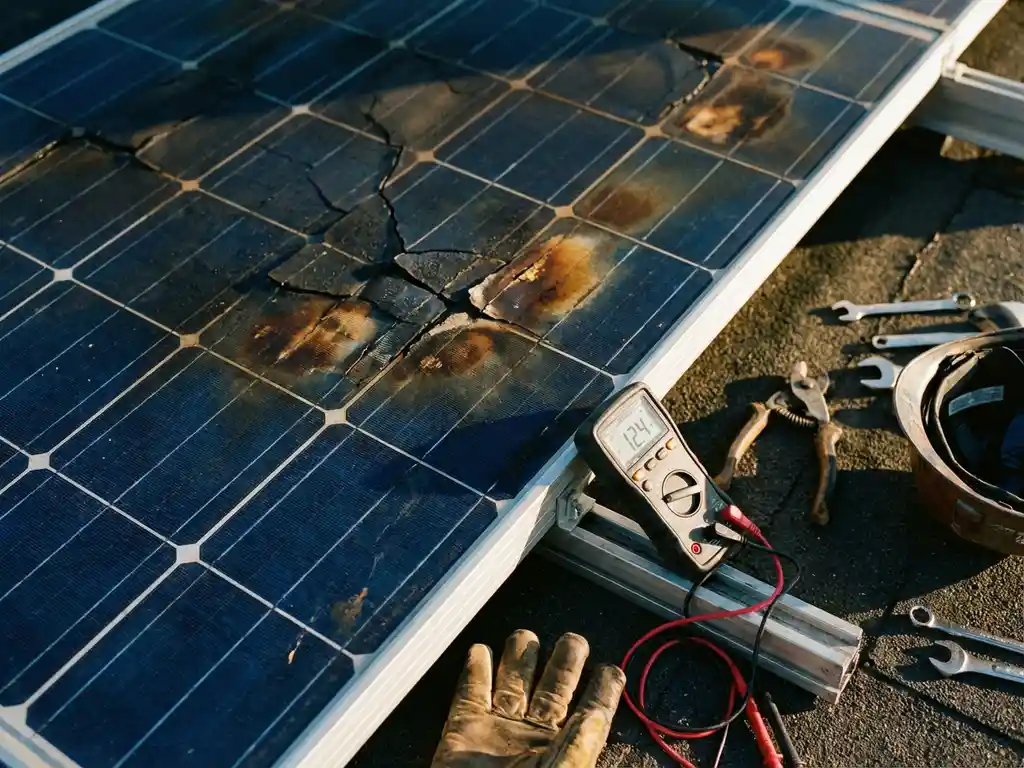
- Hot spots visible as discoloration on solar panels
Thermal imaging surveys using infrared cameras can detect hot spots, overheated connections, and failing components that may not be visible to the naked eye. These surveys are most effective when conducted during peak solar irradiance conditions, when electrical loads are highest.
Specialized testing equipment such as insulation resistance testers, ground-fault detectors, and arc-fault detection devices can identify specific electrical problems. Regular testing of insulation resistance, ground continuity, and polarity verification helps ensure electrical safety and system integrity.
Why do solar panel hot spots occur and how dangerous are they?
Solar panel hot spots occur when individual cells or sections of panels operate at significantly higher temperatures than surrounding areas, typically due to shading, soiling, cell defects, or electrical mismatches. These hot spots can reach temperatures exceeding 85°C (185°F) and pose serious risks, including fire hazards, accelerated panel degradation, and complete system failure.
The primary mechanism behind hot spot formation involves reverse-bias conditions in solar cells. When a cell receives less sunlight than its neighbors due to shading or soiling, it can become reverse biased and act as a load rather than a generator. This causes the affected cell to dissipate power as heat rather than produce electricity, leading to localized temperature increases.
Cell-level defects such as cracked cells, solder-bond failures, or manufacturing imperfections can also create hot spots. These defects increase electrical resistance in specific areas, causing power dissipation and heat generation. Additionally, bypass-diode failures can exacerbate hot spot conditions by preventing current from being routed around problematic cells.
The dangers of hot spots extend beyond immediate fire risks. Sustained high temperatures can cause permanent damage to encapsulant materials, backsheets, and cell interconnections. This damage often spreads to adjacent cells, creating larger areas of degradation. In extreme cases, hot spots can cause glass breakage, delamination, or complete panel failure. The heat can also affect nearby panels and mounting components, potentially compromising the entire array’s structural integrity.
How do you prevent electrical faults during solar installation?
Preventing electrical faults during solar installation requires following proper installation procedures, using quality components, implementing comprehensive quality-control measures, and ensuring proper system design. Adherence to electrical codes, manufacturer specifications, and industry best practices significantly reduces the likelihood of electrical problems.
Proper component selection forms the foundation of fault prevention. Using components rated for the specific application, environmental conditions, and electrical parameters ensures long-term reliability. This includes selecting appropriate cable types for outdoor exposure, using compatible connectors designed for DC applications, and ensuring all components meet relevant safety standards.
Installation procedures must emphasize electrical safety and high-quality connections. Key preventive measures include:
- Following manufacturer torque specifications for all connections
- Using proper crimping tools and techniques for cable terminations
- Implementing strain relief at all connection points
- Protecting cables from sharp edges and mechanical damage
- Ensuring proper grounding and bonding of all metallic components
- Sealing all junction boxes and outdoor connections against moisture infiltration
Quality control during installation involves systematic testing and verification procedures. This includes continuity testing of all circuits, insulation resistance testing, polarity verification, and ground-fault circuit testing. Documentation of all test results provides a baseline for future maintenance and troubleshooting activities.
System design considerations also play a crucial role in fault prevention. Proper string sizing, adequate spacing between components for thermal management, and appropriate overcurrent-protection device sizing help prevent electrical stress conditions that can lead to faults.
How Solarif helps with electrical fault prevention and management
We specialize in comprehensive risk management for solar energy projects, including protection against electrical faults that can threaten system performance and safety. Through our insurance solutions, quality inspections, and risk-assessment services, we help developers, investors, and EPC companies minimize electrical risks throughout project lifecycles.
Our electrical fault prevention and management services include:
- Scope 12 inspections by SCIOS-certified inspectors to identify electrical safety issues before they become critical problems
- Comprehensive insurance coverage that protects against electrical failures, including fire damage and business interruption
- Risk-assessment services that evaluate electrical system design and installation quality
- Performance insurance solutions that protect against output losses due to electrical faults
- Solarif-Certified panel certification, ensuring components meet strict quality standards for electrical reliability
With over 15 years of experience in the renewable energy sector and 521 completed Scope 12 inspections covering 3.8 GW of capacity, we understand the critical importance of electrical safety in solar installations. Our expertise helps ensure that electrical faults do not compromise your project’s safety, performance, or profitability.
Protect your solar investment from electrical risks. Contact our experts today to discuss comprehensive risk management solutions for your project.
Insurance and inspection needs for your BESS?
Contact us today if you want to know more about the possibilities in BESS insurance and Scope inspections.
📧 Email: support@solarif.com
☎️ Phone: +31 (0)26 711 5050