



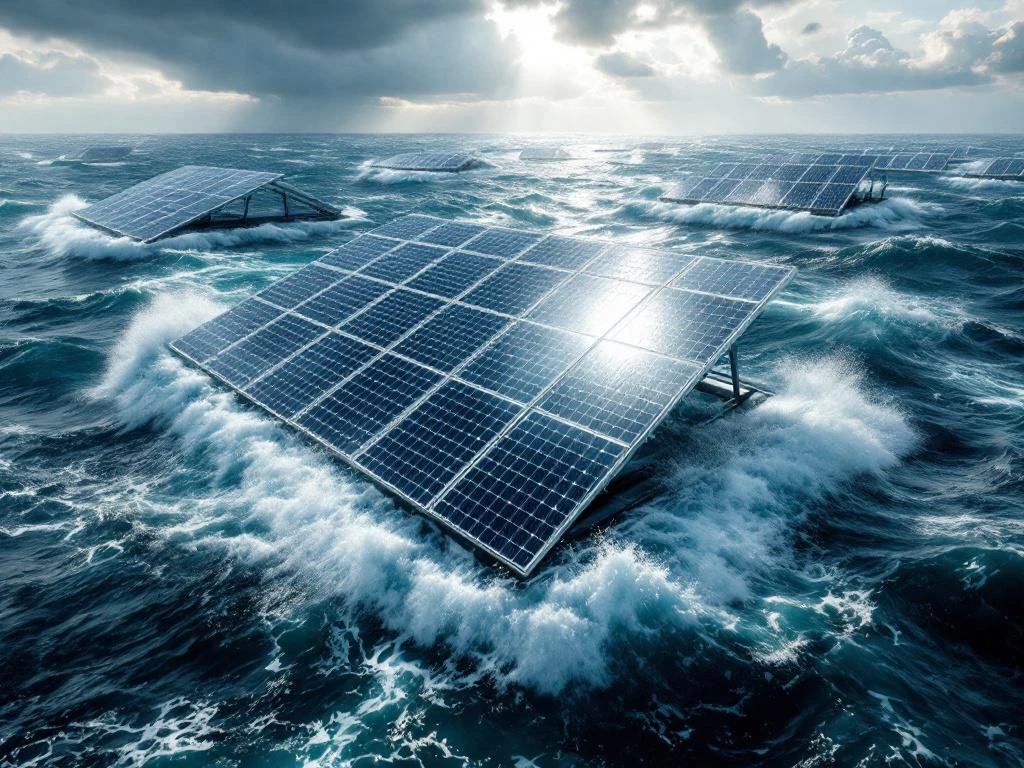
How do floating solar panels handle waves?
Floating solar panels use advanced anchoring systems and flexible connections to handle waves effectively. The installations feature specialized flotation platforms that move naturally with water motion while maintaining panel stability. Wave action actually helps cool the panels and prevent debris accumulation, making these systems more efficient than traditional land-based installations.
What are floating solar panels and how do they work on water?
Floating solar panels, also known as floating photovoltaic (FPV) systems, are solar installations mounted on specialized floating platforms designed to operate on water surfaces. These systems use high-density polyethylene (HDPE) floats that support the solar panels while allowing natural movement with water conditions.
The technology combines traditional photovoltaic panels with marine-grade mounting systems and flotation devices. The panels connect to flexible walkways and maintenance platforms, creating a stable working environment even during moderate wave activity. Waterproof electrical connections and marine-rated cables ensure safe power transmission from the floating array to onshore facilities.
These installations work by converting sunlight into electricity just like land-based systems, but with the added benefit of water cooling that improves panel efficiency. The floating platforms distribute weight evenly across multiple flotation points, preventing stress concentration and maintaining structural integrity during various water conditions.
How do floating solar panels stay stable during waves and rough water?
Floating solar systems maintain stability through sophisticated anchoring systems that allow controlled movement while preventing drift. The installations use multiple anchor points with flexible mooring lines that accommodate water level changes and wave motion without creating excessive stress on the structure.
The key stability features include flexible inter-row connections that allow individual sections to move independently while maintaining overall array integrity. These connections prevent rigid stress transfer that could damage panels during rough conditions. The flotation platforms themselves are designed with low centers of gravity and wide bases to minimize tilting.
Wave damping occurs naturally as the floating structure moves with water motion rather than fighting against it. This approach reduces structural stress and prevents the resonance effects that could damage rigid installations. The systems typically include breakwater elements around the perimeter to reduce wave impact on the main array.
Professional installation teams calculate wave loads and weather forces during the design phase to ensure adequate anchoring capacity. The mooring systems often incorporate elastic elements that absorb shock loads while maintaining position within acceptable limits.
What happens to floating solar panels during storms and extreme weather?
Floating solar installations are engineered to withstand severe weather through robust design standards and emergency protocols. During storms, the flexible mounting systems allow the array to ride out extreme conditions by moving with the water rather than resisting natural forces.
Storm preparation typically involves emergency disconnection procedures that isolate electrical systems and secure loose components. Many installations include remote monitoring systems that track structural stress and weather conditions, allowing operators to implement protective measures before conditions become dangerous.
The anchoring systems are designed with safety factors that account for extreme weather loads and wave heights based on local climate data. In severe conditions, the installations may experience temporary displacement within designed limits, but the flexible connections prevent catastrophic failure.
Post-storm inspections focus on anchor integrity, electrical connections, and panel alignment. The modular design allows for quick repairs or replacement of damaged sections without affecting the entire installation. Most systems include redundant safety features that prevent complete system failure during extreme events.
Why do floating solar panels perform better than land-based systems?
Floating solar panels typically generate more electricity than equivalent land-based installations due to the cooling effect of water beneath the panels. Solar panel efficiency decreases as temperature increases, so the natural cooling from water contact improves overall energy output throughout the day.
The water surface provides several performance advantages beyond cooling. Reduced dust accumulation means less frequent cleaning requirements, and the reflective properties of water can increase light exposure to the panels. Additionally, floating installations avoid the shading issues common with ground-mounted systems on uneven terrain.
Water-based installations also eliminate many common solar panel challenges associated with land-based systems. There is no issue of vegetation growth blocking panels, reduced fire hazards from dry grass or debris, and minimal ground preparation requirements that can affect installation costs and timelines.
The stable platform created by properly designed floating systems often provides better panel alignment and orientation consistency compared to ground installations on sloped or irregular terrain. This consistent positioning optimizes energy capture throughout the day and across seasons.
How Solarif helps with floating solar project insurance and risk management
We specialize in providing comprehensive insurance solutions and inspection services through our Risk Management unit specifically designed for floating solar installations. Our expertise covers the unique challenges these projects face, from water-related hazards to specialized technical requirements that traditional solar insurance may not address adequately.
Our floating solar services include:
- Specialized marine insurance coverage that addresses water-specific hazards including storm damage, anchoring failure, and environmental factors
- Scios Scope 12 inspections adapted for floating installations, ensuring compliance with insurer requirements for commercial projects
- Factory inspections of flotation systems and marine-grade components
- Drone inspections for comprehensive assessment of floating arrays
- Claims support with marine engineering expertise to assess damage and coordinate repairs
- Project matching services connecting investors with qualified floating solar developers
As an insurance broker with over 15 years of renewable energy experience, we understand that floating solar projects require specialized knowledge of both solar technology and marine engineering. Our network of A-rated insurers includes providers experienced with water-based renewable installations.
Ready to protect your floating solar investment? Contact our specialized team at Solarif for comprehensive inspections and tailored insurance solutions that address your project’s unique water-based challenges.
Insurance and inspection needs for your BESS?
Contact us today if you want to know more about the possibilities in BESS insurance and Scope inspections.
📧 Email: support@solarif.com
☎️ Phone: +31 (0)26 711 5050