



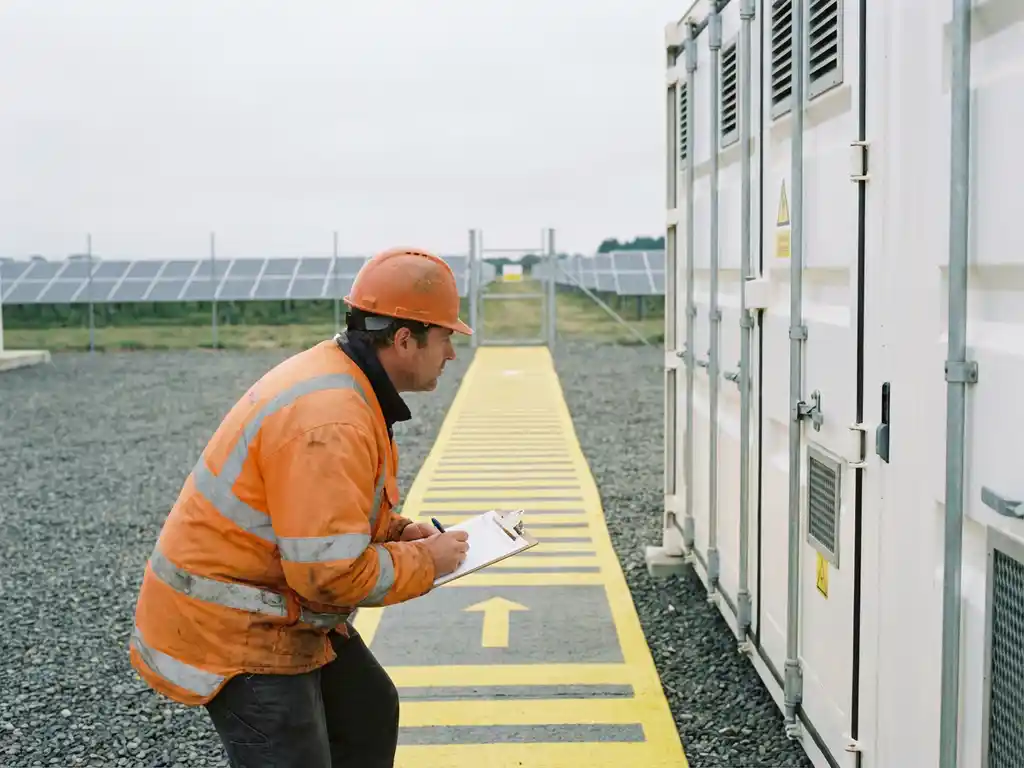
How do you design safe BESS evacuation procedures?
Battery Energy Storage Systems (BESS) represent critical infrastructure in our renewable energy landscape, but they also present unique safety challenges that require specialized emergency response protocols. When thermal runaway, electrical faults, or fire incidents occur in these high-energy systems, well-designed BESS evacuation procedures can mean the difference between a contained incident and a catastrophic event.
The complexity of battery storage installations—from small commercial systems to utility-scale battery farms—demands comprehensive safety planning that goes far beyond traditional fire evacuation procedures. Understanding how to design and implement effective BESS evacuation procedures is essential for protecting personnel, minimizing property damage, and ensuring business continuity in renewable energy operations.
What are BESS evacuation procedures and why are they critical?
BESS evacuation procedures are specialized emergency response protocols designed to safely remove personnel from battery energy storage installations during hazardous incidents such as thermal runaway, fires, or toxic gas releases. These procedures are critical because battery storage systems can experience rapid escalation of dangerous conditions that traditional building evacuation plans cannot adequately address.
Unlike conventional electrical equipment, battery systems store massive amounts of energy in chemical form that can be released suddenly and unpredictably. The Battery Management System (BMS) continuously monitors cell conditions, but when safety thresholds are exceeded, the situation can deteriorate within minutes. Thermal runaway in lithium-ion batteries can propagate from cell to cell, creating intense heat, toxic gases, and potential explosions that require immediate and coordinated evacuation.
The importance of these procedures stems from the unique hazard profile of battery installations. Large-scale BESS facilities often contain hundreds of battery modules in containers or specialized buildings, creating concentrated energy storage that demands respect. Emergency responders must understand that water—while currently the most widely recommended cooling method—can worsen battery fires due to electrical conductivity and electrolyte spread, making evacuation timing even more crucial.
Effective evacuation procedures also protect business continuity by minimizing incident escalation. When personnel can evacuate safely and quickly, emergency response teams can focus on containment rather than rescue operations, potentially saving millions in equipment costs and preventing extended downtime of critical energy infrastructure.
What are the main safety risks that require BESS evacuation?
The primary safety risks requiring BESS evacuation include thermal runaway events, toxic gas emissions, electrical hazards from high-voltage DC systems, and fire incidents that can rapidly spread between battery modules. These risks can occur individually or simultaneously, creating compound emergency situations that demand immediate evacuation.
Thermal runaway represents the most serious risk in lithium-ion battery systems. When a battery cell overheats beyond its safety threshold, it can trigger a chain reaction in which adjacent cells also overheat and fail. This process generates extreme temperatures exceeding 1,000°C, releases flammable gases, and can lead to explosions. The Battery Management System monitors for early warning signs, but once thermal runaway begins, evacuation must commence immediately, as the situation can escalate within minutes.
Toxic gas emissions pose another critical evacuation trigger. During thermal events, battery cells release hydrogen fluoride, carbon monoxide, and other hazardous gases that can be lethal in enclosed spaces. Ventilation systems in BESS installations help manage normal operations, but during emergencies, these gases can overwhelm safety systems and create immediate health threats requiring evacuation.
High-voltage electrical hazards add complexity to BESS emergencies. The Power Conversion System operates at dangerous voltage levels, and damaged components can create electrocution risks or arc-flash incidents. Additionally, the rapid switching capability of BESS installations means electrical conditions can change instantaneously, making areas safe one moment and deadly the next.
Fire incidents in battery installations behave differently from conventional fires. They can reignite hours or days after appearing extinguished, produce intense heat that damages fire suppression systems, and create structural risks for container-based installations. These characteristics make evacuation procedures more complex than standard fire protocols.
How do you assess evacuation zones around BESS installations?
Evacuation zone assessment for BESS installations involves establishing multiple safety perimeters based on potential hazard ranges, including immediate danger zones around battery containers, intermediate zones for toxic gas dispersion, and outer perimeters for emergency vehicle access and personnel staging areas.
The immediate danger zone typically extends 50–100 meters from battery containers or buildings, depending on the installation size and energy capacity. This zone accounts for potential explosions, projectile risks from failing battery modules, and the most concentrated toxic gas emissions. Personnel within this zone must evacuate immediately when alarms activate, with no time for equipment shutdown or material retrieval.
Intermediate evacuation zones extend 200–500 meters from the installation, accounting for wind-driven toxic gas dispersion and radiant heat from major fire events. These zones require conditional evacuation based on wind direction, weather conditions, and incident severity. Emergency management systems should integrate real-time weather data to adjust these boundaries dynamically during incidents.
Site-specific factors significantly influence zone boundaries. Installations near populated areas, other critical infrastructure, or environmentally sensitive locations may require expanded evacuation zones. The thermal management and enclosure design also affect risk management assessment, with container-based systems potentially requiring different zone calculations than purpose-built battery buildings with advanced fire suppression.
Topographical considerations play a crucial role in evacuation zone design. Low-lying areas can accumulate toxic gases, while elevated positions may be affected by radiant heat over longer distances. Access routes must be evaluated to ensure evacuation paths do not lead personnel through higher-risk areas, and emergency vehicle access must be maintained even during worst-case scenarios.
What equipment and systems support safe BESS evacuation?
Essential equipment supporting safe BESS evacuation includes integrated fire detection and suppression systems, emergency communication networks, gas monitoring equipment, and specialized personal protective equipment designed for battery incident response. These systems work together to provide early warning, safe evacuation routes, and protection during emergency egress.
Fire detection systems in BESS installations use multiple sensor types, including thermal, smoke, and gas detectors, to provide early warning of developing incidents. These systems integrate with the Battery Management System to correlate electrical anomalies with physical warning signs, enabling faster response times. Advanced installations include thermal imaging systems that can detect hot spots before they develop into full thermal runaway events.
Emergency communication systems must function independently of the main facility power to ensure reliability during incidents. This includes emergency lighting along evacuation routes, public address systems with battery backup, and two-way communication devices for coordination between facility personnel and emergency responders. Mobile communication may be compromised during major incidents, making hardwired emergency communication critical.
Gas monitoring equipment provides real-time detection of toxic emissions, enabling dynamic evacuation decisions based on actual hazard levels rather than predetermined assumptions. Portable gas detectors should be available for emergency response teams, while fixed monitoring systems can trigger automatic ventilation responses and evacuation alarms when dangerous concentrations are detected.
Specialized fire suppression systems designed for battery fires include gas suppression systems for enclosed spaces and specialized cooling systems for thermal runaway mitigation. While these systems primarily serve containment rather than evacuation, their activation status influences evacuation timing and route selection. Some installations use immersion cooling technology, which requires different emergency response protocols than air-cooled systems.
How do you train personnel for BESS emergency evacuation?
BESS emergency evacuation training requires specialized programs that combine general evacuation principles with battery-specific hazard recognition, evacuation route familiarization, and coordination protocols with emergency responders. Training must address the unique timing constraints and hazard evolution patterns specific to battery storage incidents.
Hazard recognition training teaches personnel to identify early warning signs of battery system problems, including unusual sounds, smells, visual indicators, and alarm conditions from the Battery Management System. This training emphasizes that battery incidents can escalate much more rapidly than conventional electrical emergencies, making immediate response critical. Personnel learn to distinguish between different alarm types and the appropriate responses.
Evacuation route training goes beyond standard fire drill procedures to address battery-specific considerations, such as avoiding areas downwind of installations during gas release incidents, understanding when different evacuation routes should be used based on incident type, and recognizing when evacuation zones may need to expand as an incident escalates.
Coordination protocols training ensures personnel understand their roles during different types of emergency responses. This includes communication procedures with emergency responders who may not be familiar with battery system hazards, documentation requirements for incident investigation, and post-evacuation accountability procedures that account for the potentially extended duration of battery-related emergencies.
Regular drill programs should simulate various incident scenarios, including thermal runaway events, gas releases, and electrical faults. These drills test not only evacuation procedures but also decision-making under pressure, communication system functionality, and coordination with local emergency services. Training records and drill performance data help identify areas for procedure improvement and ensure regulatory compliance.
How Solarif helps with BESS evacuation procedures
We specialize in comprehensive risk management for battery energy storage projects, providing the expertise needed to design and implement effective evacuation procedures that protect both personnel and investments. Our approach combines technical risk assessment with practical safety planning to ensure BESS installations meet the highest safety standards.
Our BESS safety services include:
- Risk assessment and evacuation zone modeling for battery storage installations
- Safety system specification and integration planning
- Emergency response procedure development and training program design
- Insurance coordination to ensure coverage aligns with implemented safety measures
- Regulatory compliance verification for battery storage safety requirements
As an insurance broker specializing in renewable energy projects, we see that insurers sometimes offer lower premiums for BESS installations with comprehensive thermal runaway prevention systems, or they may decline to insure systems that lack adequate safety measures. Our expertise helps ensure your battery storage project meets both safety requirements and insurance expectations from the design phase onward.
Ready to ensure your BESS project has the comprehensive safety planning it needs? Contact our renewable energy risk management experts to discuss your battery storage evacuation procedures and safety system requirements.
Insurance and inspection needs for your BESS?
Contact us today if you want to know more about the possibilities in BESS insurance and Scope inspections.
📧 Email: support@solarif.com
☎️ Phone: +31 (0)26 711 5050