



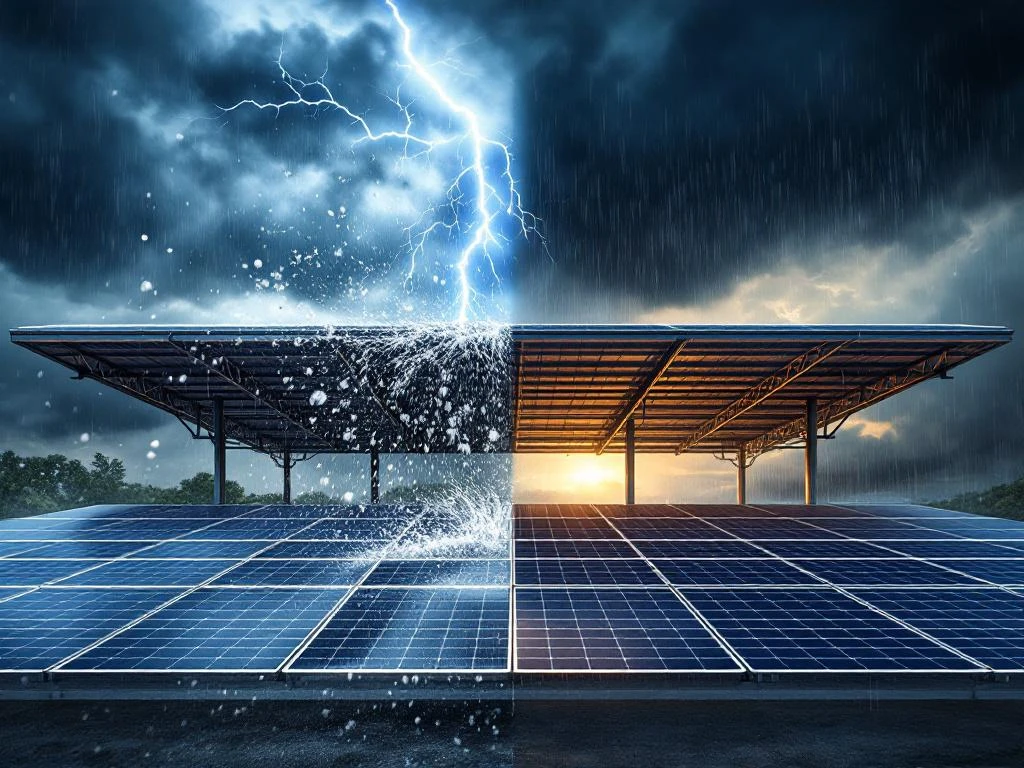
How does extreme weather affect solar carports?
Extreme weather poses significant threats to solar carports, with hail, high winds, snow loads, and temperature extremes being the primary concerns. These weather events can damage panels, compromise structural integrity, and reduce energy production. Solar carport installations face unique challenges due to their elevated position and dual function as both parking structures and energy generators. Understanding these risks helps protect your investment and ensures reliable performance throughout the system’s lifespan.
What types of extreme weather pose the biggest threats to solar carports?
Solar carports face multiple weather hazards that can cause substantial damage and financial losses. Hailstorms, high winds, heavy snow loads, extreme temperatures, and severe storms represent the most significant threats to these installations. Each weather type affects different components in specific ways.
Hailstones can crack or shatter solar panels, creating immediate power loss and potential water infiltration points. High winds stress the mounting systems and can lift panels or entire sections if they are not properly secured. Snow accumulation adds weight that structural supports must handle, while also blocking sunlight and reducing energy output.
Extreme temperature fluctuations cause thermal expansion and contraction in both the solar panels and the carport structure. This repeated stress can lead to micro-cracks in panels, loose connections, and structural fatigue over time. Severe storms often combine multiple threats, creating compound risks that can overwhelm even well-designed systems.
The elevated nature of solar carports makes them particularly vulnerable to high wind damage compared to ground-mounted systems. Their parking structure function also means they cannot be easily shut down or protected during severe weather events, unlike some other solar installations.
How do solar carports handle high winds and storm conditions?
Solar carports use engineered wind-resistance features, robust anchoring systems, and precise wind-load calculations to withstand severe weather conditions. Modern installations incorporate multiple design elements specifically to handle high wind speeds and storm conditions.
The structural framework typically uses galvanized steel or aluminum components designed to flex without breaking under wind pressure. Mounting systems distribute loads across multiple connection points, preventing concentrations of stress that could lead to failure. Foundation systems anchor deep into the ground or use ballasted designs to resist uplift forces.
Wind-load calculations consider local weather patterns, building codes, and site-specific factors like terrain and nearby structures. Engineers design systems to handle wind speeds well above typical storm conditions, often incorporating safety factors of 1.5 to 2 times expected loads.
Panel mounting systems use clamps and rails that secure modules while allowing controlled movement. This prevents rigid connections that might snap under pressure. Some systems incorporate aerodynamic features that reduce wind resistance and turbulence around the installation.
Professional installations also consider wind-direction patterns and site topography. Proper spacing between rows, appropriate tilt angles, and strategic placement help minimize wind-related risks while maintaining optimal energy production.
What happens when hail hits solar carport panels?
Hail impact can crack tempered glass, damage anti-reflective coatings, and create micro-fractures that reduce panel efficiency and allow moisture infiltration. Modern solar panels undergo impact-resistance testing, but severe hailstorms can still cause significant damage.
Solar panels typically withstand hailstones up to 25 mm in diameter at terminal velocity. Larger hailstones, or those driven by strong winds, can exceed these design limits. When glass cracks, it usually creates spiderweb patterns that may not immediately stop power production but compromise long-term reliability.
Damage often appears gradually after hail events. Initial cracks may be hairline-thin, becoming more pronounced as temperature changes cause expansion and contraction. Water infiltration through damaged glass can corrode electrical connections and damage the photovoltaic cells themselves.
Some manufacturers offer enhanced hail-resistant panels with thicker glass or protective films. These provide better protection but come at higher cost. The choice depends on local hail frequency and severity patterns in your area.
Insurance considerations become important for hail-prone regions. Solar panel risks from hail damage can result in substantial repair costs and lost production revenue. Proper coverage helps protect against both immediate damage and consequential losses from reduced energy output during repair periods.
How does extreme heat and cold affect solar carport performance?
Temperature extremes impact panel efficiency, structural expansion, and long-term durability in solar carport installations. Both excessive heat and severe cold create challenges that affect energy production and system longevity.
Solar panels lose efficiency as temperatures rise above their optimal operating range, typically around 25°C. For every degree above this point, most panels lose 0.3–0.5% of their rated output. In extreme heat, this can reduce production by 10–20% compared to standard test conditions.
Cold temperatures actually improve panel efficiency but create other challenges. Rapid temperature changes cause thermal cycling that stresses solder joints and electrical connections. Snow and ice accumulation block sunlight and add structural loads that the carport must support.
The carport structure itself expands and contracts with temperature changes. Metal components can grow several centimetres in extreme heat, requiring expansion joints and flexible connections to prevent structural damage. Poor design can lead to warped frames, loose panels, and compromised weather sealing.
Extreme temperature fluctuations accelerate material aging. UV exposure combined with heat degrades panel backsheets and junction boxes. Cold snaps can make materials brittle, increasing the risk of damage from impact events.
What maintenance do solar carports need after severe weather events?
Post-storm maintenance requires systematic visual inspections, electrical testing, and structural assessments to identify weather-related damage and ensure continued safe operation. Prompt attention prevents minor issues from becoming major problems.
Begin with a visual inspection from ground level, looking for obvious damage such as cracked panels, loose mounting hardware, or structural deformation. Check for debris accumulation, damaged wiring, and signs of water infiltration around electrical connections.
Electrical testing should verify system performance and identify any drops in power output that might indicate hidden damage. Monitor individual panel performance if your system includes optimizers or microinverters that provide panel-level data.
Structural assessment becomes important after severe weather events. Look for bent framing, loose bolts, foundation movement, or signs of stress concentration. Any structural concerns require professional evaluation before the system returns to full operation.
Document all damage with photographs and detailed notes for insurance purposes. Keep receipts for any emergency measures taken to prevent further damage. Avoid disposing of damaged components until insurers have completed their assessment.
A professional inspection may be necessary for systems that have experienced severe weather events, particularly if you notice any performance degradation or visible damage. This ensures both safety and optimal performance restoration.
How Solarif helps with solar carport weather protection
We provide comprehensive insurance solutions and Risk Management services specifically designed for solar carport installations facing extreme weather challenges. Our specialized approach protects your investment through multiple layers of coverage and professional support.
Our services include:
- All-risks insurance coverage protecting against hail, wind damage, fire, theft, and other weather-related damage
- Business interruption insurance compensating for lost energy production during repair periods
- Scios Scope 12 inspections ensuring installations meet insurer requirements and safety standards
- Inspection services identifying vulnerabilities and recommending protective measures
- Claims support providing expert guidance through the damage-reporting and repair process
As an insurance broker specializing in renewable energy projects, we understand the unique risks solar carports face from extreme weather. We work with A-rated insurers to provide comprehensive coverage that addresses both immediate damage and consequential losses from weather events.
Ready to protect your solar carport investment? Contact our renewable energy insurance specialists today for a comprehensive assessment and a tailored insurance solution that safeguards your installation against extreme weather threats.
Insurance and inspection needs for your BESS?
Contact us today if you want to know more about the possibilities in BESS insurance and Scope inspections.
📧 Email: support@solarif.com
☎️ Phone: +31 (0)26 711 5050