



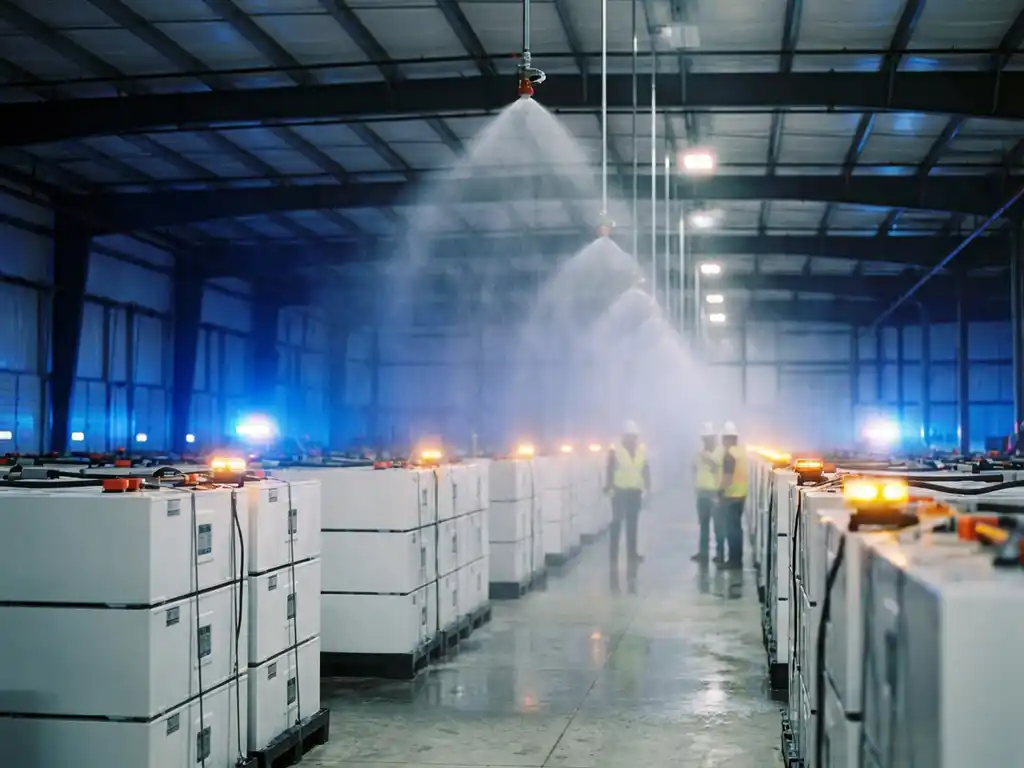
How does fire suppression work in battery storage?
Fire safety remains one of the most critical concerns in battery energy storage systems (BESS), particularly as these installations grow larger and more complex. With lithium-ion batteries dominating the energy storage market, understanding how fire suppression systems work is essential for project developers, facility operators, and insurers evaluating risk profiles.
Battery storage fires present unique challenges that conventional fire suppression methods cannot adequately address. The risk of thermal runaway, combined with the electrical nature of these systems, requires specialized fire protection strategies that can effectively cool battery cells while managing the spread of toxic gases and preventing re-ignition.
What is fire suppression in battery storage systems?
Fire suppression in battery storage systems refers to specialized fire protection technologies designed to detect, contain, and extinguish fires in battery energy storage facilities while managing the unique hazards of lithium-ion battery fires. These systems combine early detection, automated suppression agents, and cooling mechanisms to prevent thermal runaway propagation.
Unlike traditional fire suppression, which focuses primarily on extinguishing flames, battery storage fire suppression must address multiple objectives simultaneously. The primary goal is to cool battery cells to temperatures below the thermal runaway threshold, typically around 130–150°C for most lithium-ion chemistries. Secondary objectives include suppressing flammable gases, preventing fire spread to adjacent battery modules, and maintaining safe evacuation conditions for personnel.
Modern battery storage fire suppression systems integrate multiple technologies that work in coordination. Fire detection systems use thermal sensors, smoke detectors, and gas monitors to identify early warning signs of thermal events. Upon detection, suppression systems activate automatically, deploying cooling agents while simultaneously triggering ventilation systems to manage toxic gas accumulation. These systems also coordinate with building management systems to shut down electrical circuits and initiate emergency protocols.
Why do battery storage systems need specialized fire suppression?
Battery storage systems require specialized fire suppression because lithium-ion battery fires exhibit fundamentally different characteristics than conventional fires, including sustained high temperatures, toxic gas emissions, and the potential for thermal runaway propagation that can reignite even after initial suppression.
Thermal runaway represents the primary fire risk in battery storage facilities. When a lithium-ion cell overheats due to overcharging, physical damage, or manufacturing defects, it can reach temperatures exceeding 1,000°C. This extreme heat triggers a self-sustaining chemical reaction that releases flammable gases, including hydrogen, carbon monoxide, and hydrogen fluoride. The process can propagate from cell to cell, creating a cascading failure that spreads throughout the battery system.
Traditional water-based sprinkler systems are inadequate for several reasons. Water conducts electricity, creating electrocution risks in energized battery systems. Additionally, water cannot effectively penetrate battery module enclosures to reach individual cells where thermal runaway occurs. The high thermal mass of battery packs means that even after external flames are extinguished, internal temperatures may remain elevated enough to cause re-ignition hours or even days later.
The toxic gases produced during thermal runaway create additional hazards that require specialized ventilation and detection systems. Hydrogen fluoride, in particular, poses severe health risks and can damage electronic equipment throughout the facility. Effective fire suppression must therefore address gas management alongside thermal control, which is why comprehensive risk management strategies are essential for battery storage facilities.
How does thermal runaway detection work in battery facilities?
Thermal runaway detection in battery facilities relies on multi-layered monitoring systems that track temperature, smoke, gas concentrations, and electrical parameters to identify thermal events before they escalate into full fires. These systems typically provide 5–15 minutes of warning before visible flames appear.
Temperature monitoring forms the foundation of thermal runaway detection. Thermal sensors positioned throughout battery racks continuously monitor cell and module temperatures. When temperatures exceed predetermined thresholds—typically 60–80°C above normal operating ranges—the system triggers initial alarms. Advanced systems use thermal imaging cameras to provide visual confirmation and precise location identification of hot spots.
Gas detection systems monitor for specific off-gases that indicate the onset of thermal runaway. Carbon monoxide and hydrogen sensors provide early warning signals, as these gases can appear before visible smoke or flames. Some facilities also monitor for hydrogen fluoride, though this gas typically appears later in the thermal runaway process. Multi-gas detection arrays can differentiate between normal battery operation and thermal events based on gas concentration patterns.
Electrical parameter monitoring tracks voltage, current, and impedance changes within battery systems. Sudden voltage drops, unexpected current flows, or impedance changes can indicate internal cell damage that precedes thermal runaway. Battery management systems continuously analyze these parameters and can trigger thermal runaway protocols when anomalies are detected.
Integration among detection systems enables rapid, coordinated response. When multiple detection methods confirm a thermal event, automated systems can isolate affected battery circuits, activate suppression systems, and initiate emergency ventilation within seconds of detection.
What types of fire suppression agents work for battery fires?
Effective fire suppression agents for battery fires include water mist systems, inert gases such as nitrogen or argon, specialized cooling fluids, and aerosol-based suppression agents, each designed to address the unique cooling and gas-suppression requirements of lithium-ion thermal events.
Water mist systems are the most widely deployed suppression technology for battery storage facilities. These systems produce fine water droplets that provide superior cooling capacity compared to traditional sprinklers while using significantly less water. The fine mist can penetrate battery enclosures more effectively and provides better heat absorption per unit of water applied. However, water-based systems require careful electrical isolation to reduce electrocution hazards.
Inert gas suppression systems flood battery compartments with nitrogen, argon, or carbon dioxide to reduce oxygen concentrations below combustion thresholds. These systems effectively suppress flames and help prevent ignition of flammable gases released during thermal runaway. Nitrogen systems are particularly favored because they provide sustained suppression without the environmental concerns associated with some traditional halon alternatives.
Specialized cooling fluids designed specifically for battery applications offer enhanced thermal management capabilities. These engineered fluids can absorb more heat than water while providing electrical insulation properties. Some immersion-cooling systems use dielectric fluids that can directly contact battery cells, providing immediate thermal management when thermal runaway begins.
Aerosol suppression systems deploy fine particulate agents that interrupt combustion reactions while providing some cooling effect. These systems work well in enclosed battery compartments and can be effective against both flames and hot surfaces. However, they typically need to be combined with other cooling methods to address the sustained heat generation associated with thermal runaway.
How do water mist systems suppress battery storage fires?
Water mist systems suppress battery storage fires by producing fine water droplets that maximize heat absorption and cooling capacity while minimizing electrical conductivity risks, thereby reducing battery cell temperatures below thermal runaway thresholds while helping manage flammable gas concentrations.
The effectiveness of water mist systems lies in their ability to optimize heat transfer. Fine water droplets, typically 10–100 microns in diameter, have a much larger surface-area-to-volume ratio than traditional sprinkler droplets. This increased surface area enables more efficient heat absorption as the droplets evaporate, removing substantial thermal energy from the fire environment. The evaporation process also produces steam that helps displace oxygen and suppress combustion.
Water mist systems can penetrate battery enclosures more effectively than conventional sprinklers. The fine droplets can enter through ventilation openings, cable conduits, and small gaps in battery module housings to reach internal components where thermal runaway occurs. This penetration capability is crucial because thermal runaway generates heat from within battery cells, requiring internal cooling to be effective.
These systems address electrical safety concerns through reduced water volume and improved droplet characteristics. Water mist systems typically use 80–90% less water than traditional sprinklers, reducing the accumulation of conductive water on floors and electrical equipment. The fine droplets also have lower electrical conductivity than bulk water, though electrical isolation remains necessary for safe operation.
Advanced water mist systems incorporate additives to enhance suppression effectiveness. Some systems add surfactants to improve droplet penetration and wetting characteristics. Others include corrosion inhibitors to protect battery system components from long-term water damage. Certain installations use demineralized water to further reduce electrical conductivity.
What safety protocols activate during a battery fire event?
During a battery fire event, safety protocols automatically activate emergency shutdown procedures, facility evacuation systems, hazardous-gas ventilation, emergency responder notifications, and electrical isolation sequences to protect personnel and limit fire propagation throughout the battery storage facility.
Immediate electrical isolation represents the first critical safety response. Automated systems disconnect battery circuits from the grid, isolate affected battery modules, and shut down charging operations to prevent additional energy input that could worsen thermal runaway conditions. Emergency shutdown systems also de-energize non-essential electrical systems while maintaining power to critical safety equipment.
Facility evacuation protocols trigger automatically when fire detection systems confirm thermal runaway events. Emergency lighting activates, evacuation alarms sound, and automated voice announcements guide personnel to designated assembly points. Access control systems unlock emergency exits while simultaneously restricting entry to prevent unauthorized personnel from entering hazardous areas.
Hazardous-gas management systems activate to protect both facility personnel and emergency responders. Emergency ventilation systems increase air-exchange rates to dilute toxic gas concentrations while directing airflow away from occupied areas. Some facilities deploy emergency ventilation fans specifically designed to handle corrosive gases produced during battery fires.
Emergency responder notification systems automatically contact fire departments and hazardous materials teams when thermal runaway detection occurs. These systems provide real-time information about facility layout, battery system specifications, and current fire suppression system status to help responders develop appropriate tactical approaches.
Facility isolation protocols help prevent fire spread to adjacent areas or buildings. Automated fire doors close to compartmentalize the fire area, while suppression systems in unaffected areas remain on standby. Some facilities also activate emergency backup power systems to ensure continued operation of safety systems throughout the event.
How Solarif helps with battery storage fire safety
We specialize in comprehensive risk assessment and insurance solutions for battery energy storage systems, ensuring your BESS installations meet the highest fire safety standards while securing appropriate coverage for thermal runaway risks. Our expertise in renewable energy insurance enables us to evaluate the fire suppression systems and safety protocols insurers require for BESS coverage.
Our battery storage fire safety services include:
- Comprehensive fire safety risk assessments for BESS installations
- Insurance placement with carriers experienced in battery storage risks
- Scope 12 inspections that evaluate fire suppression system effectiveness
- Risk management consulting on thermal runaway prevention strategies
- Claims support specifically for battery fires and thermal runaway events
As an insurance broker specializing in renewable energy projects, we have seen that insurers sometimes offer lower premiums for BESS installations with comprehensive thermal runaway prevention systems, or they may decline to insure systems that lack adequate fire protection. Our technical expertise helps ensure your battery storage project meets both safety requirements and insurance standards.
Ready to secure comprehensive fire safety coverage for your battery storage project? Contact our renewable energy insurance experts today to discuss your specific BESS fire protection requirements and insurance needs.
Insurance and inspection needs for your BESS?
Contact us today if you want to know more about the possibilities in BESS insurance and Scope inspections.
📧 Email: support@solarif.com
☎️ Phone: +31 (0)26 711 5050