


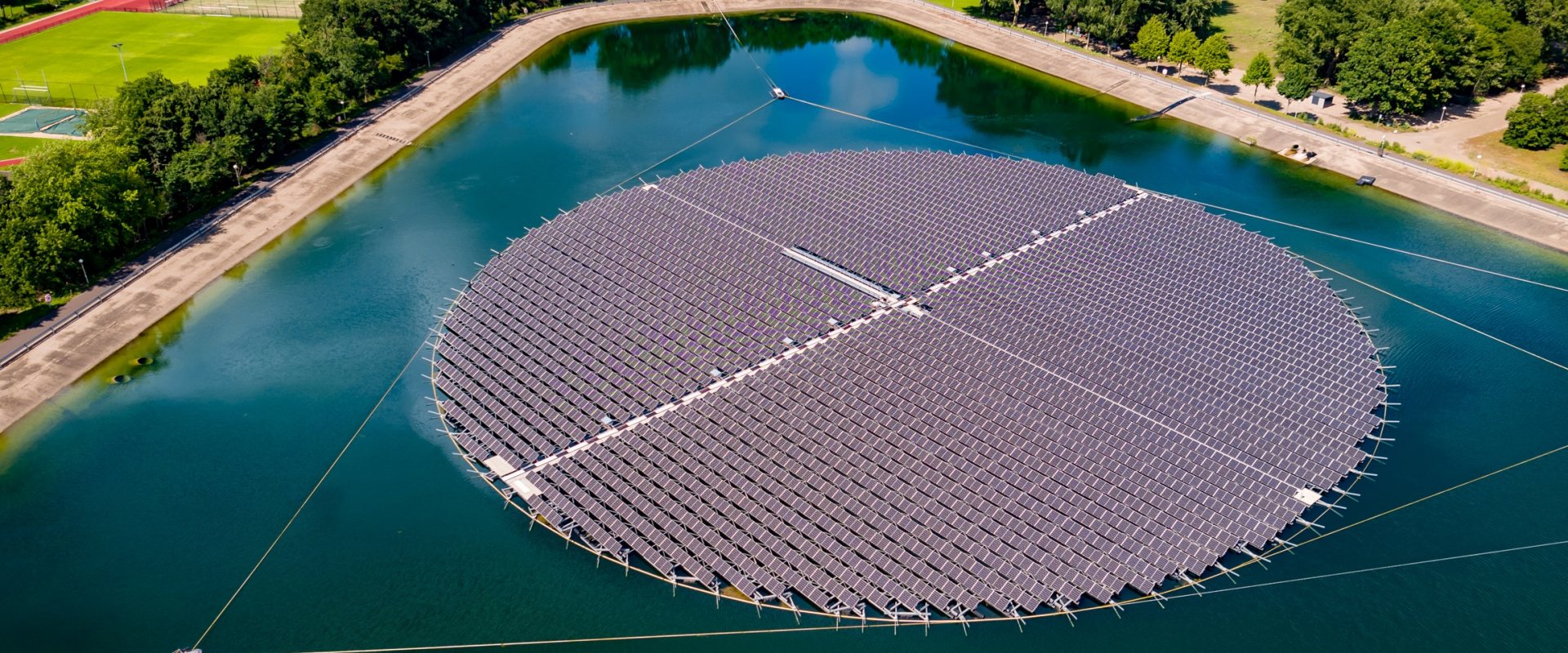
Operational management of a floating installation is fundamentally different from a land or rooftop installation. The risks surrounding maintenance and inaccessibility determine the continuity of generation.
Maintenance and safety challenges
Maintenance on water requires specialized personnel and equipment (boats, floating pontoons). This increases operational costs and introduces additional safety risks.
- Cleaning and inspection: the panels and floats must be regularly inspected for fouling and damage. Drones and ROVs (Remotely Operated Vehicles) are often needed for underwater inspections, which entails extra costs.
- Risk from animals: aquatic life can cause damage. For example, water birds can rest on the panels and create Hot Spots through their droppings, while beavers or other rodents can damage the flexible cabling.
- Prevention: in vulnerable areas, the installation of fences or deterrent elements around the installation is required.
The logistical challenge in case of damage
If damage occurs (e.g., a broken anchor line), the repair time is often longer than with land installations due to the logistical complexity of working on water. Coverage for production loss must take this into account and apply a realistic recovery period. Damage to floatovoltaics requires specific expertise in its handling.
Floating Solar insurance: specialization is necessary
The uncertainty of water, such as the failure of anchoring to unforeseen ecological requirements and logistically complex damages, demands an insurance partner who truly understands these risks. Our expertise in global PV project insurance ensures that unique risks on and around the water are fully and correctly covered. We look forward to hearing from you! 😊
📧 Email: support@solarif.com
☎️ Phone: +31 (0)26 711 5050