



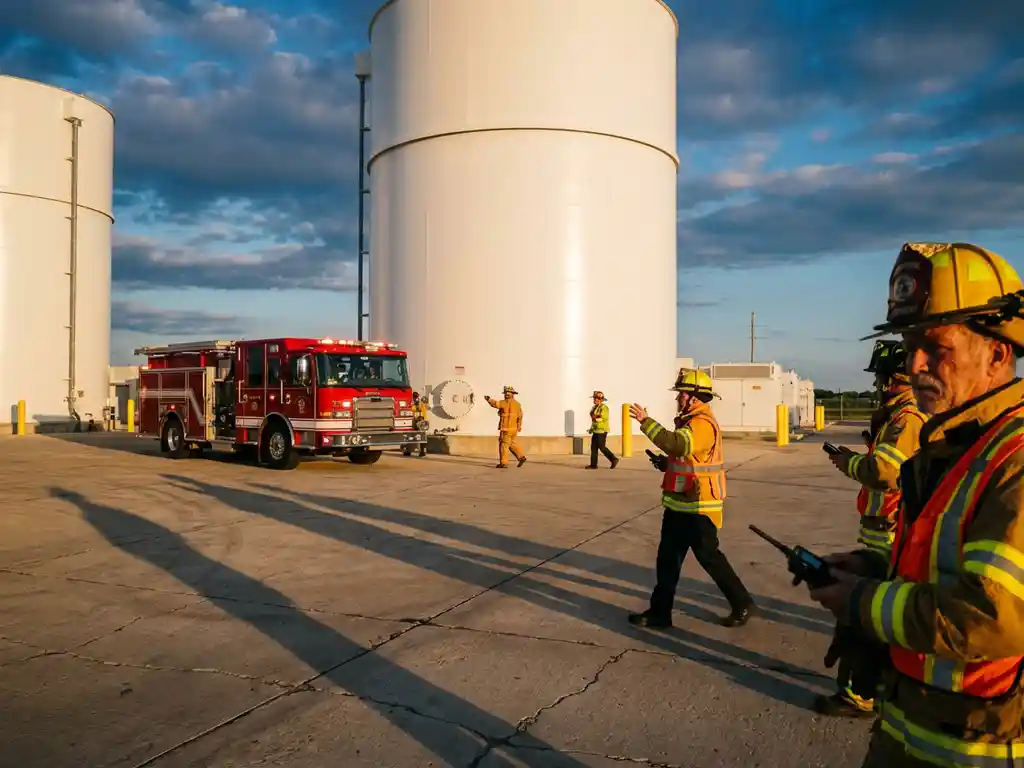
Should BESS facilities have dedicated fire departments?
Battery Energy Storage Systems (BESS) are becoming critical infrastructure for renewable energy projects, but their rapid growth raises important questions about fire safety and emergency response. Because these facilities store massive amounts of energy in lithium-ion batteries, they present unique fire risks that traditional emergency services may not be equipped to handle effectively.
The question of whether BESS facilities need dedicated fire departments is becoming increasingly relevant as installations grow larger and more complex. Understanding the specific fire risks, current suppression systems, and response requirements helps facility operators make informed decisions about their emergency preparedness strategies.
What are the main fire risks associated with BESS facilities?
BESS facilities face significant fire risks primarily from thermal runaway, a chain reaction in which overheated lithium-ion battery cells cause neighboring cells to overheat and potentially ignite. This process can release toxic gases, generate intense heat exceeding 1,000°C, and prove extremely difficult to extinguish once it starts.
Thermal runaway represents the most dangerous scenario in battery storage facilities. When one cell overheats due to manufacturing defects, physical damage, or electrical faults, it can trigger a cascade effect throughout the battery module. The reaction produces flammable gases, including hydrogen fluoride, carbon monoxide, and various organic compounds, that pose serious health risks to emergency responders.
Electrical hazards compound these risks significantly. BESS facilities operate at high voltages and store substantial amounts of energy that can discharge rapidly during emergencies. Arc faults, ground faults, and short circuits can all trigger fires while simultaneously creating dangerous electrical conditions for firefighters.
The enclosed nature of many BESS installations creates additional challenges. Battery containers and buildings can trap heat and toxic gases, making access difficult and increasing the risk of explosion. Poor ventilation systems may fail to remove dangerous gases quickly enough during thermal events.
How do current fire suppression systems work in BESS facilities?
Current BESS fire suppression systems typically combine early detection with specialized suppression agents designed to cool batteries and prevent thermal runaway propagation. Most facilities use thermal sensors, smoke detectors, and gas monitoring systems to identify problems before they escalate into major fires.
Detection systems in modern BESS facilities continuously monitor multiple parameters. Temperature sensors track cell-level heat buildup, while smoke detectors identify early signs of thermal decomposition. Gas sensors detect hydrogen fluoride and other toxic emissions that indicate thermal runaway has begun.
Suppression approaches vary based on facility design and risk assessment. Water-based systems remain common despite their limitations, as water effectively cools batteries and prevents heat from spreading to adjacent modules. However, water can exacerbate battery fires due to its electrical conductivity and the potential to spread electrolytes; despite these drawbacks, it is currently the most widely recommended method for cooling and de-escalation.
Specialized suppression agents are increasingly deployed in high-value installations. Inert gas systems flood battery enclosures with nitrogen or argon to displace oxygen and prevent combustion. Some facilities use specialized cooling fluids designed specifically for lithium-ion battery fires, though these systems require significant investment and maintenance.
What’s the difference between dedicated fire departments and standard emergency response?
Dedicated fire departments for BESS facilities provide specialized training, equipment, and response protocols specifically designed for battery storage emergencies, while standard emergency services follow general industrial fire response procedures that may not address unique BESS risks effectively.
Training represents the most significant difference between dedicated and standard response teams. Dedicated BESS fire departments receive extensive education on lithium-ion battery chemistry, thermal runaway behavior, and electrical safety protocols specific to energy storage systems. They understand which suppression agents work best for different battery types and how to safely approach energized storage systems.
Equipment specialization sets dedicated departments apart from standard services. BESS-specific fire departments carry thermal imaging equipment calibrated for battery temperatures, specialized personal protective equipment for toxic gas exposure, and suppression agents designed for electrical fires. They also maintain electrical safety equipment rated for the high voltages common in utility-scale storage facilities.
Response protocols differ substantially between dedicated and standard services. Dedicated BESS fire departments follow procedures that prioritize electrical isolation, controlled cooling, and extended monitoring periods. Standard fire departments may apply traditional firefighting approaches that could worsen battery fires or endanger responders unfamiliar with energy storage hazards.
When should BESS facilities consider dedicated fire departments?
BESS facilities should consider dedicated fire departments when they exceed 50 MWh in capacity, operate in remote locations with limited emergency services, or support critical infrastructure requiring guaranteed uptime. Facilities with complex battery chemistries or experimental technologies also benefit from specialized fire response capabilities.
Facility size is a primary consideration for dedicated fire services. Large-scale installations with hundreds of battery containers can create fire scenarios that overwhelm standard emergency response capabilities. The potential for multiple simultaneous thermal runaway events requires specialized coordination and extended suppression efforts that dedicated teams can provide more effectively.
Geographic isolation makes dedicated fire departments particularly valuable. BESS facilities located far from urban fire services may experience response delays that allow small thermal events to escalate into major emergencies. Remote installations often justify the cost of dedicated services through reduced insurance premiums and improved safety margins.
Critical infrastructure applications warrant dedicated fire protection regardless of size. BESS facilities supporting hospitals, data centers, or emergency services require maximum reliability and minimal downtime. Dedicated fire departments can implement response strategies that prioritize continued operation while managing fire risks.
Regulatory requirements increasingly influence the decision to use dedicated fire services. Some jurisdictions mandate specialized fire protection for large energy storage installations, while insurance providers may require dedicated services for coverage approval or premium reductions.
How much does a dedicated fire department cost for BESS facilities?
Dedicated fire departments for BESS facilities typically cost between $500,000 and $2 million annually for staffing, equipment, and training, depending on facility size, location, and service-level requirements. Initial setup costs can range from $1 million to $5 million for specialized equipment and infrastructure.
Staffing represents the largest ongoing expense for dedicated BESS fire services. Maintaining 24/7 coverage requires multiple trained firefighters, with annual salaries ranging from $60,000 to $120,000 per firefighter depending on location and experience level. Specialized BESS training adds additional costs for initial certification and ongoing education.
Equipment costs vary significantly based on facility requirements and technology choices. Basic BESS firefighting equipment, including specialized protective gear, thermal monitoring devices, and suppression agents, costs approximately $200,000 to $500,000. Advanced installations may require specialized fire trucks, atmospheric monitoring systems, and backup suppression equipment that can double these costs.
Training and certification expenses add substantial upfront and ongoing costs. Initial BESS firefighter certification programs cost $10,000 to $25,000 per firefighter, while annual recertification and skills maintenance require additional investment. Specialized equipment training and safety updates contribute to ongoing education expenses.
Many facilities reduce costs through shared services or contracted specialized response teams. Regional cooperatives allow multiple BESS installations to share dedicated fire services, reducing individual facility costs while maintaining specialized capabilities. Contracted services typically cost 30-50% less than fully dedicated departments while providing similar response quality.
What training do firefighters need for BESS emergencies?
Firefighters responding to BESS emergencies require specialized training in lithium-ion battery chemistry, electrical safety protocols, toxic gas response, and thermal runaway suppression techniques. Certification programs typically require 40-80 hours of initial training, plus annual recertification to maintain competency.
Battery chemistry education forms the foundation of BESS firefighter training. Responders must understand how lithium-ion cells store and release energy, what triggers thermal runaway, and how different battery chemistries behave during thermal events. This knowledge helps firefighters predict fire behavior and select appropriate suppression strategies.
Electrical safety training addresses the unique hazards of energized storage systems. Firefighters learn proper lockout/tagout procedures, how to identify electrical isolation points, and safe approach distances for different voltage levels. Understanding DC electrical systems and their behavior during emergencies helps prevent electrocution and equipment damage.
Toxic gas response protocols prepare firefighters for the dangerous emissions produced during battery fires. Training covers proper respiratory protection, atmospheric monitoring techniques, and decontamination procedures. Firefighters learn to recognize signs of hydrogen fluoride exposure and implement appropriate medical response protocols.
Suppression technique training teaches firefighters when and how to apply different suppression agents effectively. Practical exercises demonstrate water-application techniques, inert gas deployment, and the use of specialized cooling agents. Training emphasizes the importance of cooling over extinguishment in battery-fire scenarios.
How Solarif helps with BESS fire safety
We provide comprehensive risk management and insurance solutions specifically designed for BESS facilities facing complex fire safety challenges. Our specialized approach helps facility operators navigate the insurance requirements, safety protocols, and risk mitigation strategies essential for successful battery storage operations.
Our BESS fire safety services include:
- Specialized insurance coverage for battery storage facilities, with fire safety considerations
- Risk assessments and safety protocol development for thermal runaway prevention
- Insurance carrier negotiations for facilities with dedicated or contracted fire services
- Compliance guidance for evolving BESS safety regulations and standards
- Connections to certified fire safety contractors and emergency response providers
As an insurance broker specializing in renewable energy projects, we find that insurers sometimes offer lower premiums for BESS installations with comprehensive thermal runaway prevention systems—or may decline to insure systems that lack them altogether. Our expertise in BESS risk management helps you secure appropriate coverage while implementing cost-effective safety measures.
Ready to protect your BESS investment with proper fire safety coverage? Contact our renewable energy insurance experts today to discuss your specific requirements and receive a customized risk management strategy for your battery storage facility.
Insurance and inspection needs for your BESS?
Contact us today if you want to know more about the possibilities in BESS insurance and Scope inspections.
📧 Email: support@solarif.com
☎️ Phone: +31 (0)26 711 5050