



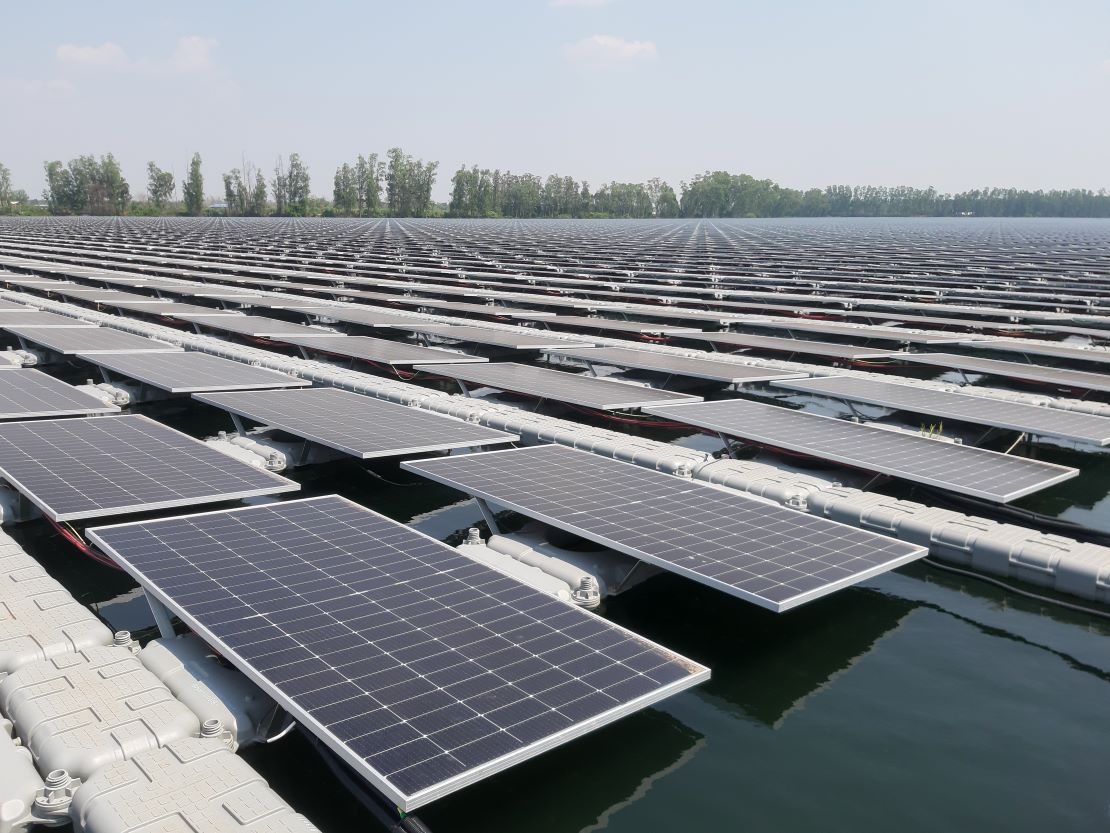
The combination of high voltage and water creates a high-risk profile, where the electrical safety and integrity of the cables are of primary importance.
Water ingress and component corrosion
The inverters and switch cabinets must be robust and comply with very high Ingress Protection (IP) classifications (minimum IP67).
- Cabling underwater: the cables running through the water must be resistant to continuous submersion, UV radiation, and mechanical wear from water movement. Conventional DC cables are unsuitable.
- Prevention: all connectors (especially the MC4s) must be of maritime quality and the soldered connections must be finished to be extremely watertight. A sealing failure inevitably leads to short circuits and corrosion. A Scope 12 inspection can check all of this.
Lightning Strike on an Open Surface
An installation on a large, open water surface often forms the highest point in the vicinity and is therefore highly susceptible to lightning strikes.
The lightning protection must be an integral part of the system and effectively divert the current through the anchoring or a specialized grounding system, without causing damage to the floating structure or the cables. The conductors must be corrosion-resistant.
The result: strict quality controls and certification of all electrical components for underwater use to minimize the risk of short circuits, fire, and operational failure is essential.
Floating Solar insurance: specialization is necessary
The uncertainty of water, such as the failure of anchoring to unforeseen ecological requirements and logistically complex damages, demands an insurance partner who truly understands these risks. Our expertise in global PV project insurance ensures that unique risks on and around the water are fully and correctly covered. We look forward to hearing from you! 😊
📧 Email: support@solarif.com
☎️ Phone: +31 (0)26 711 5050