



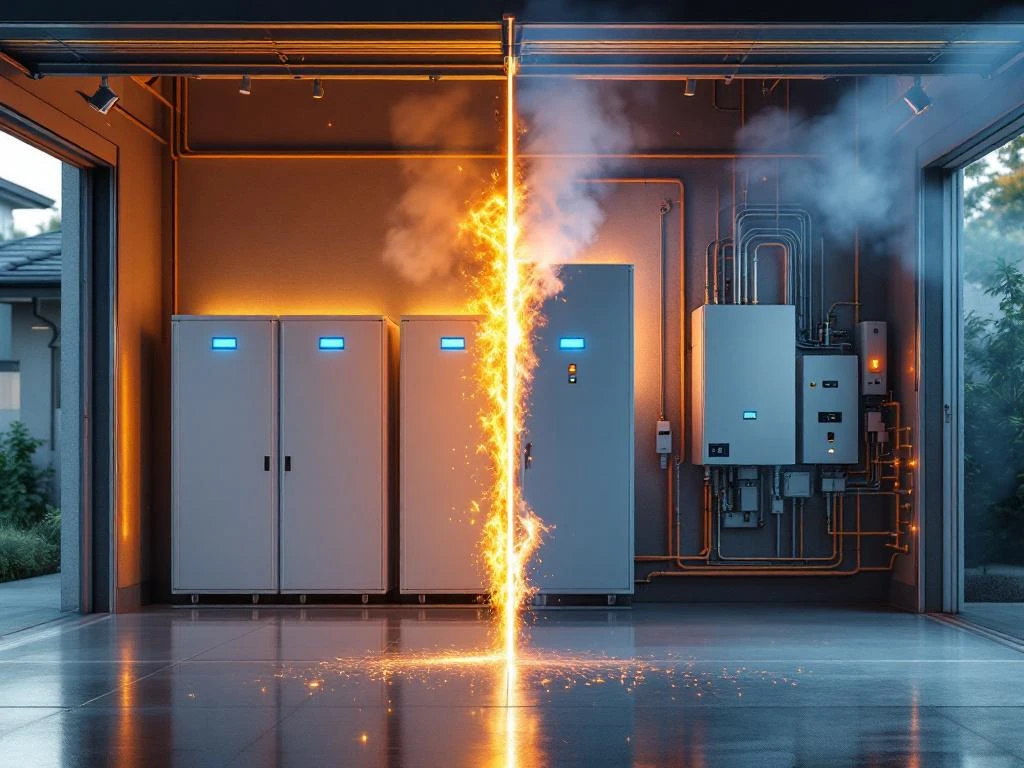
What are the fire risks of solar battery systems?
Solar battery systems present fire risks primarily through thermal runaway in lithium-ion cells, manufacturing defects, improper installation, and external damage. While these risks exist, they remain relatively low compared to other household fire hazards when proper safety measures are implemented. Understanding these risks helps you protect your commercial solar investment and maintain safe operations.
What actually causes solar batteries to catch fire?
Thermal runaway represents the primary fire hazard in solar battery systems, occurring when lithium-ion cells overheat and trigger a chain reaction of chemical breakdown. This process generates intense heat, toxic gases, and potentially flames that can spread to adjacent cells.
Manufacturing defects contribute significantly to battery fire risks. Faulty separators, contaminated materials, or poor quality control during production can create internal short circuits that lead to overheating. These defects may not manifest immediately but can develop over time as the battery undergoes charge and discharge cycles.
Improper installation creates multiple fire hazards through inadequate ventilation, incorrect wiring, or placement too close to flammable materials. Poor electrical connections generate heat and arcing, while insufficient spacing prevents proper heat dissipation. Professional installation by certified technicians familiar with battery management systems substantially reduces these installation-related risks.
External damage from physical impacts, water ingress, or extreme temperatures can compromise battery integrity and safety systems. Even minor damage to battery casings can allow moisture penetration, leading to corrosion and eventual failure of protective circuits designed to prevent dangerous conditions.
How dangerous are solar battery fires compared to other household risks?
Solar battery fires occur less frequently than common household fire causes like electrical faults, cooking accidents, or heating system malfunctions. However, battery fires present unique challenges, including toxic gas emissions and difficulty in extinguishing, making proper prevention particularly important.
Traditional household fire risks like faulty wiring or kitchen accidents typically involve familiar materials and established firefighting methods. Battery fires generate toxic gases including hydrogen fluoride and can reignite even after appearing extinguished, requiring specialised response protocols.
The intensity and duration of battery fires can exceed typical household fires due to the energy density of lithium-ion cells. Water can worsen battery fires due to electrical conductivity and the spreading of electrolytes, though it remains the most recommended method for cooling and de-escalating the situation when applied properly by trained professionals.
Commercial solar battery installations face additional considerations due to larger system sizes and higher energy storage capacity. The potential for more significant damage increases with system scale, making comprehensive inspections and proper insurance coverage particularly relevant for business applications.
What are the warning signs that your solar battery might be unsafe?
Visual indicators of battery problems include swelling, discolouration, or corrosion around terminals and connections. Any physical deformation of battery cases or mounting systems suggests internal pressure buildup or structural compromise requiring immediate professional attention.
Unusual sounds like hissing, popping, or crackling indicate potential internal failures or dangerous chemical reactions. These auditory warnings often precede more serious safety issues and should prompt immediate system shutdown and professional inspection.
Temperature changes represent critical warning signs, particularly batteries that feel unusually hot during normal operation or remain warm when not actively charging or discharging. Thermal monitoring systems can detect these temperature anomalies before they become visible or tactile.
Performance indicators include reduced capacity, slower charging rates, or frequent error messages from the battery management system. These operational changes often signal deteriorating internal components that could lead to safety issues if left unaddressed.
Environmental changes around the battery installation, such as unusual odours, moisture accumulation, or discolouration of nearby surfaces, can indicate electrolyte leakage or off-gassing that requires immediate professional evaluation.
How can you prevent solar battery fires from happening?
Professional installation by certified technicians ensures proper system design, adequate ventilation, and compliance with safety standards. Installers should have demonstrable experience with battery management systems and understand fire safety requirements for commercial applications.
Regular maintenance schedules help identify potential issues before they become safety hazards. Professional inspections should examine electrical connections, thermal management systems, and battery management software to ensure all protective measures function correctly.
Environmental considerations include maintaining appropriate operating temperatures, protecting systems from moisture ingress, and ensuring adequate clearance from combustible materials. Battery installations should include fire detection systems and appropriate extinguishing equipment designed for electrical fires.
Quality equipment selection involves choosing batteries and components from reputable manufacturers with proper certifications and proven safety records. Battery management systems should include multiple layers of protection against overcharging, overheating, and other dangerous conditions.
Installing fire detection and suitable extinguishing systems provides early warning and response capability. Systems should be placed at safe distances from people, animals, and buildings, with concrete partitions used when space limitations prevent adequate separation distances.
What should you do if your solar battery system shows signs of problems?
Immediate response to minor concerns involves documenting the issue, checking system monitoring displays for error codes, and contacting qualified technicians for professional assessment. Avoid attempting repairs on battery systems without proper training and equipment.
For moderate safety concerns like unusual temperatures, sounds, or performance changes, safely shut down the system using proper procedures and isolate it from electrical connections where possible. Ensure adequate ventilation around the battery area and restrict access until professional evaluation occurs.
Emergency situations involving visible damage, strong odours, or signs of thermal runaway require immediate evacuation of the area and contact with emergency services. Do not attempt to fight battery fires with standard firefighting methods without proper training and equipment.
Professional consultation should occur whenever you observe warning signs or have concerns about system safety. Qualified technicians can perform diagnostic tests, thermal imaging, and comprehensive safety assessments to determine appropriate corrective actions.
Documentation of all issues, responses, and professional recommendations helps maintain safety records and supports insurance claims if damage occurs. This information also assists technicians in identifying patterns or recurring problems that might indicate systemic issues.
How Solarif helps with solar battery safety inspections
We provide specialised inspection services for commercial solar battery installations through detailed safety assessments and tailored insurance coverage. Our approach combines technical expertise with a deep understanding of insurer requirements and industry best practices.
Our Risk Management services include:
- Scope 10 inspections by certified inspectors who thoroughly examine energy storage systems and provide detailed safety reports
- Scope 8 inspections for comprehensive solar installation assessments
- Scope 12 inspections covering operational solar systems
- Factory inspections to verify manufacturing quality and compliance
- Batch inspections for quality assurance across multiple installations
- Energy Storage All Risks Insurance covering material damage, production loss, and business interruption from fire, theft, vandalism, and mechanical defects
As an insurance broker specialising in renewable energy projects, we work with A-rated insurers who understand battery fire risks and may offer lower premiums for installations with comprehensive thermal runaway prevention systems. Our technical knowledge helps ensure your battery installation meets both safety requirements and insurer expectations.
Protect your solar battery investment with professional inspections. Contact our renewable energy insurance specialists for a comprehensive assessment and a tailored coverage quote that addresses the specific fire safety challenges of your energy storage system.
Insurance and inspection needs for your BESS?
Contact us today if you want to know more about the possibilities in BESS insurance and Scope inspections.
📧 Email: support@solarif.com
☎️ Phone: +31 (0)26 711 5050