



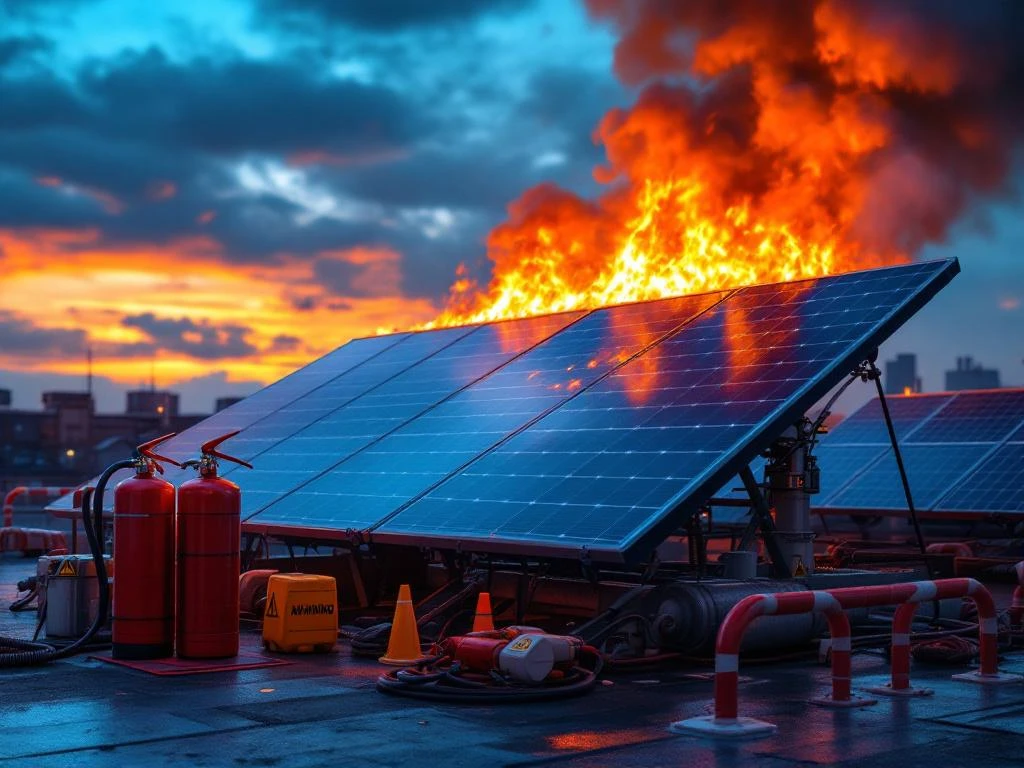
What are the fire safety requirements for rooftop solar?
Rooftop solar installations must comply with multiple fire safety requirements to protect property, occupants, and emergency responders. These requirements include proper spacing around panels, electrical safety measures, emergency access pathways, and regular maintenance protocols. Understanding these requirements helps ensure your commercial solar project meets all safety standards and insurance conditions.
What fire safety codes apply to rooftop solar installations?
Rooftop solar installations must comply with the National Electrical Code (NEC), International Fire Code (IFC), and local building codes. The NEC establishes electrical safety standards, while the IFC sets requirements for emergency access and fire prevention. Local authorities may impose additional requirements based on regional conditions and building types.
The NEC requires specific electrical components such as rapid shutdown devices and arc fault circuit interrupters. The IFC mandates clear pathways for firefighter access and equipment placement. Local building codes often address structural requirements and permitting processes. These codes work together to create comprehensive safety standards.
Some municipalities require additional safety measures for certain roof types. Buildings with flammable insulation materials such as EPS, PUR, or PIR may need enhanced fire prevention systems. Solar panel risks increase significantly on roofs with combustible materials, making code compliance even more important.
How much space must you leave around solar panels for fire department access?
Fire codes typically require 3-foot pathways along roof edges and 6-foot pathways through solar arrays. These dimensions allow firefighters to move safely across rooftops and position ventilation equipment. The exact requirements vary by local jurisdiction and building height.
Pathways must remain clear of panels, conduits, and other equipment. The space provides room for firefighters to operate hoses, ladders, and ventilation fans. Buildings over certain heights may require wider pathways or additional access points.
Some codes require setbacks from roof edges to prevent panels from interfering with ladder placement. Corner areas often need larger clear zones for equipment staging. These requirements can significantly impact system design and energy production capacity.
What electrical safety measures prevent fires in solar systems?
Rapid shutdown devices automatically reduce DC voltage to safe levels during emergencies. Arc fault circuit interrupters detect dangerous electrical arcs and shut down affected circuits. Proper grounding systems prevent electrical faults from causing fires or electrocution hazards.
Modern solar installations include multiple layers of electrical protection. DC optimizers or microinverters can isolate individual panels during faults. Proper wire management prevents damage from weather and thermal expansion. All connections must use approved methods and materials.
Regular electrical inspections help identify potential problems before they cause fires. Loose connections generate heat and can ignite surrounding materials. Solar panel risks from electrical faults increase over time without proper maintenance and monitoring systems.
How do firefighters handle emergencies on buildings with solar panels?
Firefighters follow specific protocols when responding to buildings with solar installations. They locate and activate rapid shutdown systems to reduce electrical hazards. Clear labeling helps responders identify system components and shutdown procedures quickly.
Emergency response procedures include identifying AC and DC disconnect switches. Firefighters avoid cutting through solar panels or DC wiring when possible. Water application requires special consideration due to electrical conductivity concerns.
Proper system labeling provides important information about voltage levels and shutdown locations. Placards must be visible and weather-resistant. Some systems include remote shutdown capabilities that allow responders to deactivate panels from ground level.
What maintenance prevents fire hazards in rooftop solar systems?
Regular visual inspections should check for loose connections, damaged wiring, and debris accumulation. Monthly monitoring of system performance can identify electrical problems early. Annual professional inspections ensure all safety systems function properly.
Cleaning procedures must avoid damaging panels or electrical components. Debris removal prevents hot spots that can cause fires. Tightening connections prevents arcing and overheating. Proper maintenance schedules depend on environmental conditions and system age.
Monitoring systems can detect performance drops that indicate potential safety issues. Thermal imaging inspections reveal hot spots and electrical problems. Documentation of all maintenance activities helps demonstrate compliance with safety requirements and insurance conditions.
How Solarif helps with rooftop solar fire safety compliance
We provide comprehensive quality inspection services that ensure your commercial solar installation meets all fire safety requirements. Our certified inspectors conduct thorough Scope 12 inspections, which insurers require for commercial solar projects. These inspections verify that your installation complies with electrical codes, fire safety standards, and manufacturer specifications.
Our fire safety compliance services include:
- Pre-installation assessments for different roof types and building conditions
- Scope 12 safety inspections to meet insurer requirements
- Electrical system verification and testing
- Fire safety equipment validation and documentation
- Ongoing maintenance planning and inspection schedules
As an insurance broker specialising in renewable energy projects, we understand exactly what insurers require for coverage approval. We help you navigate complex safety requirements while ensuring your project remains commercially viable through our professional inspection services. Contact our experts today to discuss your fire safety compliance needs and secure appropriate insurance coverage for your solar installation.
Insurance and inspection needs for your BESS?
Contact us today if you want to know more about the possibilities in BESS insurance and Scope inspections.
📧 Email: support@solarif.com
☎️ Phone: +31 (0)26 711 5050