


What are the maintenance challenges of floating solar?
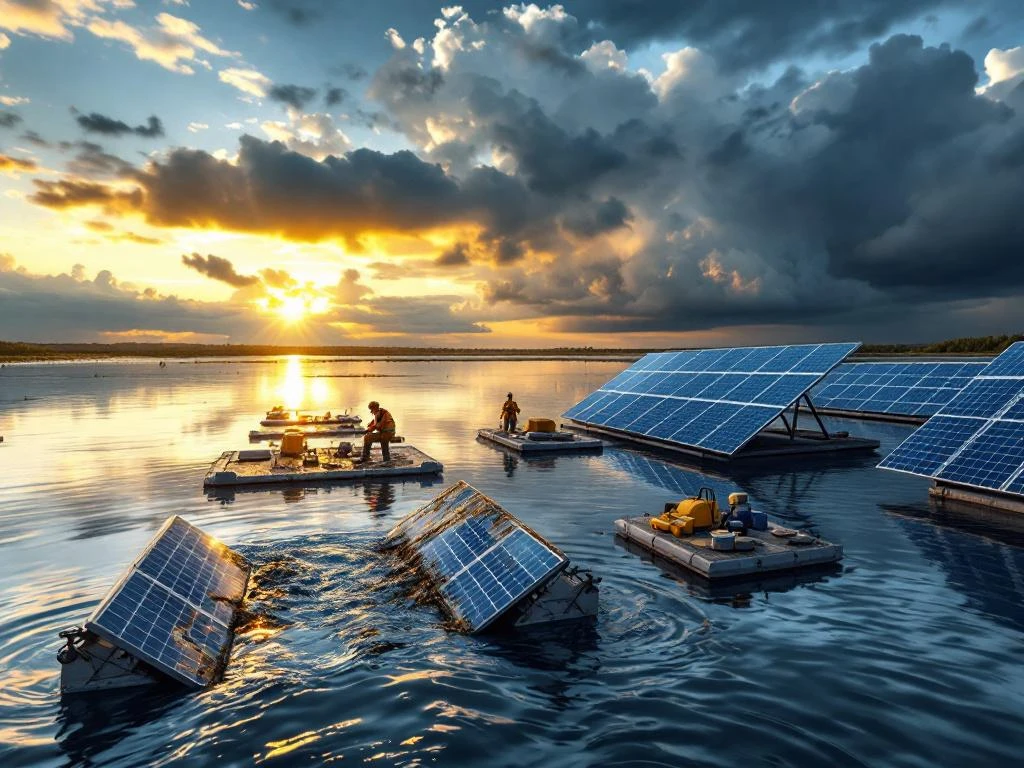
Floating solar maintenance presents unique challenges compared to traditional ground-mounted systems. Water-based installations require specialized equipment, marine-grade tools, and careful navigation of weather conditions that do not affect land-based systems. These installations need more frequent cleaning due to water splash, algae growth, and increased bird activity, while access requires boats or floating platforms rather than simple ground access.
What makes floating solar maintenance different from land-based systems?
Floating solar systems face environmental factors that do not exist with ground installations. Water exposure creates corrosion risks, while wave action and water level fluctuations put constant stress on mounting systems and electrical connections. The marine environment accelerates wear on components, requiring materials specifically designed for water exposure.
Access represents the biggest operational difference. You cannot simply walk to a problem panel or drive maintenance equipment to the installation site. Every maintenance visit requires watercraft, specialized floating platforms, or permanent walkway systems built into the installation design.
Electrical safety becomes more complex on water. Standard grounding techniques do not work the same way, and water conductivity creates additional shock hazards. Maintenance teams need marine electrical safety training beyond standard solar panel risks, and all electrical work requires waterproof connections and marine-grade components.
How do you access floating solar panels for routine maintenance?
Most floating solar maintenance relies on small boats or specialized maintenance vessels designed for shallow-water navigation. Floating walkway systems provide stable platforms for technicians to move safely between panel sections. Some installations include permanent walkways built into the array structure, while others use temporary floating platforms deployed during maintenance visits.
Safety protocols for water-based work require personal flotation devices, marine radio communication, and weather monitoring systems. Teams typically work in pairs, with one person maintaining boat position while the other performs maintenance tasks. Emergency procedures must account for water rescue scenarios that do not exist with ground installations.
Access planning becomes weather-dependent in ways that ground systems are not. Water conditions, wave height, and water temperature all affect maintenance scheduling. You need backup dates for maintenance activities, since water conditions can change quickly and make work unsafe.
What are the biggest weather-related risks for floating solar systems?
Storms and severe weather create the most significant threat for floating solar installations. Wave action from sustained storms can damage anchoring systems, stress electrical connections, and cause panel-to-panel impacts. Storm conditions that might only require post-storm inspections for ground systems can cause immediate structural damage to floating arrays.
Ice formation presents unique challenges in colder climates. Unlike ground systems, where snow and ice simply add weight, floating systems must handle ice expansion that can damage flotation components and create uneven stress distribution across the array.
Water level fluctuations affect system performance and maintenance access. Seasonal water changes can alter the angle of panels, affect electrical connections designed for specific positions, and make maintenance platforms unusable. Extreme water level changes may require system adjustments that ground installations never need, making thorough inspections essential for floating installations.
Why do floating solar systems need more frequent cleaning than ground installations?
Water environments create multiple contamination sources that do not affect ground-mounted systems. Algae growth on panel surfaces reduces efficiency and requires specialized cleaning solutions designed for aquatic environments. Water splash carries minerals and organic matter onto panels, creating deposits that build up faster than typical dust accumulation on land.
Bird activity increases significantly around water bodies. Floating solar installations often see higher bird populations using the structures as resting areas, leading to more frequent bird-dropping accumulation. The combination of moisture and organic waste creates stubborn contamination that is harder to remove than dry debris.
Humidity levels around water installations keep panels damp longer, allowing dirt and organic matter to adhere more strongly to panel surfaces. This moisture also supports biological growth that can etch panel surfaces if not removed regularly. The marine environment requires cleaning schedules that may be twice as frequent as those for comparable ground installations.
What specialized equipment do you need for floating solar maintenance?
Marine-grade tools represent the foundation of floating solar maintenance equipment. All electrical testing equipment must be waterproof or water-resistant, while hand tools need corrosion-resistant coatings designed for marine environments. Standard maintenance tools used on ground installations will quickly deteriorate in water-based conditions.
Floating platforms or maintenance vessels provide stable work surfaces that boats alone cannot offer. These specialized platforms include tool storage, safety equipment, and sometimes small cranes for panel replacement. The platform must be stable enough for precision electrical work while remaining mobile enough to access all array sections.
Safety equipment goes beyond standard solar maintenance gear to include marine safety requirements. Personal flotation devices, waterproof communication devices, and emergency signaling equipment become mandatory. Water rescue equipment and marine first aid supplies must be immediately available during all maintenance activities.
How do water conditions affect floating solar system performance and maintenance?
Water temperature directly affects panel cooling and electrical performance. Cooler water temperatures can improve panel efficiency compared to ground installations, but temperature variations throughout the day create different expansion and contraction cycles that affect mounting systems and electrical connections.
Water chemistry plays a role in component longevity and maintenance requirements. Saltwater installations face aggressive corrosion that requires more frequent inspection and component replacement. Even freshwater installations deal with mineral content that can affect electrical components and create cleaning challenges.
Seasonal water changes affect both performance and maintenance scheduling. Spring algae blooms may require additional cleaning cycles, while winter conditions might limit maintenance access entirely. Water clarity affects underwater component inspection, and seasonal debris such as leaves or aquatic vegetation can accumulate around flotation systems.
How Solarif helps with floating solar maintenance challenges
We understand that floating solar installations require specialized inspection expertise that goes beyond traditional ground-mounted systems. Our team provides targeted inspection services for the unique challenges of water-based solar installations through services designed for marine environments.
- Specialized drone inspections using thermal and visual imaging to identify panel damage, efficiency issues, and contamination without requiring water access
- Factory and batch inspections for marine-grade components to ensure they meet the demands of water-based installations
- Insurance solutions tailored for floating solar systems, including coverage for marine-specific risks and maintenance requirements
- Scios Scope 12 inspections adapted for floating installations, ensuring electrical safety standards are met in marine environments
Our experience with water-based renewable energy projects means we understand the insurance requirements and inspection needs that traditional solar inspectors might miss. We work with insurers who recognize the unique maintenance needs of floating systems and can provide coverage that accounts for marine-specific operational requirements.
Ready to protect your floating solar investment? Contact our renewable energy insurance specialists at Solarif to discuss comprehensive Risk Management solutions designed specifically for water-based solar installations.
Insurance and inspection needs for your BESS?
Contact us today if you want to know more about the possibilities in BESS insurance and Scope inspections.
📧 Email: support@solarif.com
☎️ Phone: +31 (0)26 711 5050