


What are the soil erosion risks for solar farms?
Soil erosion poses significant risks to solar farms through altered water flow patterns, reduced vegetation cover, and concentrated runoff areas. Solar panel installations change natural drainage by creating drip edges and flow channels that can lead to infrastructure damage, reduced panel efficiency, and regulatory compliance issues. Understanding these solar panel risks helps developers implement proper erosion control measures during construction and operation.
What causes soil erosion on solar farm sites?
Solar panel installations fundamentally alter natural water flow patterns by creating large impervious surfaces that concentrate rainfall in specific areas. When panels are mounted above ground, they eliminate vegetation cover beneath and redirect water flow, creating concentrated runoff that overwhelms natural drainage patterns.
Construction activities contribute significantly to erosion risk through grading operations that disturb existing soil structure and remove stabilizing vegetation. Heavy machinery compacts soil, reducing its ability to absorb water naturally. The positioning of panels creates shaded areas where vegetation struggles to establish, leaving soil exposed to erosive forces.
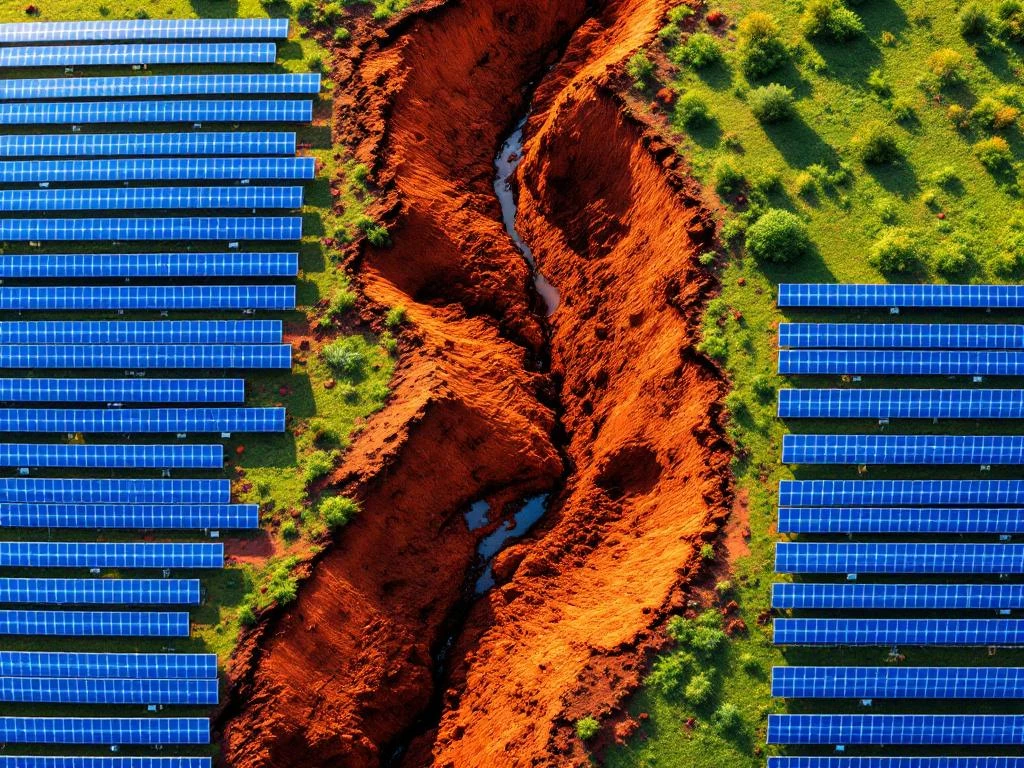
Panel mounting systems and access roads further disrupt natural topography. These changes create new flow paths that channel water into areas not designed to handle concentrated runoff, leading to gully formation and soil displacement that can affect both the solar installation and surrounding properties.
How do solar panels change water runoff patterns?
Solar panels act as large collection surfaces that gather rainfall and concentrate it along panel edges, creating drip lines where water cascades in concentrated streams. This edge-drip effect generates flow volumes that exceed what natural vegetation and soil can handle, particularly during heavy rainfall events.
The spacing between panel rows creates channels that direct water flow in patterns completely different from natural drainage. Installation angles influence how quickly water moves across panel surfaces and where it concentrates upon reaching the ground. Steeper angles accelerate water velocity, increasing erosive potential.
These altered flow patterns create preferential pathways where water repeatedly follows the same routes, gradually carving deeper channels. The cumulative effect transforms gentle, dispersed natural drainage into concentrated streams that carry away topsoil and create erosion problems that compound over time.
What are the long-term consequences of unchecked erosion?
Unchecked erosion affects solar farm performance through sediment buildup on panels and access roads, reducing energy generation efficiency and increasing maintenance costs. Soil displacement can undermine panel mounting foundations, creating structural instability that requires expensive repairs or reinstallation.
Infrastructure damage extends beyond the immediate installation area. Erosion can affect neighboring properties through increased sediment runoff, potentially creating liability issues and regulatory compliance problems. Local ecosystems suffer when topsoil loss degrades surrounding agricultural land or natural habitats.
Regulatory agencies may require remediation measures if erosion violates environmental protection standards. These compliance issues can result in operational restrictions, fines, or requirements for expensive corrective actions that significantly impact project economics and long-term viability.
Which soil types face the highest erosion risks?
Clay soils present high erosion risks because they become impermeable when compacted during construction, creating surface runoff rather than absorption. When dry, clay soils crack and become vulnerable to water infiltration that can cause rapid erosion once saturation occurs.
Sandy soils lack cohesion and erode easily under concentrated water flow from panel drip edges. These soils cannot maintain stable channels, leading to ongoing erosion problems that worsen with each rainfall event. Slopes with sandy soils require immediate protective measures.
Sites with shallow topsoil over bedrock or hardpan layers face particular challenges because limited soil depth provides little buffer against erosive forces. Once the protective topsoil layer erodes away, restoration becomes extremely difficult and expensive, making prevention the only viable strategy.
How can you prevent erosion during solar farm construction?
Minimize soil disturbance by limiting grading to essential areas and preserving existing vegetation wherever possible. Implement temporary erosion controls such as silt fences, sediment basins, and erosion blankets before construction begins, not as an afterthought when problems develop.
Plan construction timing to avoid wet seasons when soil is most vulnerable to erosion. Establish temporary seeding on disturbed areas that will not be built upon immediately. Use proper grading techniques that maintain natural drainage patterns where possible and create stable slopes that resist erosion.
Install permanent erosion control measures progressively as construction advances rather than waiting until project completion. This approach prevents small erosion problems from becoming major issues that require extensive remediation and delay project completion.
What vegetation strategies work best under solar panels?
Native grasses and low-growing perennial plants thrive in the partial shade conditions under solar panels while providing excellent erosion protection. These plants adapt to reduced sunlight and typically require less maintenance than non-native species once established.
Select drought-tolerant species that can handle the altered moisture patterns created by panel coverage. Some areas under panels receive less rainfall, while drip edges create wetter zones, requiring plant selections that can adapt to these varying conditions within the same installation.
Ground cover vegetation should be low-growing to avoid shading panels while providing continuous root systems that stabilize soil. Regular maintenance involves managing growth height rather than frequent replanting, making native species more cost-effective for long-term erosion control.
How Solarif helps with solar farm erosion management
We provide erosion-related inspections and assessments for commercial solar projects through our specialized inspection and risk management services. Our approach identifies potential erosion issues during our inspection processes, helping you understand site conditions related to erosion concerns.
Our services include:
- Site inspections using drone technology to identify erosion-prone areas and drainage patterns
- Factory and batch inspections to ensure equipment quality that affects proper installation
- Insurance inspection services that document site conditions for coverage purposes
- Specialist connections through our matchmaker services to link you with qualified erosion control contractors
Our Scope 12 inspections, required by insurers for commercial solar installations, include documentation of site conditions and erosion-related factors. This inspection-focused approach helps document your installation conditions while ensuring proper assessment for insurance coverage.
Plan your inspection assessment today to document your solar installation conditions related to potential soil erosion concerns.
Insurance and inspection needs for your BESS?
Contact us today if you want to know more about the possibilities in BESS insurance and Scope inspections.
📧 Email: support@solarif.com
☎️ Phone: +31 (0)26 711 5050