



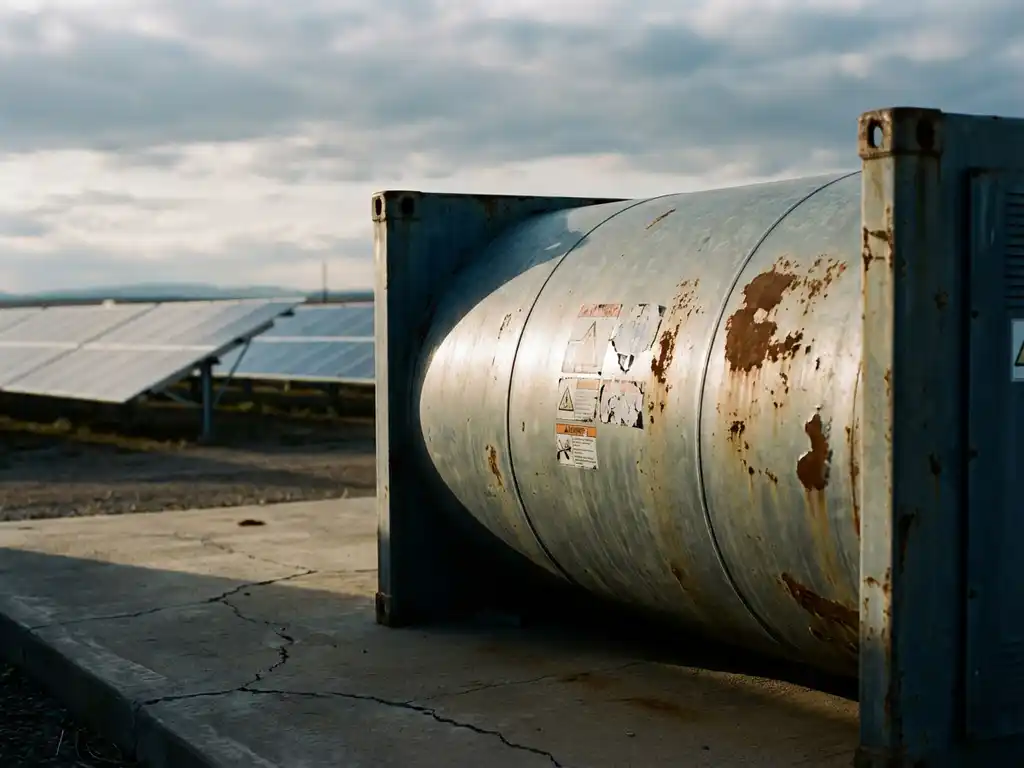
What causes BESS battery degradation over time?
Battery Energy Storage Systems (BESS) play a crucial role in stabilizing renewable energy projects, but like all battery technologies, they degrade over time. This gradual decline in performance affects capacity, efficiency, and overall system reliability, making it a critical concern for project developers and investors.
Understanding BESS battery degradation is essential for accurate financial modeling, maintenance planning, and insurance considerations. As these systems become increasingly important for grid stability and renewable energy integration, managing degradation effectively can mean the difference between a profitable project and costly operational challenges.
What is BESS battery degradation, and how does it affect energy storage systems?
BESS battery degradation is the gradual loss of battery capacity and performance over time, typically measured as a percentage decline in energy storage capability compared with the original specifications. Most lithium-ion batteries in BESS installations experience 1–3% capacity loss annually under normal operating conditions.
This degradation manifests in several ways that directly affect system performance. The most noticeable effect is reduced energy capacity, meaning the battery can store less energy than when it was new. Additionally, degraded batteries often show increased internal resistance, leading to higher energy losses during charging and discharging cycles.
The financial implications are significant for energy storage projects. Reduced capacity means lower revenue potential from energy arbitrage, peak shaving, or grid services. Insurance providers closely monitor degradation rates because they affect project viability and claims risk. Systems that degrade faster than expected may require earlier replacement, reducing the overall return on investment.
What are the main causes of battery degradation in BESS installations?
The primary causes of BESS battery degradation include electrochemical reactions within battery cells, thermal stress, mechanical wear from repeated charging cycles, and exposure to environmental factors. These mechanisms act individually and in combination to gradually reduce battery performance.
Electrochemical degradation occurs as lithium-ion batteries undergo chemical changes during normal operation. The formation of solid electrolyte interphase (SEI) layers on battery electrodes consumes active lithium, reducing available capacity. Additionally, electrode materials can crack or degrade due to repeated expansion and contraction during charge cycles.
Thermal stress accelerates chemical reactions that damage battery components. High temperatures increase the rate of unwanted side reactions, while temperature fluctuations cause mechanical stress on battery materials. Deep discharge cycles and high charge/discharge rates also contribute to faster degradation by stressing the battery’s internal chemistry.
Environmental factors such as humidity, vibration, and electrical stress from grid fluctuations add further degradation mechanisms. Poor battery management system performance can exacerbate these issues by failing to maintain optimal operating conditions.
How do temperature and environmental conditions accelerate BESS battery degradation?
Temperature is the most critical environmental factor affecting BESS battery degradation, with high temperatures roughly doubling degradation rates for every 10°C increase above the optimal operating range. Most lithium-ion batteries perform best between 15°C and 25°C, with aging processes accelerating significantly above 30°C.
Elevated temperatures accelerate electrochemical side reactions that consume active battery materials. These reactions produce gas and heat, creating a feedback loop that can lead to thermal runaway in extreme cases. High temperatures also increase electrolyte decomposition and electrode corrosion, permanently reducing battery capacity.
Cold temperatures present different challenges, reducing battery efficiency and available capacity. While cold conditions may slow some degradation mechanisms, repeated cycling at low temperatures can cause lithium plating, which permanently damages battery cells and creates safety risks.
Humidity and moisture exposure can corrode electrical connections and penetrate battery enclosures, leading to short circuits and accelerated degradation. Vibration from nearby equipment or environmental sources can cause mechanical stress on battery connections and internal components. Proper thermal management systems and environmental controls are essential for minimizing these degradation factors in BESS installations.
What’s the difference between calendar aging and cycle aging in BESS batteries?
Calendar aging refers to battery degradation that occurs simply due to time passing, regardless of usage, while cycle aging results from repeated charge and discharge operations. Both mechanisms contribute to overall BESS battery degradation, but through different pathways and at different rates.
Calendar aging happens continuously from the moment a battery is manufactured, driven by slow electrochemical reactions within the battery cells. These reactions gradually consume active materials and form resistive layers on electrodes, reducing capacity even when the battery sits unused. Calendar aging is influenced primarily by temperature and state of charge, with higher temperatures and higher states of charge accelerating the process.
Cycle aging occurs each time a battery charges and discharges, causing mechanical stress on electrode materials and electrolyte consumption. The depth of discharge, charge rate, and operating temperature during cycling significantly affect cycle-aging rates. Shallow cycles typically cause less degradation than deep cycles, while fast charging can accelerate aging compared with slower charging rates.
In practical BESS operations, both aging mechanisms act simultaneously. A battery used for daily peak shaving will experience cycle aging from regular use and calendar aging from time-based degradation. Understanding this distinction helps operators optimize charging strategies and maintenance schedules to minimize total degradation.
How do charging and discharging patterns affect BESS battery lifespan?
Charging and discharging patterns significantly affect BESS battery lifespan, with depth of discharge, charge rates, and cycling frequency being the most critical factors. Limiting discharge depth to 80% of capacity and avoiding fast charging can extend battery life by 50% or more compared with aggressive cycling patterns.
Depth of discharge has a profound effect on cycle life. Shallow cycles that use only 20–30% of battery capacity can provide 5,000–10,000 cycles, while deep cycles using 80–90% capacity may deliver only 1,000–3,000 cycles. This relationship exists because deeper discharges cause more mechanical stress on electrode materials and consume more electrolyte.
Charge and discharge rates also influence degradation. High C-rates (fast charging/discharging) generate heat and cause uneven current distribution within battery cells, accelerating aging processes. Maintaining charge rates below 1C and discharge rates below 2C typically provides an optimal balance between performance and longevity.
The timing and frequency of cycles matter as well. Continuous cycling provides less rest time for chemical equilibration within cells than intermittent use. Battery management systems can optimize these patterns by implementing smart charging algorithms that balance immediate performance needs with long-term degradation minimization.
Can BESS battery degradation be slowed down or prevented?
While BESS battery degradation cannot be completely prevented, it can be significantly slowed through proper thermal management, optimized charging strategies, and advanced battery management systems. These measures can extend battery life by 30–50% compared with unmanaged systems.
Thermal management is the most effective degradation-mitigation strategy. Maintaining battery temperatures within optimal ranges through active cooling and heating systems dramatically reduces aging rates. Advanced thermal management includes not only temperature control but also temperature uniformity across battery modules to prevent localized stress.
Battery management system optimization plays a crucial role in mitigating degradation. Modern BMSs can implement cell balancing, state-of-charge optimization, and predictive maintenance algorithms that minimize stress on individual cells. These systems can also adjust charging profiles based on battery age and condition to maintain optimal performance throughout the system’s life.
Operational strategies such as avoiding extreme states of charge, implementing partial cycling rather than full cycles, and scheduling maintenance during low-stress periods all contribute to reducing degradation. Regular monitoring and predictive analytics help identify degradation trends early, allowing for proactive interventions before significant capacity loss occurs.
How Solarif helps with BESS battery degradation management
As an insurance broker specializing in renewable energy projects, we understand that battery degradation represents one of the most significant risks in BESS investments. Our comprehensive approach helps clients manage these risks through specialized insurance products and risk management services.
Our services include:
- Performance guarantee insurance that covers unexpected degradation beyond manufacturer warranties
- Comprehensive risk assessments for BESS installations, including thermal management evaluation
- Quality inspections to ensure proper installation and commissioning of battery management systems
- Ongoing monitoring support to track degradation trends and optimize insurance coverage
We work exclusively with commercial and utility-scale renewable energy projects, connecting investors and developers with A-rated insurers who understand BESS technology risks. Our expertise in battery degradation mechanisms helps ensure your energy storage investment remains protected throughout its operational life.
Contact our renewable energy insurance experts today to discuss comprehensive coverage for your BESS project and protect against unexpected degradation risks.
Insurance and inspection needs for your BESS?
Contact us today if you want to know more about the possibilities in BESS insurance and Scope inspections.
📧 Email: support@solarif.com
☎️ Phone: +31 (0)26 711 5050