


What causes solar inverter malfunctions?
Solar inverters are critical components that convert the direct current (DC) electricity generated by solar panels into the alternating current (AC) electricity used by homes and businesses. When these sophisticated devices malfunction, they can bring entire solar systems to a halt, causing significant production losses and financial impacts. Understanding the root causes of solar inverter malfunctions is essential for project developers, EPC contractors, and facility owners who depend on reliable solar energy generation.
Solar inverter problems can stem from various factors, including environmental stresses, electrical issues, component degradation, and installation errors. Early identification of these potential failure modes enables proactive risk management strategies and helps prevent costly downtime that can affect project yields and investor confidence.
What are the most common solar inverter malfunctions?
The most common solar inverter malfunctions include overheating, DC isolation faults, capacitor degradation, grid-connection issues, and software errors. These problems typically account for the majority of inverter-related system downtime in commercial solar installations.
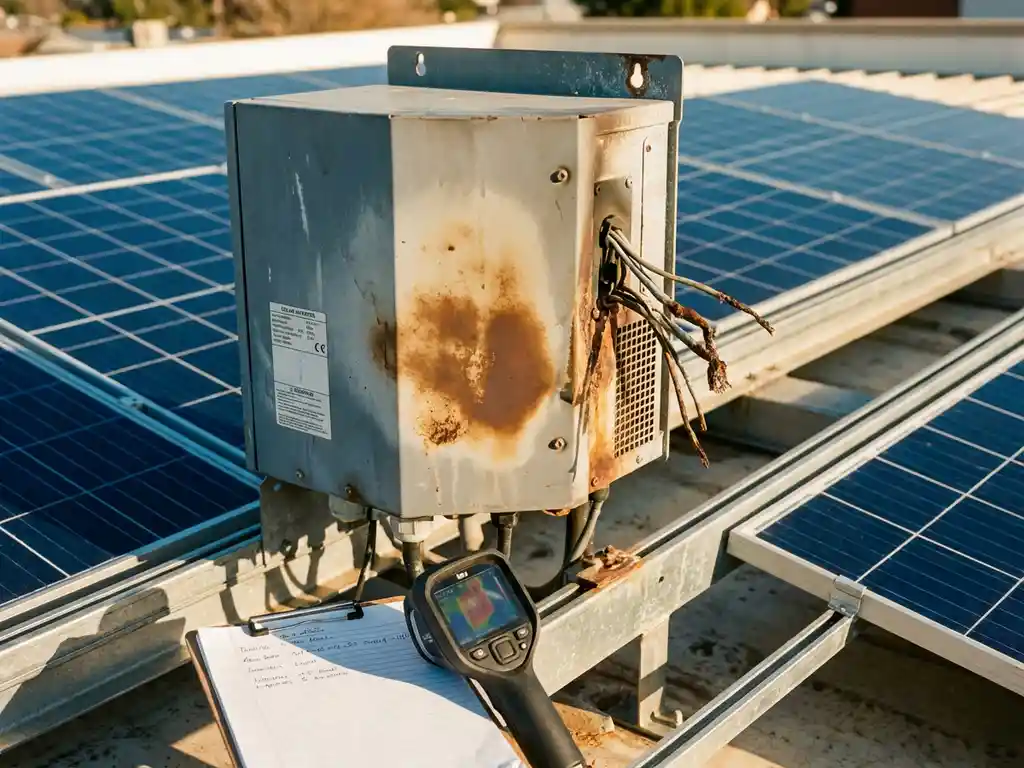
Overheating is one of the primary failure modes, often caused by inadequate ventilation, dust accumulation on cooling components, or extreme ambient temperatures. When inverters operate above their designed temperature thresholds, internal components begin to degrade rapidly, leading to reduced efficiency and eventual failure.
DC isolation faults occur when the electrical isolation between the DC and AC sides of the inverter becomes compromised. This can result from moisture ingress, insulation breakdown, or component aging. These faults trigger safety shutdowns to prevent electrical hazards, but they render the system inoperable until repairs are completed.
Capacitor failures are particularly common in older inverter designs, as these components have limited lifespans and are sensitive to temperature fluctuations and voltage stress. Failed capacitors can cause power-quality issues, reduced efficiency, or complete system shutdown.
Why do solar inverters overheat and fail?
Solar inverters overheat due to inadequate cooling systems, dust accumulation that blocks airflow, high ambient temperatures, and poor installation practices that restrict ventilation. Overheating accelerates component degradation and triggers thermal-protection shutdowns.
Poor installation site selection contributes significantly to overheating issues. Inverters installed in direct sunlight, enclosed spaces without proper ventilation, or areas with limited airflow experience higher operating temperatures. The power electronics within inverters generate substantial heat during operation, and this heat must be effectively dissipated to maintain reliable performance.
Dust and debris accumulation on heat sinks, fans, and air intake filters creates thermal barriers that prevent effective cooling. In dusty environments or locations with high particulate matter, regular cleaning becomes essential to maintain proper thermal management.
Component aging also affects thermal performance. As cooling fans wear out or thermal interface materials degrade over time, the inverter’s ability to manage heat diminishes, creating a cycle in which higher temperatures accelerate further component degradation.
How do electrical surges damage solar inverters?
Electrical surges damage solar inverters by overwhelming protective circuits, degrading sensitive semiconductor components, and causing immediate or latent failures in power electronics. Lightning strikes, grid disturbances, and switching events are common sources of damaging voltage spikes.
Lightning represents the most severe surge threat, capable of inducing voltages thousands of times higher than normal operating levels. Even indirect lightning strikes can couple energy into solar systems through electromagnetic induction, potentially damaging multiple inverters simultaneously.
Grid-side surges occur during utility switching operations, fault conditions, or when large loads are connected or disconnected. These events can send voltage spikes back through the electrical system, affecting connected inverters if adequate surge protection is not in place.
Surge damage often manifests as immediate failure of input or output stages, but it can also cause latent damage that leads to premature failure weeks or months later. This delayed failure mode makes surge-related damage particularly problematic for system reliability and warranty claims.
What causes DC isolation faults in solar systems?
DC isolation faults in solar systems are caused by moisture ingress, insulation breakdown, ground faults, and degraded wiring connections that compromise the electrical separation between DC and AC circuits. These faults trigger safety shutdowns to prevent electrical hazards.
Moisture infiltration into electrical enclosures creates conductive paths that can bridge isolation barriers. This commonly occurs through damaged cable glands, degraded seals, or inadequate weatherproofing during installation. Once moisture penetrates the system, it can cause corrosion and create permanent conductive paths.
Insulation breakdown occurs naturally over time due to thermal cycling, UV exposure, and electrical stress. Cable insulation, particularly in harsh environmental conditions, gradually loses its dielectric properties, eventually allowing current leakage that triggers isolation monitoring systems.
Ground faults represent a specific type of isolation fault in which current flows through unintended paths to ground. These can result from damaged cables, water ingress, or degraded panel-to-frame insulation, and they pose both safety risks and system performance issues.
How long do solar inverters typically last before failing?
Solar inverters typically last 10–15 years before requiring major repairs or replacement, though this varies significantly based on inverter type, environmental conditions, maintenance practices, and installation quality. String inverters generally have shorter lifespans than central inverters due to higher component stress.
Environmental factors play a crucial role in inverter longevity. Systems installed in moderate climates with proper ventilation and regular maintenance often exceed their expected lifespan, while those in extreme heat, high humidity, or corrosive environments may require replacement sooner.
The quality of installation significantly impacts inverter lifespan. Properly installed systems with adequate clearances, appropriate cable management, and correct grounding typically experience fewer failures and longer operational life. Conversely, poor installation practices can lead to premature failures and reduced system reliability.
Maintenance frequency also affects longevity. Regular cleaning, inspection, and preventive maintenance can extend inverter life by identifying and addressing issues before they cause major failures. Systems with comprehensive maintenance programs often achieve lifespans at the upper end of the expected range.
How can you prevent solar inverter malfunctions?
Solar inverter malfunctions can be prevented through proper installation practices, regular maintenance schedules, environmental monitoring, surge protection systems, and quality component selection. Proactive maintenance and monitoring significantly reduce unexpected failures and extend equipment life.
Installation quality forms the foundation of reliable inverter operation. This includes selecting appropriate mounting locations with adequate ventilation, proper cable management to prevent stress and moisture ingress, and correct electrical connections. Installing surge protection devices and ensuring proper grounding provide essential protection against electrical disturbances.
Regular maintenance programs should include cleaning heat sinks and air filters, inspection of electrical connections, monitoring of performance parameters, and testing of safety systems. These activities help identify potential issues before they cause system failures.
Environmental monitoring systems can provide early warning of conditions that may lead to inverter problems. Temperature monitoring, humidity sensors, and performance tracking help operators identify trends that indicate developing issues, enabling proactive intervention.
How Solarif helps with solar inverter reliability
At Solarif, we understand that inverter malfunctions can significantly impact project yields and investor confidence. Our comprehensive risk management approach helps prevent these costly failures through specialized services designed for commercial solar projects.
- Scope 12 Inspections: Our SCIOS-certified inspectors thoroughly evaluate inverter installations and electrical systems to identify potential failure modes before they cause problems.
- Risk Insurance Solutions: We provide tailored coverage that protects against inverter failures, business interruption, and equipment replacement costs.
- Performance Insurance: Our policies ensure certainty about system output and provide protection against equipment reliability issues.
- Proactive Risk Assessment: We help identify technical risks early in the project lifecycle, preventing them from developing into serious operational problems.
With over 15 years of experience and 3.8 GW of insured capacity, we’ve seen how proper risk management prevents inverter-related losses. Our expertise helps EPC contractors, developers, and investors protect their solar investments from the technical risks that can derail project success.
Ready to protect your solar project from inverter failures? Contact our renewable energy insurance specialists today to discuss comprehensive coverage solutions tailored to your specific needs.
Insurance and inspection needs for your BESS?
Contact us today if you want to know more about the possibilities in BESS insurance and Scope inspections.
📧 Email: support@solarif.com
☎️ Phone: +31 (0)26 711 5050