


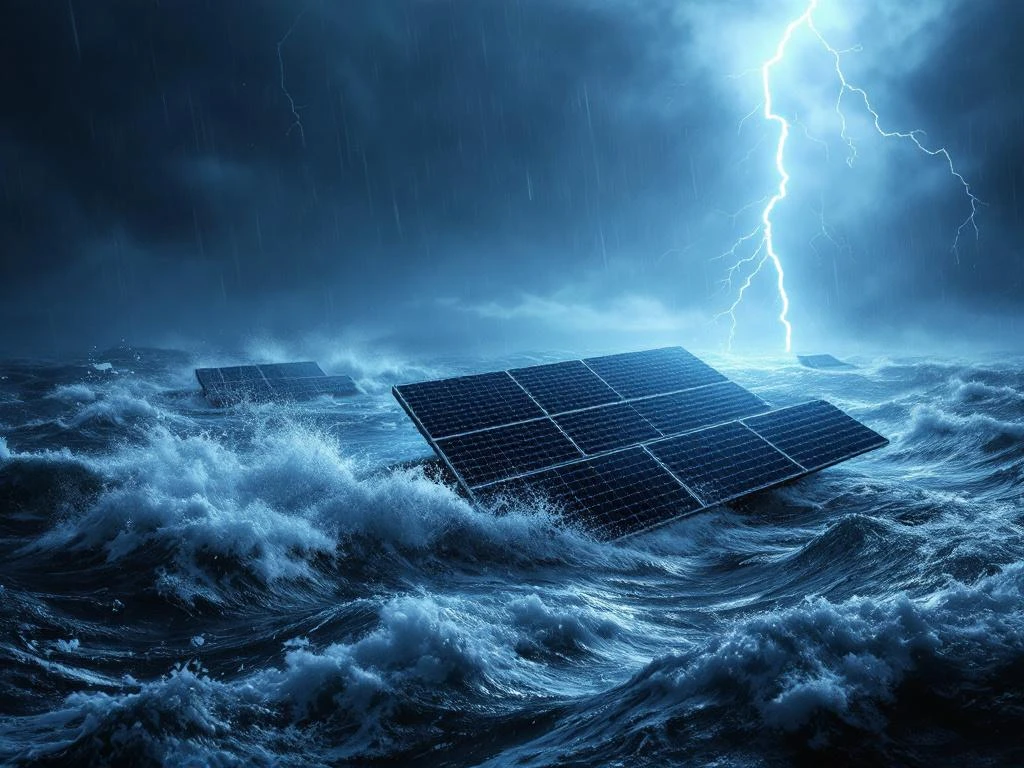
What happens to floating solar during storms?
Floating solar installations face unique challenges during storms, but they’re engineered with sophisticated systems to handle extreme weather. These systems respond to storms through flexible mooring arrangements, wave-following capabilities, and protective design features that allow them to move with water conditions rather than resist them. Understanding how these installations withstand severe weather helps investors and developers make informed decisions about floating photovoltaic projects.
What exactly happens to floating solar panels when storms hit?
Floating solar panels respond to storm conditions by moving with the water rather than fighting against it. The entire system flexes and adjusts to wave action and changing water levels through engineered connections that prevent rigid resistance to natural forces.
When storms arrive, the floating platform experiences several simultaneous stresses. Wave action creates vertical and horizontal movement that the system must accommodate without breaking connections between panels. The flexible connection points between individual floats allow sections to move independently, distributing stress across the entire array rather than concentrating it at weak points.
The buoyant foundation responds to changing water levels by rising and falling with flood conditions. This prevents the submersion damage that ground-mounted systems might experience during severe flooding. However, the system must maintain electrical connections and structural integrity throughout these movements, which requires careful engineering of cable management and joint design.
Most floating solar installations include drainage systems that prevent water accumulation on panel surfaces during heavy rainfall. Standing water adds weight and can create additional stress points, so effective drainage becomes part of the storm survival strategy.
How do floating solar systems stay anchored during high winds?
Floating solar systems use multi-point mooring arrangements with tensioned cables, deadweight anchors, and helical anchors to maintain position during high winds. These anchoring technologies work together to prevent the entire installation from drifting while allowing controlled movement that reduces stress.
The most common anchoring approach combines deadweight anchors on the lake or reservoir bottom with tensioned cable systems that connect to multiple points around the floating array’s perimeter. This creates a web of restraint that holds the installation in position without creating rigid attachment points that could fail under extreme loads.
Helical anchors provide additional holding power in suitable bottom conditions. These screw-in anchors penetrate deep into the substrate and offer superior resistance to pullout forces compared with simple deadweight systems. The choice between anchor types depends on bottom composition, water depth, and expected loads.
Cable systems typically include shock absorbers or tensioning devices that allow for dynamic loading during storms. Rather than using rigid connections that might snap under sudden loads, these systems incorporate elements that can stretch and recover, absorbing energy from wave action.
The anchoring system design must account for the installation’s profile during adverse weather conditions. Large floating arrays present considerable surface area to environmental forces, creating substantial lateral loads that the mooring system must handle without allowing excessive drift.
What design features protect floating solar panels from storm damage?
Protective design features include flexible inter-panel connections, wave-following float arrangements, integrated drainage systems, and corrosion-resistant materials that maintain integrity during extended exposure to harsh conditions. These features work together to prevent critical damage during extreme weather events.
The flexible connection system represents the most important protective feature. Rather than rigid mounting that might crack under stress, floating installations use joints that allow panels to move relative to each other. This prevents the concentration of stress that could cause catastrophic failure across large sections of the array.
Float design incorporates wave-following capabilities that allow individual sections to rise and fall with water movement. This prevents the system from acting like a rigid platform that might be damaged by large waves. Instead, the installation conforms to water surface conditions, reducing the forces that individual components must withstand.
Drainage systems prevent water accumulation that could create additional weight and stress during storms. Integrated channels and drainage points ensure that heavy rainfall flows off the installation rather than pooling in areas where it might cause structural problems or electrical issues.
Material selection focuses on corrosion resistance and UV stability for components that face constant exposure to water and sunlight. Aluminum framing, marine-grade fasteners, and specialized float materials maintain structural integrity over extended periods despite harsh environmental conditions.
How much adverse weather can floating solar panels actually handle?
Most floating solar installations are designed to withstand severe weather conditions equivalent to 150–180 km/h (93–112 mph) forces, which covers Category 1 and often Category 2 hurricane conditions. These design standards typically exceed the resistance of many ground-mounted installations due to the flexible mounting approach.
The resistance advantage comes from the system’s ability to move with environmental forces rather than creating rigid resistance. Ground-mounted systems must withstand the full force of loads through structural strength alone, while floating systems can dissipate some of this energy through movement and flexible connections.
Design parameters vary based on local climate conditions and project requirements. Installations in hurricane-prone regions may be engineered for higher resistance levels, while those in more protected locations might use standard design parameters. The anchoring system capacity often determines the maximum resistance rather than the panels themselves.
However, floating systems face unique challenges that ground-mounted installations don’t encounter. The combination of atmospheric and wave action creates complex loading conditions that require specialized engineering analysis. Storm-driven waves can create additional stresses that must be considered in the overall design process.
Testing standards for floating solar often reference marine engineering practices rather than traditional solar mounting standards. This reflects the unique operating environment and the need for systems that can handle both atmospheric and water-based forces simultaneously.
What happens if floating solar panels get damaged during a storm?
Storm damage to floating solar installations typically involves anchor failure, panel displacement, electrical system flooding, or structural damage to floats and connections. Emergency response procedures focus on system isolation, damage assessment, and preventing additional damage while planning repairs safely.
When damage occurs, the first priority is electrical system isolation to prevent safety hazards. Floating installations present unique electrical risks when damaged, as water exposure can create dangerous conditions for repair personnel. Remote monitoring systems often allow operators to shut down electrical systems without physical access to the installation.
Anchor failure represents one of the most serious damage scenarios, as it can allow the entire installation to drift and potentially cause additional damage to shoreline facilities or other infrastructure. Emergency response plans typically include procedures for deploying temporary anchoring or retrieving drifting sections.
Panel displacement damage often involves individual panels or small sections that break free from the main array. These components may need to be recovered from the water and assessed for repair or replacement. The modular design of most floating installations allows for section-by-section repair rather than complete system replacement.
Insurance considerations for floating solar include coverage for both the installation itself and potential liability for damage caused by drifting components. The unique risks associated with water-based installations require specialized insurance products that address both solar technology and marine exposures.
Repair processes must account for water access requirements and specialized equipment needed to work on floating platforms. This often involves marine contractors with experience in both electrical systems and water-based construction projects.
How Solarif helps with floating solar storm protection
We provide comprehensive inspection services and insurance solutions specifically designed for floating solar installations, helping you protect your investment against storm-related damage and operational disruptions. Our specialized approach addresses the unique challenges that floating photovoltaic systems face during extreme weather events.
Our floating solar protection services include:
- Specialized inspection services that evaluate anchoring systems, structural design, and site-specific weather exposure for floating installations
- Tailored insurance solutions covering both material damage and production loss from storm-related incidents, including coverage for anchor failure and drift damage
- Quality inspections using marine-qualified teams who understand both solar technology and water-based installation requirements
- Storm preparedness planning that includes emergency response procedures, system isolation protocols, and damage assessment frameworks
- Claims management support with expertise in both solar panel risks and marine insurance requirements for faster resolution
As an insurance broker specializing in renewable energy projects, we work with A-rated insurers who understand the specific risks associated with floating solar installations. Our experience with over 3.8 GW of insured capacity gives us the expertise to identify potential vulnerabilities and recommend appropriate protection measures.
Ready to protect your floating solar investment against storm damage? Contact our renewable energy insurance specialists today for a comprehensive assessment and a customized insurance solution that covers your specific project requirements.
Insurance and inspection needs for your BESS?
Contact us today if you want to know more about the possibilities in BESS insurance and Scope inspections.
📧 Email: support@solarif.com
☎️ Phone: +31 (0)26 711 5050