



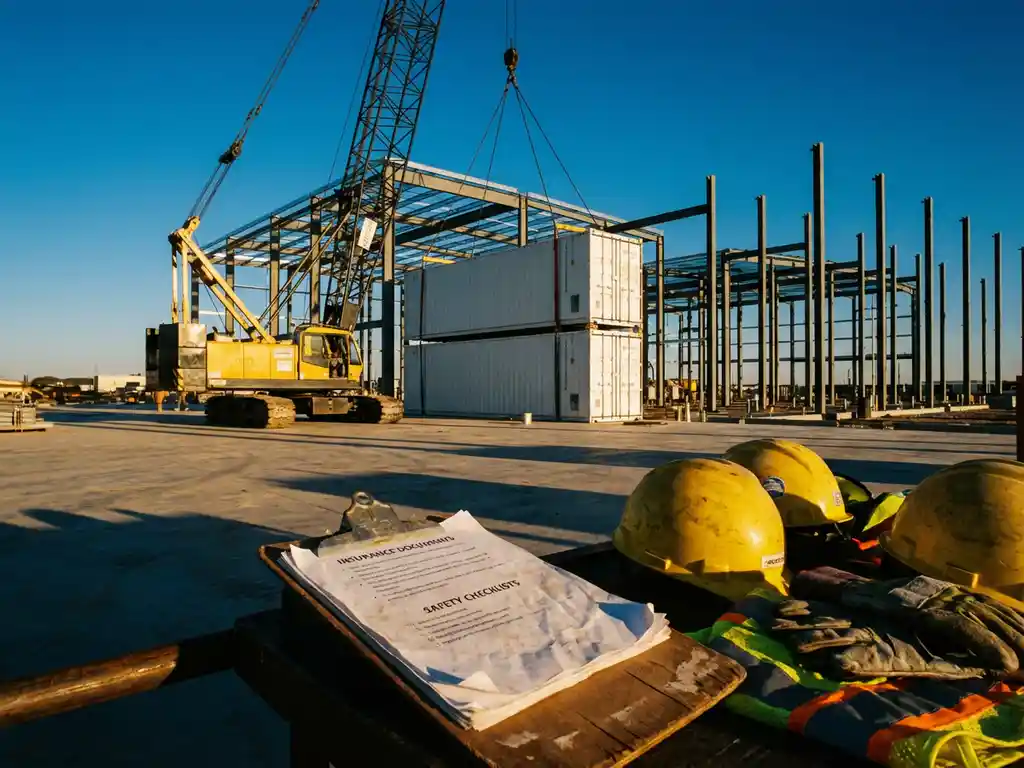
What insurance is needed for BESS construction phase?
Battery Energy Storage Systems (BESS) are transforming the renewable energy landscape by providing critical grid stability and energy management solutions. However, the construction phase of BESS projects presents unique risks that require specialized insurance coverage to protect substantial investments and ensure project completion.
From fire hazards associated with battery technology to construction delays and equipment damage, BESS construction projects face complex challenges that standard construction insurance may not adequately address. Understanding the specific insurance requirements for battery storage construction is essential for developers, contractors, and investors to safeguard their projects and financial interests.
What is BESS construction insurance, and why is it essential?
BESS construction insurance is specialized coverage designed to protect battery energy storage projects during the build phase, addressing unique risks such as thermal runaway, electrical hazards, and technology-specific vulnerabilities. This insurance is essential because traditional construction policies often exclude—or inadequately cover—the sophisticated battery systems, power electronics, and control technologies integral to BESS projects.
The construction of battery storage systems involves several high-risk elements that make specialized insurance crucial. Battery modules contain significant stored energy even during installation, creating potential fire and explosion risks. The integration of complex electrical systems, inverters, and energy management software introduces technical vulnerabilities that can lead to costly delays or equipment replacement.
Additionally, BESS projects typically represent substantial capital investments, often ranging from millions to hundreds of millions of dollars. Without proper insurance coverage, a single incident during construction could result in project delays, cost overruns, or total financial loss. The specialized nature of battery technology also means that replacement components may have long lead times, making business interruption coverage particularly valuable.
Insurance providers require detailed risk assessments for BESS projects because the technology is relatively new compared with traditional power infrastructure. This includes evaluating fire suppression systems, thermal management designs, and safety protocols specific to battery storage installations.
What types of insurance coverage are required during BESS construction?
BESS construction projects typically require multiple types of insurance, including Contractors’ All Risks (CAR), Professional Indemnity, Public Liability, Employers’ Liability, and specialized technology coverage for battery systems and control equipment. Each type of coverage addresses specific risks inherent to battery storage construction projects.
Contractors’ All Risks (CAR) insurance forms the foundation of BESS construction coverage, protecting against physical damage to materials, equipment, and works during construction. This includes coverage for battery modules, inverters, transformers, and associated electrical equipment. However, standard CAR policies may exclude certain battery-related risks, requiring specific endorsements or separate technology insurance.
Professional Indemnity insurance protects against errors in design, engineering, or project management that could lead to system failures or performance issues. For BESS projects, this coverage is particularly important given the complex integration requirements between battery systems, power electronics, and grid-connection equipment.
Public Liability insurance covers third-party property damage and bodily injury claims that may arise during construction. Given the potential for battery-related incidents, this coverage often requires higher limits than typical construction projects and may include specific provisions for electrical hazards.
Specialized technology insurance addresses risks unique to battery storage systems, including thermal runaway events, software failures, and cybersecurity incidents affecting control systems. This coverage may also extend to the testing and commissioning phases, when battery systems are first energized and integrated with grid infrastructure.
How much does BESS construction insurance typically cost?
BESS construction insurance costs typically range from 0.5% to 2% of total project value, depending on project size, battery technology, location, and the risk-mitigation measures implemented. Larger projects often achieve better rates due to economies of scale, while smaller installations may face higher percentage costs.
Several factors significantly influence insurance pricing for BESS construction projects. Battery technology type plays a crucial role, with lithium-ion systems generally commanding higher premiums than other technologies due to thermal runaway risks. Projects incorporating advanced fire suppression systems, thermal management, and safety protocols often qualify for reduced premiums.
Project location affects pricing through considerations such as natural-disaster exposure, local fire-department capabilities, and proximity to populated areas. Remote locations may face higher costs due to emergency-response limitations, while urban locations might have increased liability exposure.
The experience and track record of the construction team also affect pricing. Contractors with proven BESS construction experience and strong safety records typically qualify for better rates. Additionally, projects with comprehensive risk management plans, including detailed safety protocols and emergency-response procedures, often receive favorable pricing.
Insurance providers may offer multi-year policies covering both construction and initial operational phases, which can provide cost savings compared with separate policies. However, these arrangements require careful evaluation to ensure adequate coverage throughout all project phases.
What are the biggest risks during BESS construction that need coverage?
The biggest risks during BESS construction include thermal runaway events, electrical system failures, construction delays due to damage to specialized equipment, weather-related impacts on sensitive battery components, and cybersecurity threats to control systems. These risks require specialized coverage beyond standard construction insurance.
Thermal runaway represents the most significant unique risk in BESS construction, in which battery cells can overheat and potentially cause fires or explosions. This risk exists even during installation, when batteries may be partially charged or energized for testing. Proper fire suppression systems and thermal management are critical risk-mitigation measures that insurers evaluate carefully.
Electrical system integration risks arise from the complex interconnection of battery modules, inverters, transformers, and control systems. Improper installation, testing errors, or component failures during commissioning can result in significant equipment damage and project delays. These risks are particularly acute during system energization and initial testing.
Weather-related risks pose unique challenges for BESS construction, as battery components are often sensitive to temperature extremes, humidity, and moisture. Unlike traditional construction materials, battery systems may require climate-controlled storage and installation conditions, making weather delays more costly and complex.
Cybersecurity risks emerge during the installation and commissioning of energy management systems and grid-interconnection equipment. Malicious attacks or system vulnerabilities could compromise project timelines and require extensive system rebuilding or security upgrades.
Who is responsible for arranging BESS construction insurance?
The primary contractor or EPC (Engineering, Procurement, and Construction) company typically arranges BESS construction insurance, though responsibility may vary based on contract terms and project structure. Project owners, developers, and subcontractors may also have specific insurance requirements depending on their contractual obligations and risk exposure.
In most BESS construction projects, the main contractor assumes responsibility for comprehensive project insurance as part of its contractual obligations. This includes ensuring that all subcontractors and suppliers maintain adequate coverage and that policy terms protect all project stakeholders’ interests.
Project developers and owners often maintain their own insurance coverage for development risks, land acquisition, and long-term asset protection. They may also require specific insurance provisions in construction contracts, including being named as additional insureds on contractor policies.
Specialized subcontractors, particularly those handling battery installation, electrical integration, or control-system commissioning, typically carry their own professional indemnity and specialized technology coverage. These policies complement the main construction insurance and address specific technical risks within their scope of work.
International projects may involve multiple insurance arrangements across different jurisdictions, requiring careful coordination among contractors, developers, and insurance brokers to ensure comprehensive coverage without gaps or overlaps.
How does BESS construction insurance differ from operational insurance?
BESS construction insurance focuses on build-phase risks such as installation errors, equipment damage during construction, and commissioning failures, while operational insurance covers long-term performance, maintenance, and business interruption risks during commercial operation. The coverage scope, risk assessment, and policy terms differ significantly between these phases.
Construction-phase insurance addresses risks inherent to building and commissioning battery storage systems, including physical damage to equipment during installation, testing failures, and construction delays. This coverage typically includes materials in transit, temporary works, and the gradual energization process as systems come online.
Operational insurance shifts focus to long-term performance risks, including battery degradation, system availability, and revenue protection. This coverage addresses risks such as equipment failures during commercial operation, cyberattacks on operational systems, and business interruption from extended outages.
Risk assessment approaches differ substantially between construction and operational phases. Construction insurance evaluates contractor experience, installation procedures, and temporary risk exposures, while operational coverage focuses on technology reliability, maintenance programs, and long-term performance projections.
Policy terms and conditions also vary significantly. Construction policies typically provide coverage for specific project timelines with defined completion triggers, while operational insurance offers ongoing protection with annual renewals and evolving risk assessments based on system performance data.
How Solarif helps with BESS construction insurance
We specialize in comprehensive insurance solutions for renewable energy projects, including emerging battery storage technologies. Our expertise in energy storage project risks and established relationships with specialized insurers enable us to provide tailored BESS construction coverage that addresses the unique challenges of battery storage projects.
Our BESS construction insurance services include:
- Comprehensive risk assessment covering thermal runaway, electrical integration, and technology-specific vulnerabilities
- Customized policy structures combining traditional construction coverage with specialized battery storage protection
- Access to insurers with proven experience in energy storage projects and competitive pricing
- Risk management consulting to help implement safety protocols that may reduce insurance costs
- Seamless transition planning from construction to operational insurance phases
Ready to protect your BESS construction project with specialized insurance coverage? Contact our renewable energy insurance experts today to discuss your specific requirements and receive a customized insurance proposal for your battery storage project.
Insurance and inspection needs for your BESS?
Contact us today if you want to know more about the possibilities in BESS insurance and Scope inspections.
📧 Email: support@solarif.com
☎️ Phone: +31 (0)26 711 5050