



What protective equipment is required for BESS work?
Battery Energy Storage Systems (BESS) are transforming the renewable energy landscape, but working with these high-voltage, high-energy systems requires specialized protective equipment to ensure worker safety. From lithium-ion battery hazards to electrical arc-flash risks, BESS installations present unique safety challenges that demand comprehensive protection protocols.
Understanding the specific protective equipment requirements for BESS work is critical for project developers, EPC companies, and maintenance teams. The right safety gear not only protects workers from serious injury but also helps ensure compliance with insurance requirements and industry safety standards.
What Is BESS Protective Equipment and Why Is It Critical?
BESS protective equipment encompasses specialized safety gear designed to protect workers from electrical, chemical, and thermal hazards unique to battery energy storage systems. This equipment includes arc-flash suits, chemical-resistant gear, respiratory protection, and emergency response tools specifically rated for high-voltage DC systems and lithium-ion battery environments.
The critical nature of BESS protective equipment stems from the multiple hazard types present in battery storage installations. Unlike traditional electrical work, BESS environments combine high-voltage electrical risks with potential chemical exposure from battery electrolytes and the possibility of thermal runaway events. These systems can switch from full charge to maximum discharge within fractions of a second, creating dynamic risk conditions that require comprehensive protection.
Battery Management Systems and Power Conversion Systems within BESS installations operate at voltages that can exceed 1,000 V DC, making proper electrical protection essential. Additionally, the energy density of modern lithium-ion battery modules means that even small incidents can escalate rapidly without appropriate safety measures in place.
What Are the Main Safety Hazards When Working With BESS?
The primary safety hazards in BESS work include electrical shock and arc flash from high-voltage DC systems, chemical exposure from battery electrolytes, thermal runaway events that can cause fires or explosions, and toxic gas emissions during battery failures. These hazards can occur simultaneously and require multi-layered protection strategies.
Electrical hazards represent the most immediate danger, as BESS installations typically operate between 400 V and 1,500 V DC. Unlike AC systems, DC current does not naturally cross zero, making it more difficult to interrupt and potentially more dangerous. Power Conversion System components add AC hazards to the mix, creating complex electrical environments.
Chemical hazards arise from the electrolytes within lithium-ion batteries, which can be corrosive and toxic if released. During normal operation, these chemicals remain contained, but damage to battery cells or thermal events can lead to electrolyte leakage. The confined spaces often found in BESS container installations can concentrate these chemical exposures.
Thermal runaway presents perhaps the most serious hazard, as it can rapidly escalate from a single-cell failure to a system-wide emergency. This process generates intense heat, toxic gases (including hydrogen fluoride), and can lead to fires that are difficult to extinguish with conventional methods.
What Personal Protective Equipment Is Required for BESS Installation?
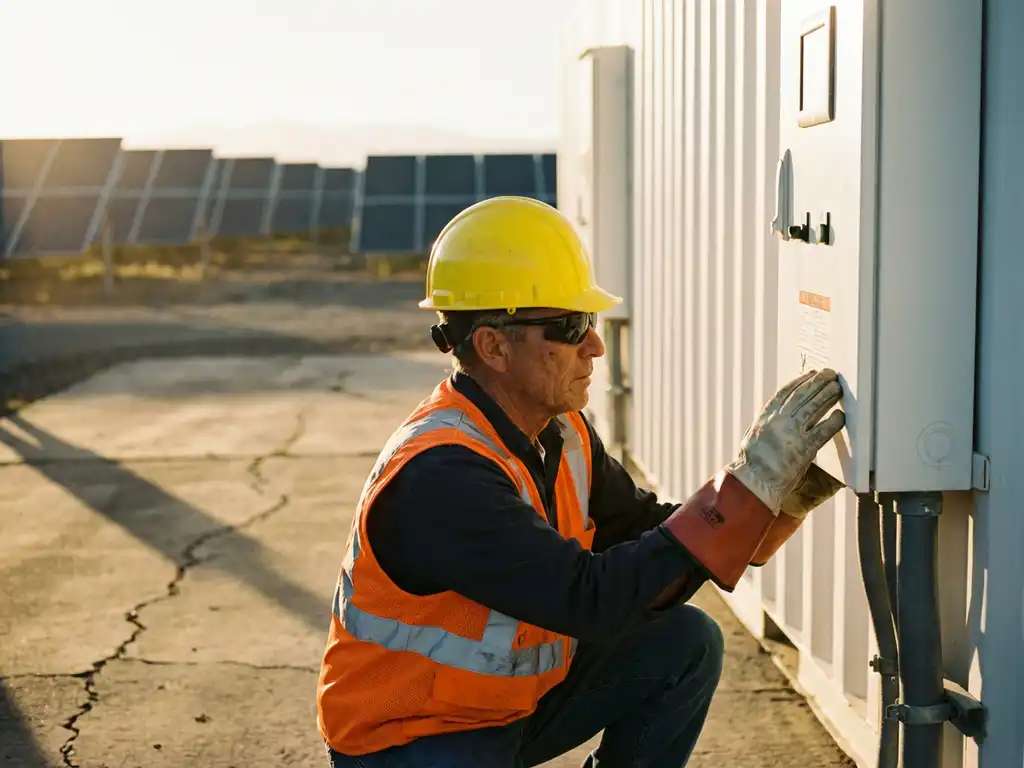
Essential PPE for BESS installation includes arc-flash suits rated for the system’s incident energy levels, Class 0 or higher electrical gloves with leather protectors, safety glasses with side shields, hard hats with an electrical rating, and chemical-resistant clothing. Respiratory protection may also be required, depending on the specific work environment and battery chemistry.
Arc-flash protection must be selected based on the specific incident energy calculations for the BESS installation. Most commercial BESS systems require Category 2 or Category 3 arc-flash suits, though larger utility-scale installations may require Category 4 protection. The suit material must be flame-resistant and provide coverage for the entire body.
Electrical gloves represent a critical component, as workers frequently interact with high-voltage DC systems during installation and maintenance. Class 0 gloves (rated to 1,000 V) are typically the minimum requirement, though Class 1 or higher may be necessary for larger systems. These must be tested regularly and used with leather protector gloves.
Chemical protection becomes important when working near battery modules or during maintenance activities that might involve electrolyte exposure. Chemical-resistant gloves, aprons, and eye protection help prevent skin and eye contact with potentially corrosive battery chemicals.
How Do Arc Flash Protection Requirements Differ for BESS Work?
Arc-flash protection for BESS work requires special consideration of DC arc characteristics, which burn hotter and longer than AC arcs, and the unique energy-release patterns of battery systems. DC arc-flash suits must provide higher thermal protection values and account for the sustained nature of DC electrical faults.
The incident energy calculations for BESS systems differ significantly from those for traditional AC electrical work. DC arcs do not self-extinguish at current zero crossings like AC arcs, meaning they can persist longer and release more total energy. This requires arc-flash suits with higher Arc Thermal Performance Value (ATPV) ratings—often 25–40 cal/cm² or higher for utility-scale BESS installations.
Battery systems can deliver massive fault currents due to their low internal impedance, potentially creating arc-flash incidents with energy levels exceeding those found in traditional electrical installations. The Energy Management System and Battery Management System must be considered when calculating arc-flash boundaries, as these control systems can affect fault-clearing times.
Additionally, the confined-space nature of many BESS installations, particularly container-based systems, can concentrate arc-flash energy and limit escape routes. This may require enhanced protection levels beyond what incident energy calculations alone would suggest.
What Emergency Safety Equipment Must Be Available During BESS Work?
Emergency safety equipment for BESS work must include specialized fire-suppression systems designed for lithium-ion battery fires, emergency shutdown controls, communication devices for immediate response coordination, and first aid supplies specific to electrical and chemical injuries. Water-based cooling systems are currently the most recommended method for battery fire suppression, despite conductivity concerns.
Fire-suppression equipment represents the most critical emergency tool, as conventional fire extinguishers are often ineffective against lithium-ion battery fires. Large quantities of water are typically required to cool battery modules and prevent thermal runaway propagation. Some installations use specialized fire-suppression systems with gaseous agents or immersion-cooling fluids designed specifically for battery fires.
Emergency shutdown systems must be readily accessible and clearly marked. These systems should be capable of isolating the battery from all external connections and may include emergency DC disconnect switches, AC isolation controls, and Battery Management System emergency stops. Workers should be trained on the location and operation of all emergency controls.
Communication equipment ensures that emergency response can be coordinated quickly. This includes two-way radios, emergency phones, and potentially gas-detection alarms that can alert workers to dangerous atmospheric conditions. Given the potential for toxic gas release during battery incidents, atmospheric monitoring equipment may also be required.
How Should BESS Protective Equipment Be Maintained and Tested?
BESS protective equipment requires regular inspection, testing, and replacement according to manufacturer specifications and industry standards. Electrical gloves must be tested every six months, arc-flash suits inspected before each use and annually tested, and emergency equipment checked monthly, with full functional testing performed quarterly.
Electrical protective equipment follows strict testing protocols due to the life-safety nature of the protection. Electrical gloves require air testing before each use and electrical testing every six months by qualified testing facilities. Any gloves showing signs of damage, including small cuts, punctures, or chemical deterioration, must be removed from service immediately.
Arc-flash suits require visual inspection before each use, checking for tears, burns, contamination, or other damage that could compromise protection. Annual electrical testing may be required depending on the suit type and manufacturer specifications. Contaminated suits must be properly cleaned or replaced, as chemical contamination can affect flame-resistant properties.
Emergency equipment maintenance includes monthly visual inspections of fire-suppression systems, quarterly testing of emergency shutdown systems, and annual calibration of atmospheric monitoring equipment. Documentation of all testing and maintenance activities is essential for insurance compliance and regulatory requirements.
How Solarif Helps with BESS Safety and Risk Management
As a specialized insurance broker for renewable energy projects, we understand that proper protective equipment and safety protocols are essential to BESS project success and insurance coverage. Our comprehensive approach to BESS risk management includes:
- Customized insurance solutions that recognize robust safety protocols and protective equipment standards
- Risk assessments that evaluate the adequacy of safety equipment and maintenance procedures
- Quality inspections, including safety protocol reviews for BESS installations
- Connections between project developers and qualified EPC companies with proven BESS safety records
Our experience with more than 3.8 GW of insured renewable energy projects gives us unique insight into the safety requirements insurers expect for BESS installations. We work closely with project developers to ensure their safety protocols meet both regulatory requirements and insurance standards, helping reduce premiums and ensure coverage availability.
Contact our renewable energy insurance experts at Solarif today to discuss your BESS project’s safety requirements and secure comprehensive coverage for your battery storage installation.
Insurance and inspection needs for your BESS?
Contact us today if you want to know more about the possibilities in BESS insurance and Scope inspections.
📧 Email: support@solarif.com
☎️ Phone: +31 (0)26 711 5050