



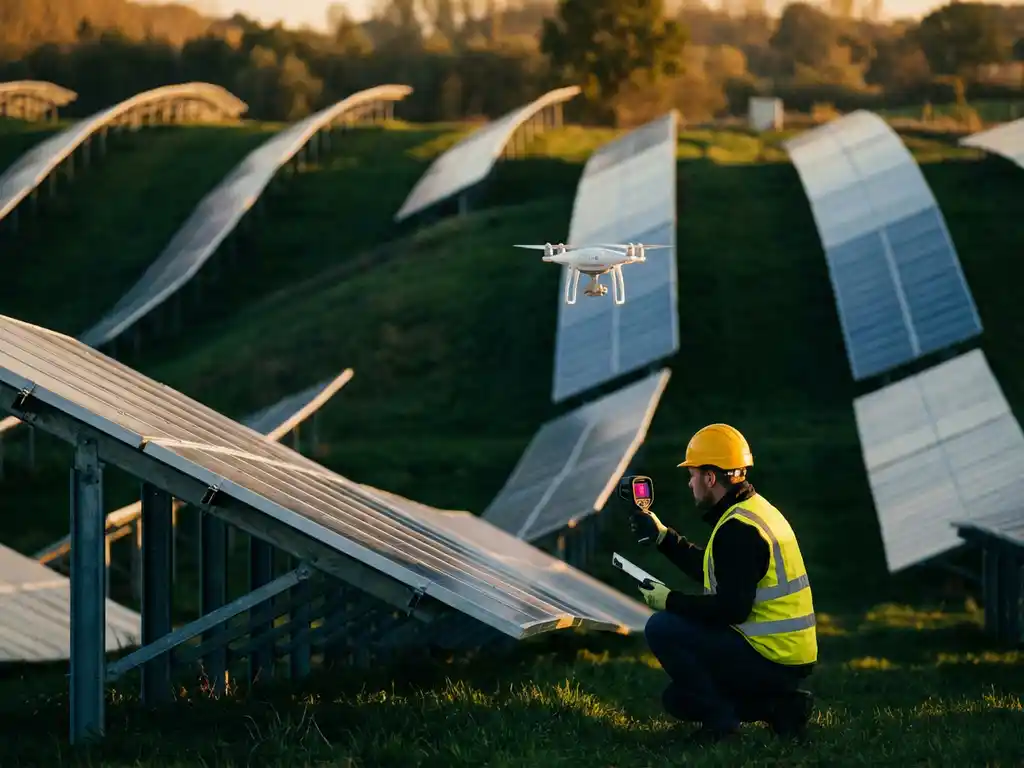
Why is project bankability crucial for solar development?
Project bankability is the cornerstone of successful solar development, determining whether projects move from concept to construction. In the competitive renewable energy landscape, investors and lenders scrutinize every aspect of a solar project before committing capital. A bankable project demonstrates clear financial viability, manageable risk, and reliable returns that meet institutional investment criteria.
Understanding project bankability is essential for developers, investors, and EPC contractors navigating the complex world of solar project finance. The difference between a bankable and a non-bankable project often determines whether the necessary funding can be secured to bring renewable energy visions to life.
What is project bankability in solar development?
Project bankability in solar development refers to a project’s ability to secure financing from banks, institutional investors, or other financial institutions based on its demonstrated viability, risk profile, and potential returns. A bankable solar project meets specific technical, financial, and legal criteria that give lenders confidence in the project’s ability to generate predictable cash flows and repay debt obligations.
Bankability encompasses multiple dimensions beyond simple financial projections. Technical bankability ensures the project uses proven technology, reliable equipment from established manufacturers, and industry best practices for design and construction. Financial bankability demonstrates strong revenue projections, appropriate debt-to-equity ratios, and sufficient contingency planning. Legal bankability confirms that permits are in place, land rights are clear, and contracts with creditworthy counterparties are enforceable.
The bankability assessment process involves rigorous due diligence by multiple stakeholders. Lenders engage independent engineers to review technical designs, financial advisors to validate economic models, and legal experts to examine contractual structures. This comprehensive evaluation determines whether the project meets the financing parties’ risk-adjusted return requirements.
Why do solar projects need to be bankable for financing?
Solar projects must be bankable to secure financing because institutional lenders and investors need to minimize risk exposure while ensuring predictable returns on their capital. Financial institutions operate under strict regulatory frameworks and fiduciary responsibilities that require thorough risk assessment before committing funds to any project.
The capital-intensive nature of solar development amplifies the importance of bankability. Large-scale solar projects often require tens or hundreds of millions in financing, with debt typically comprising 70–80% of total project costs. Lenders need assurance that projects will generate sufficient cash flows to service debt payments over 15–25-year loan terms, even under adverse market conditions.
Risk mitigation drives the bankability requirement across multiple project phases. During construction, lenders face completion risk, cost-overrun risk, and technology performance risk. During operation, they encounter market risk, regulatory risk, and equipment degradation risk. Bankable projects address these concerns through proven technologies, experienced contractors, comprehensive insurance coverage, and robust contractual protections.
Market dynamics further reinforce bankability requirements. As solar development has matured, competition for financing has intensified, leading to more stringent lending criteria. Projects that cannot demonstrate clear bankability struggle to secure favorable financing terms or may face outright rejection, effectively halting development progress.
What factors make a solar project bankable?
Several critical factors determine solar project bankability, including proven technology, experienced development teams, secure offtake agreements, suitable site conditions, and comprehensive risk mitigation strategies. These elements work together to create a compelling investment proposition that meets institutional financing standards.
Technology selection plays a fundamental role in bankability assessment. Lenders prefer projects that use equipment from established manufacturers with strong balance sheets and proven track records. Solar panels, inverters, and mounting systems must demonstrate reliability through independent testing, bankable warranties, and successful deployment in similar applications. Performance guarantees from creditworthy manufacturers provide additional security for projected energy yields.
Contractual structure significantly affects bankability through revenue certainty and risk allocation. Long-term power purchase agreements with creditworthy offtakers provide predictable cash flows that support debt service. Engineering, procurement, and construction contracts with experienced contractors, backed by appropriate bonding and insurance, mitigate completion and performance risks.
Site characteristics influence both technical and financial viability. Strong solar resource availability, suitable topography, adequate grid interconnection capacity, and clear land tenure create favorable conditions for project success. Environmental and permitting compliance demonstrates regulatory approval and reduces development risk.
Financial structure and sponsor strength round out bankability considerations. Appropriate debt-to-equity ratios, sufficient contingency reserves, and experienced project sponsors with strong track records provide additional confidence in execution and management capabilities.
How does project bankability affect solar development timelines?
Project bankability significantly affects solar development timelines by determining the speed and ease of securing financing. Bankable projects typically reach financial close 6–12 months faster than projects that require extensive restructuring or additional risk mitigation.
Early bankability planning accelerates the entire development process. Projects designed with bankability criteria in mind from inception avoid costly redesigns, contract renegotiations, or technology changes during the financing phase. Developers who engage potential lenders early can identify and address bankability concerns before they cause delays.
Due diligence timelines vary dramatically based on initial bankability. Well-structured, bankable projects may complete lender due diligence in 3–4 months, while projects with bankability deficiencies can face an additional 6–12 months of review, documentation requests, and structural modifications. Complex projects requiring extensive risk mitigation may experience even longer delays.
Market conditions also influence how bankability affects timelines. During periods of abundant capital and aggressive lending, marginal projects may secure financing more quickly. Conversely, in tight credit markets, only the most bankable projects achieve timely financial close, while others face indefinite delays or cancellation.
The iterative nature of bankability improvement can significantly affect timelines. Projects that fail initial bankability assessments must address deficiencies through contract amendments, technology changes, or additional guarantees before returning to the financing market, potentially adding 6–18 months to development schedules.
What’s the difference between bankable and non-bankable solar projects?
The primary difference between bankable and non-bankable solar projects is their ability to meet institutional financing criteria. Bankable projects demonstrate proven technology, experienced teams, secure contracts, and comprehensive risk mitigation, while non-bankable projects have significant gaps in one or more of these critical areas.
Bankable projects feature established technology from manufacturers with strong financial positions and robust warranty coverage. They use proven solar panels, inverters, and balance-of-system components with documented performance histories in similar applications. Non-bankable projects may rely on unproven technologies, manufacturers with weak balance sheets, or equipment that lacks adequate warranty protection.
Contractual arrangements also clearly distinguish bankable from non-bankable projects. Bankable projects secure long-term power purchase agreements with creditworthy offtakers, construction contracts with bonded EPC contractors, and operations and maintenance agreements with experienced service providers. Non-bankable projects may lack secure offtake arrangements, rely on inexperienced contractors, or have inadequate performance guarantees.
Financial structure and documentation quality create further distinctions. Bankable projects present comprehensive financial models, detailed risk assessments, and complete documentation packages that enable efficient due diligence. Non-bankable projects often have incomplete financial analysis, inadequate risk mitigation, or insufficient documentation to support lending decisions.
Development team experience and track record also affect bankability. Bankable projects are led by sponsors and teams with successful project histories, strong financial capacity, and proven ability to execute complex transactions. Non-bankable projects may involve inexperienced developers, undercapitalized sponsors, or teams lacking relevant expertise in solar development and financing.
How can developers improve their project’s bankability?
Developers can improve their project’s bankability by selecting proven technology, securing creditworthy offtake agreements, engaging experienced contractors, implementing comprehensive risk management, and maintaining thorough documentation throughout the development process.
Technology optimization is one of the most direct paths to improved bankability. Developers should select equipment from established manufacturers with strong balance sheets, extensive warranty coverage, and proven performance records. Independent engineering reviews and quality inspections provide additional validation of technology choices and installation quality, addressing lender concerns about technical risk.
Contractual improvements can significantly enhance bankability through clearer risk allocation and greater performance certainty. Securing long-term power purchase agreements with investment-grade utilities or creditworthy corporate offtakers provides revenue stability that supports debt financing. Engaging experienced EPC contractors with appropriate bonding and insurance coverage mitigates construction and performance risks.
Financial structure optimization involves setting appropriate debt-to-equity ratios, establishing adequate contingency reserves, and developing comprehensive financial models that demonstrate viability under various scenarios. Engaging potential lenders early allows developers to understand specific bankability requirements and structure projects accordingly.
Risk mitigation strategies address the primary concerns of lenders and investors. Comprehensive insurance coverage protects against construction, operational, and revenue risks. Performance guarantees from manufacturers and contractors provide additional security for projected returns. Regular quality inspections and monitoring systems demonstrate ongoing performance and enable early identification of potential issues.
High-quality, complete documentation streamlines the financing process and demonstrates professional project management. Maintaining detailed records of permits, contracts, technical specifications, and financial projections facilitates efficient due diligence and can shorten financing timelines.
How Solarif helps with project bankability
At Solarif, we understand that project bankability can determine the success or failure of solar development initiatives. With more than 15 years of experience in the renewable energy sector, we provide comprehensive solutions that directly enhance project bankability and accelerate financing timelines.
Our specialized services address the key bankability factors that lenders and investors prioritize:
- Risk Insurance Solutions: We provide tailored insurance coverage that protects against construction, operational, and performance risks, giving lenders confidence in project viability.
- Quality Inspections: Our SCIOS-certified Scope 12 inspections ensure installation safety and quality, meeting insurers’ requirements for commercial solar projects.
- Performance Insurance: We provide greater certainty around solar panel output and reliability while offering protection against manufacturer insolvency.
- Surety Bonds: Our guarantee solutions build trust with financiers and stakeholders during the construction phase.
With more than 3.8 GW of insured capacity and hundreds of satisfied clients, we provide the risk mitigation and quality assurance that transform projects from concepts into bankable investments. Ready to enhance your project’s bankability and secure financing faster? Contact our renewable energy insurance specialists today to discuss how we can strengthen your solar development strategy.
Insurance and inspection needs for your BESS?
Contact us today if you want to know more about the possibilities in BESS insurance and Scope inspections.
📧 Email: support@solarif.com
☎️ Phone: +31 (0)26 711 5050