



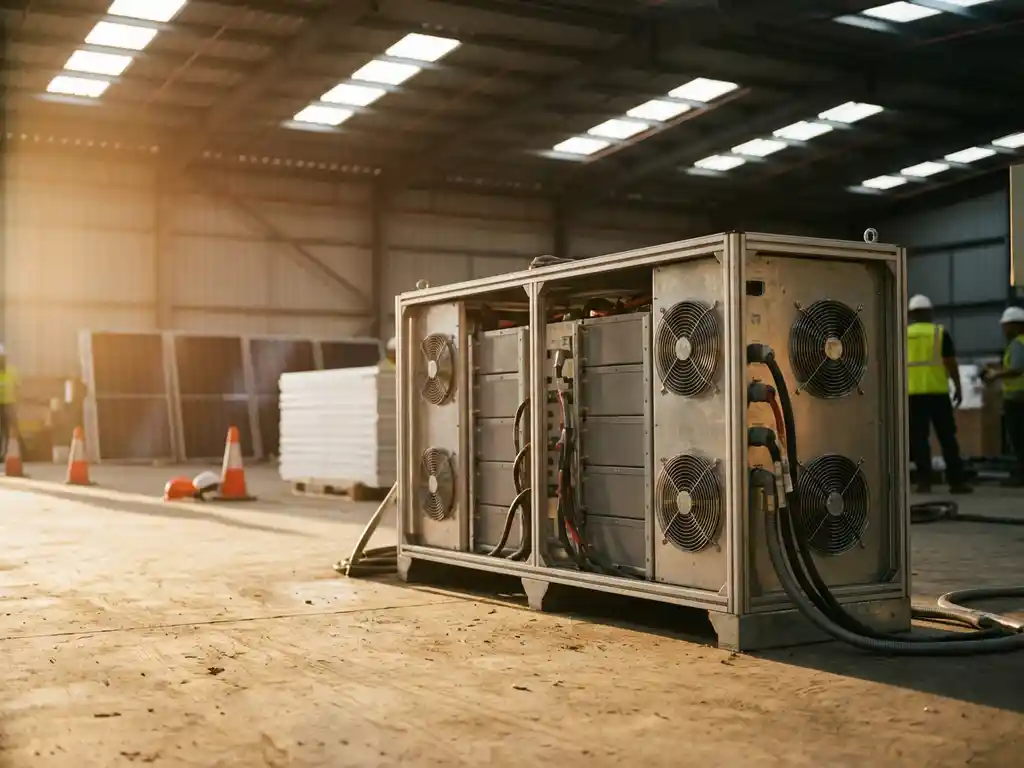
Why is proper ventilation critical for battery safety?
Battery safety in energy storage systems depends critically on proper ventilation to prevent overheating and thermal runaway. When batteries operate without adequate airflow and temperature control, they can reach dangerous temperatures that trigger cascading failures, potentially leading to fires or explosions. This risk is particularly significant in lithium-ion battery systems, which dominate the commercial energy storage market.
Understanding ventilation requirements is essential for anyone involved in battery energy storage projects, from developers and operators to investors and insurers. Proper thermal management not only helps prevent catastrophic failures but also extends battery life and maintains system performance over time.
What happens when batteries overheat without proper ventilation?
Without proper ventilation, overheating batteries can experience thermal runaway—a dangerous chain reaction in which rising temperatures cause further heat generation, potentially leading to fire, explosion, or the release of toxic gases. Once triggered, this process can become self-sustaining, making prevention through adequate cooling and ventilation critical.
Thermal runaway typically begins when a battery cell reaches temperatures between 130 and 200°C, depending on the battery chemistry. At these temperatures, the electrolyte begins to decompose, generating heat and flammable gases. Without proper ventilation to remove heat, adjacent cells can heat up and enter their own thermal runaway cycles, creating a cascading failure throughout the battery system.
The consequences extend beyond the immediate fire risk. Overheated batteries can release toxic gases, including hydrogen fluoride, carbon monoxide, and various organic compounds, which pose serious health hazards. These gases can accumulate in poorly ventilated spaces, creating dangerous conditions for emergency responders and facility personnel. Additionally, thermal events often result in the total loss of the battery system, causing significant financial damage that can reach millions of dollars for large commercial installations.
Different battery chemistries exhibit varying thermal stability characteristics. Lithium iron phosphate (LFP) batteries generally demonstrate better thermal stability than nickel manganese cobalt (NMC) chemistries, but both require proper thermal management to operate safely. Even more thermally stable chemistries can experience thermal runaway under extreme conditions or when compounded by system failures.
How does proper ventilation prevent battery fires?
Proper ventilation helps prevent battery fires by maintaining safe operating temperatures, removing heat generated during charging and discharging cycles, and diluting potentially flammable gases before they reach dangerous concentrations. Effective ventilation systems create controlled airflow that keeps battery cells within their optimal temperature range—typically 15 to 35°C for most lithium-ion systems.
Ventilation works through several mechanisms to enhance safety. Heat removal occurs through convective cooling, in which moving air carries away thermal energy generated by battery operation and environmental factors. This prevents the temperature buildup that can trigger thermal runaway. At the same time, ventilation systems dilute and remove gases that may off-gas from batteries during normal operation, preventing the accumulation of potentially combustible mixtures.
Modern battery ventilation systems incorporate both passive and active components. Passive ventilation relies on natural airflow and thermal convection, while active systems use fans, blowers, and sometimes liquid cooling to maintain precise temperature control. The most effective systems combine both approaches, using passive ventilation for baseline cooling and active systems for peak-demand periods or emergency situations.
Proper ventilation also supports the battery management system (BMS) in maintaining safe operation. Temperature sensors throughout the installation provide real-time data to the BMS, which can increase ventilation, reduce charging rates, or shut down the system when temperatures approach unsafe levels. This integrated approach creates multiple layers of protection against thermal events.
What are the different types of battery ventilation systems?
Battery ventilation systems fall into three main categories: passive natural ventilation, active mechanical ventilation, and hybrid systems that combine both approaches. Each type offers different levels of cooling capacity, control precision, and energy efficiency, depending on the specific application and environmental conditions.
Passive Natural Ventilation
Passive systems rely on natural airflow created by temperature differences and wind pressure. These systems use strategically placed vents, louvers, and openings to create airflow paths that remove heat through convection. While energy-efficient and low-maintenance, passive systems provide limited control over cooling rates and may be insufficient for high-density battery installations or extreme climate conditions.
Active Mechanical Ventilation
Active systems use fans, blowers, and ducting to create controlled airflow regardless of environmental conditions. These systems can maintain precise temperature control and respond quickly to changing thermal loads. They typically include variable-speed fans controlled by temperature sensors and the BMS, allowing for optimized energy consumption while maintaining safety margins.
Advanced active systems may incorporate air filtration to prevent dust and contaminants from affecting battery performance, humidity control to prevent condensation, and emergency exhaust capabilities for rapid gas removal during thermal events. Some installations use dedicated supply and exhaust systems to ensure proper air circulation throughout the battery enclosure.
Liquid Cooling Systems
For high-density applications, liquid cooling systems provide superior heat-removal capacity compared to air-based ventilation. These systems circulate coolant through heat exchangers or via direct contact with battery modules, then use external radiators or chillers to dissipate heat. While more complex and expensive, liquid cooling enables more compact battery installations and more precise temperature control.
How do you design adequate ventilation for battery storage?
Designing adequate ventilation requires calculating heat loads, determining airflow requirements, selecting appropriate equipment, and integrating with safety systems. The design process begins with a thermal analysis of the specific battery system, considering factors such as battery chemistry, charging rates, ambient conditions, and enclosure characteristics to determine cooling requirements.
Heat-load calculations form the foundation of ventilation design. Engineers must account for heat generated by battery charging and discharging, power conversion equipment, lighting, and solar gain on the enclosure. Peak heat loads typically occur during rapid charging or discharging cycles, requiring ventilation systems sized for these maximum conditions rather than average operation.
Airflow requirements depend on the allowable temperature rise between inlet and outlet air, typically 10 to 15°C for battery applications. The basic calculation uses the formula: CFM = (Heat Load in BTU/hr) ÷ (1.08 × Temperature Rise in °F). However, practical designs must also account for air-distribution patterns, ensuring uniform cooling across all battery modules rather than creating hot spots.
Equipment selection considers factors beyond basic cooling capacity, including noise levels, energy efficiency, reliability, and maintenance requirements. Industrial-grade fans with variable-frequency drives allow for optimized operation across different conditions while reducing energy consumption during periods of lower thermal load.
Integration with fire suppression and emergency systems is crucial. Ventilation systems must coordinate with fire detection to provide emergency exhaust capability while avoiding the spread of fire or toxic gases. Some designs incorporate separate emergency exhaust systems that activate during thermal events, providing rapid gas removal while maintaining structural fire barriers.
What safety standards govern battery ventilation requirements?
Battery ventilation safety standards are primarily governed by NFPA 855 (Standard for the Installation of Stationary Energy Storage Systems), IFC Chapter 12, the UL 9540 series, and local building codes. These standards establish minimum ventilation rates, equipment requirements, and integration with fire protection systems for different battery technologies and installation types.
NFPA 855 provides comprehensive requirements for battery energy storage system installations, including specific ventilation provisions. The standard requires ventilation systems capable of maintaining battery temperatures within manufacturer specifications and removing off-gases during normal operation. For lithium-ion systems, it mandates minimum ventilation rates and emergency exhaust capability.
The International Fire Code (IFC) Chapter 12 establishes requirements for energy storage systems in commercial buildings. It specifies ventilation rates based on battery capacity and chemistry, typically requiring 1 CFM per square foot of floor area as a baseline, with additional requirements for high-capacity installations. The code also mandates integration with fire alarm systems and emergency controls.
UL 9540 series standards address safety requirements for energy storage systems and their components. UL 9540A specifically covers fire safety testing methods, while UL 9540 establishes safety requirements for complete systems, including ventilation and thermal management. These standards are often referenced by authorities having jurisdiction and insurance companies.
Local building codes may impose additional requirements beyond national standards, particularly in areas with specific environmental concerns or fire safety priorities. Some jurisdictions require enhanced ventilation for installations near populated areas or environmentally sensitive locations. Compliance with all applicable codes is essential for obtaining permits and insurance coverage.
How Solarif helps with battery safety and ventilation compliance
We understand that proper ventilation design and compliance with safety standards are critical to securing insurance coverage for battery energy storage projects. Insurance companies increasingly require detailed ventilation plans and thermal management systems before providing coverage, as inadequate cooling systems represent significant risk exposure.
Our expertise in battery energy storage risk management helps clients navigate these requirements effectively:
- Risk evaluation of ventilation designs and thermal management systems during project development
- Compliance verification with NFPA 855, IFC, and UL standards to meet insurer requirements
- Scope 12 inspections to verify the proper installation and operation of cooling systems
- Connections with specialized insurers who understand battery storage technology and safety systems
- Ongoing risk management support throughout project operation and maintenance
Proper ventilation is not just about safety compliance—it is about demonstrating to insurers that your project meets industry best practices for risk mitigation. Contact our renewable energy insurance specialists to ensure your battery storage project has the comprehensive coverage and risk management support it needs for successful operation.
Insurance and inspection needs for your BESS?
Contact us today if you want to know more about the possibilities in BESS insurance and Scope inspections.
📧 Email: support@solarif.com
☎️ Phone: +31 (0)26 711 5050