



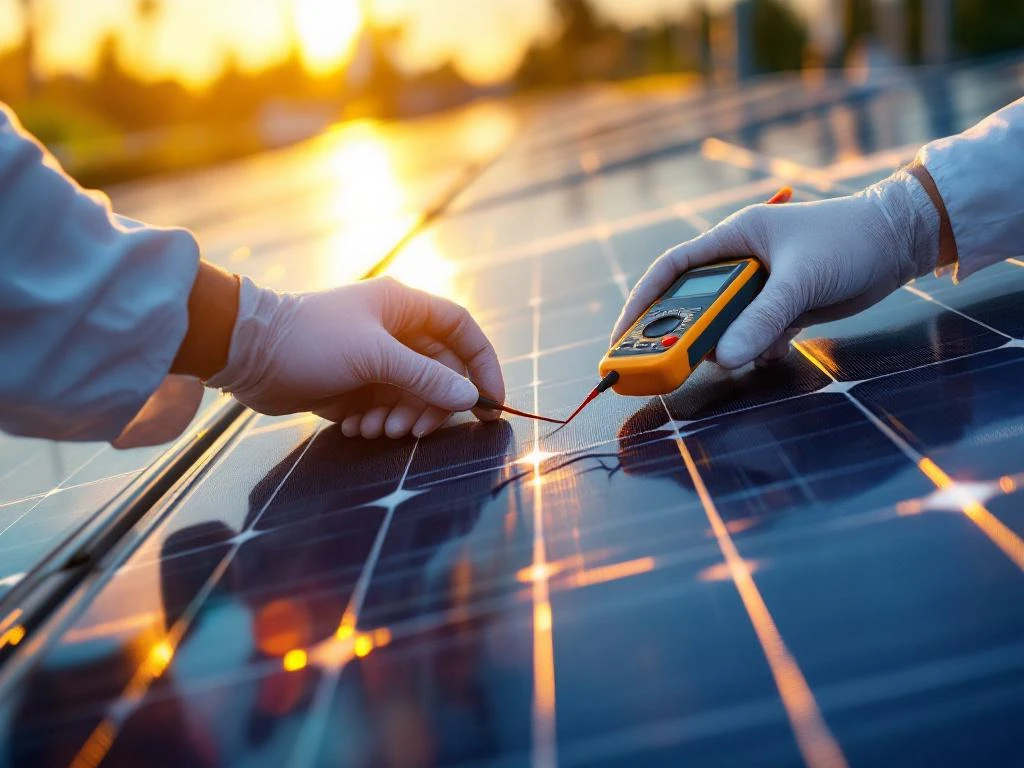
Why is quality control important for solar panels?
Solar panel quality control involves systematic testing and inspection processes to ensure panels meet performance, safety, and durability standards. Quality control protects your investment by preventing defects, maintaining energy output, and ensuring long-term reliability. Poor quality control leads to reduced performance, safety hazards, and significant financial losses for commercial solar projects.
What is solar panel quality control and why does it matter?
Solar panel quality control is a comprehensive testing and inspection process that verifies panels meet strict performance, safety, and durability standards before and after installation. This process includes material verification, electrical testing, thermal imaging, and ongoing monitoring to ensure optimal operation.
Quality control matters because it directly impacts your project’s financial success and operational safety. Without proper quality control, you risk installing panels that underperform, fail prematurely, or create safety hazards. For commercial solar projects, quality control becomes even more important because insurers require specific inspections to provide insurance coverage.
The inspection process typically involves multiple stages, from factory-level batch inspections during manufacturing to on-site commissioning tests after installation. Each stage serves a specific purpose in identifying potential issues before they become costly problems.
Quality control also plays a vital role in securing project financing. Banks and investors require assurance that solar installations will perform as expected over their 20–25-year lifespan. Proper quality control documentation demonstrates project reliability and helps meet strict financing criteria.
What happens when solar panels don’t meet quality standards?
When solar panels fail to meet quality standards, you face reduced energy output, safety risks, premature system failure, and potential warranty voids. These issues can result in substantial financial losses and operational disruptions for commercial solar projects.
Reduced energy output is often the first sign of quality issues. Panels with manufacturing defects may produce 10–20% less electricity than expected, directly impacting your return on investment. This performance gap compounds over time, leading to thousands of pounds in lost revenue over the system’s lifetime.
Safety hazards represent another serious consequence of poor quality control. Defective panels can develop electrical faults, create fire risks, or pose electrocution dangers. These safety issues not only endanger personnel but can also result in costly liability claims and regulatory penalties.
Premature system failure becomes more likely when quality standards aren’t met. While quality panels typically last 25+ years, substandard panels may fail within 5–10 years, requiring expensive replacements and system downtime.
Warranty issues compound these problems further. Manufacturers may void warranties if panels weren’t properly tested or installed according to specifications. Without warranty protection, you bear the full cost of any defects or failures that occur.
How does quality control impact solar panel performance over time?
Proper quality control ensures consistent energy production throughout the panel’s 25+ year lifespan by preventing degradation issues, maintaining efficiency ratings, and protecting against weather-related damage. Quality control directly correlates with long-term performance and return on investment.
Quality panels typically experience annual degradation rates of 0.5–0.8%, while poor-quality panels may degrade 1–2% annually. This difference becomes substantial over time – after 20 years, quality panels retain 85–90% of their original output, while substandard panels may only produce 60–70%.
Quality control prevents common degradation issues like potential-induced degradation (PID), hot spots, and cell cracking. These problems reduce energy output and can cascade into more serious failures if left unchecked.
Weather protection becomes particularly important for long-term performance. Quality control ensures panels can withstand temperature cycling, humidity, UV exposure, and mechanical stress from environmental conditions. Panels that pass rigorous quality tests maintain their protective barriers and electrical connections over decades of exposure.
Consistent performance monitoring, part of ongoing quality control, helps identify emerging issues before they impact energy production. Early detection allows for preventive maintenance rather than costly emergency repairs.
What are the different types of solar panel quality inspections?
Solar panel quality inspections include factory inspections, batch testing, electrical testing, thermal imaging, drone inspections, and various SCIOS scope inspections. Each inspection type serves specific purposes and occurs at different project stages to ensure comprehensive quality assurance.
Factory inspections assess manufacturing processes, quality systems, and production capabilities. These inspections verify that manufacturers follow proper procedures and maintain consistent quality standards throughout production.
Batch inspections occur during manufacturing and involve testing random samples from production runs. These tests include electrical performance verification, materials testing, and durability assessments to ensure each batch meets specifications.
Electrical testing encompasses various measurements, including power output, voltage, current, and resistance testing. These tests verify that panels perform according to their rated specifications and identify any electrical defects.
Thermal imaging inspections use infrared cameras to detect hot spots, cell defects, and electrical issues that aren’t visible during standard visual inspections. This technology reveals problems that could lead to performance degradation or safety hazards.
Drone inspections provide comprehensive aerial assessments of large installations using advanced thermal imaging technology. This method efficiently covers extensive areas while providing detailed analysis of panel condition and performance.
SCIOS inspections include different scopes for specific purposes. Scope 12 inspections focus on solar installation safety, quality, and insurability – these are often required by insurers for commercial projects, though they’re not legally mandated.
When should quality control inspections happen during a solar project?
Quality control inspections should occur at multiple project stages: during manufacturing (batch testing), pre-installation (component verification), the installation phase (progress monitoring), commissioning (final testing), and ongoing operations (maintenance assessments). This timeline ensures comprehensive quality assurance throughout the project lifecycle.
Pre-installation inspections verify that delivered components meet specifications and haven’t suffered damage during transport. This stage prevents the installation of defective equipment and helps avoid costly rework later in the project.
Installation phase monitoring ensures proper mounting, electrical connections, and system configuration. Regular inspections during installation catch errors early, when they’re easier and less expensive to correct.
Commissioning inspections occur after installation is complete and verify that the entire system operates correctly. These comprehensive tests confirm performance meets design expectations and identify any final adjustments needed.
For commercial projects, insurers typically require Scope 12 inspections before providing coverage. These inspections assess safety, quality, and reliability to determine insurability and may influence premium rates.
Ongoing maintenance inspections help maintain performance and identify emerging issues. Regular monitoring extends system life and ensures continued optimal operation throughout the project’s lifespan.
How we help with solar panel quality control
We provide quality control solutions for commercial solar projects through our Risk Management inspection services. Our expertise helps protect your solar investments and ensures projects meet insurer requirements for coverage.
Our inspection services include:
- SCIOS Scope 12 inspections that assess installation safety, quality, and insurability
- SCIOS Scope 8 inspections for specific technical assessments
- SCIOS Scope 10 inspections for targeted evaluations
- Factory inspections to verify manufacturing quality
- Batch inspections during production
- Drone inspections using advanced thermal imaging for detailed analysis
As an insurance broker specialising in renewable energy, we understand exactly what insurers require for coverage approval. Our inspection services are designed to meet these requirements while protecting your investment.
Our certified panels offer exclusive benefits, including lower insurance premiums, enhanced warranty protection, and improved project financeability. This certification demonstrates quality assurance that banks and investors value when evaluating solar projects.
Ready to protect your solar investment with professional quality control? Contact our renewable energy experts to discuss how our comprehensive inspection services can secure your project’s success and insurability.
Insurance and inspection needs for your BESS?
Contact us today if you want to know more about the possibilities in BESS insurance and Scope inspections.
📧 Email: support@solarif.com
☎️ Phone: +31 (0)26 711 5050