



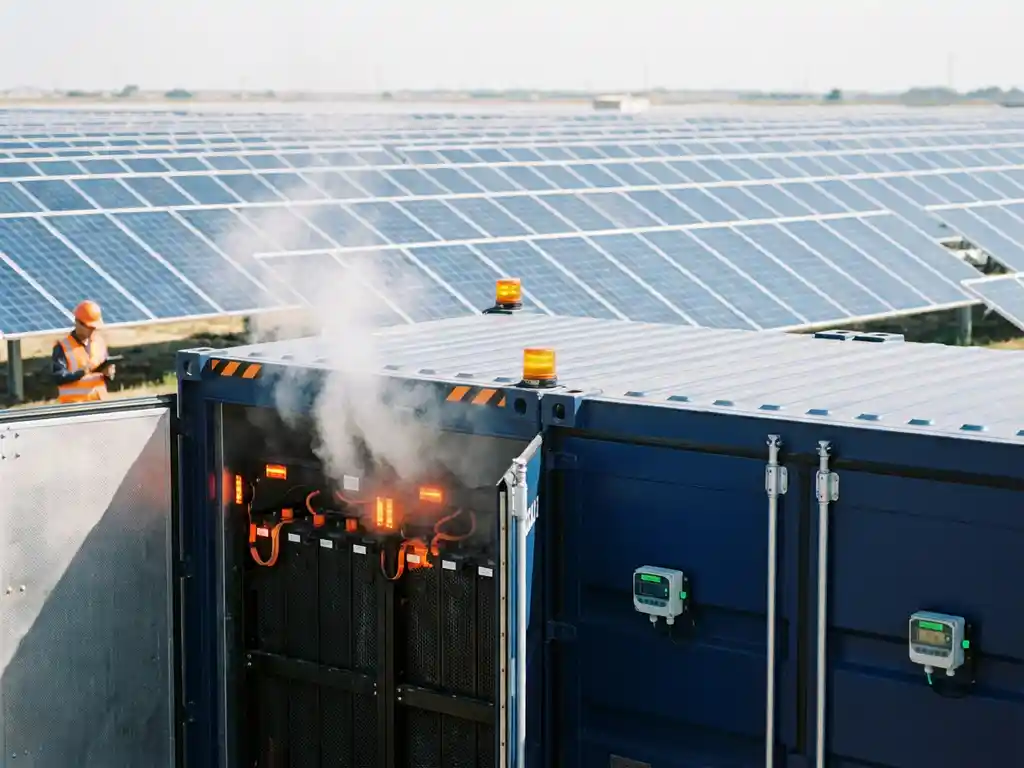
Why is temperature monitoring essential in BESS?
Battery Energy Storage Systems (BESS) have become critical infrastructure for renewable energy projects, storing power when generation exceeds demand and releasing it when needed. However, these large-scale installations face significant safety challenges, with temperature control perhaps being the most crucial factor for safe operation. When lithium-ion batteries operate outside their optimal temperature range, they can experience reduced performance, accelerated degradation, or even dangerous thermal events.
Effective temperature monitoring in BESS installations protects both valuable assets and personnel while ensuring reliable energy storage performance. Understanding how thermal management systems work and why they matter is essential for anyone involved in energy storage projects, from developers and operators to insurers.
What is temperature monitoring in BESS and why is it critical?
Temperature monitoring in BESS involves continuously tracking thermal conditions throughout battery installations using sensors and control systems to maintain safe operating temperatures. This monitoring is critical because lithium-ion batteries must operate within specific temperature ranges to prevent safety hazards, performance degradation, and premature system failure.
The Battery Management System (BMS) serves as the central hub for temperature monitoring, continuously tracking the status of individual cells, including voltage, current, temperature, and state of charge. This system ensures safe and optimal operation by preventing overcharging, deep discharge, and thermal excursions that could lead to dangerous conditions.
Temperature monitoring becomes even more critical in large-scale BESS installations, where hundreds of battery modules operate in close proximity. These systems often include sophisticated cooling and ventilation systems to remove heat and maintain stable temperatures. Without proper thermal management, battery performance suffers significantly, and the risk of thermal runaway increases exponentially.
The consequences of inadequate temperature monitoring extend beyond performance issues. Overheated batteries can experience rapid capacity loss, shortened lifespan, and, in extreme cases, thermal runaway events that pose serious safety risks to personnel and surrounding infrastructure.
How does temperature affect battery performance and safety?
Temperature directly impacts battery performance by affecting chemical reaction rates, internal resistance, and capacity retention, while extreme temperatures can trigger thermal runaway events that pose serious safety risks. Operating outside optimal temperature ranges reduces efficiency, accelerates aging, and can lead to catastrophic failure.
When batteries operate at elevated temperatures, several negative effects occur simultaneously. High temperatures increase internal resistance, reducing the battery’s ability to deliver power efficiently. The chemical reactions within the cells accelerate beyond optimal levels, causing faster degradation of active materials and reducing overall lifespan. Most critically, excessive heat can trigger thermal runaway, in which the battery generates more heat than it can dissipate, leading to a self-sustaining reaction.
Cold temperatures present different but equally problematic challenges. Low temperatures slow chemical reactions, reducing available capacity and power output. Charging cold batteries can cause lithium plating, permanently damaging the cells and creating safety hazards. The optimal operating range for most lithium-ion batteries used in BESS applications falls between 15°C and 35°C (59°F to 95°F).
Safety risks escalate rapidly when temperature control fails. Thermal runaway can spread from cell to cell, creating intense heat, toxic gas emissions, and potential fire hazards. This propagation effect makes temperature monitoring absolutely essential in large battery installations, where a single cell failure could cascade throughout the system.
What types of temperature monitoring systems are used in BESS?
BESS installations typically use multiple temperature monitoring technologies, including thermocouples, resistance temperature detectors (RTDs), thermistors, and infrared sensors, often integrated into comprehensive thermal management systems with active cooling and heating capabilities.
Thermocouples are the most common temperature-sensing technology in BESS applications due to their reliability, wide temperature range, and cost-effectiveness. These sensors can withstand harsh conditions and provide accurate readings across the full operating spectrum of battery systems. They connect directly to the BMS for continuous monitoring and rapid response to temperature changes.
Resistance Temperature Detectors (RTDs) offer higher accuracy than thermocouples and excellent long-term stability, making them ideal for critical monitoring points. While more expensive, RTDs provide precise measurements essential for maintaining optimal battery performance and detecting early signs of thermal issues.
Infrared thermal imaging systems provide non-contact temperature monitoring, allowing operators to identify hot spots and thermal patterns across large battery installations. These systems can detect temperature variations that might indicate developing problems before they become critical, enabling proactive maintenance and preventing failures.
Modern BESS installations often combine multiple sensor types within integrated thermal management systems. These systems include active cooling through HVAC systems, liquid cooling loops, or immersion cooling technologies, all controlled by sophisticated algorithms that respond to temperature data in real time.
Where should temperature sensors be placed in battery energy storage systems?
Temperature sensors in BESS should be strategically placed at the individual cell level, at module interfaces, on cooling system components, and at ambient air monitoring points to ensure comprehensive thermal coverage throughout the installation. Critical placement includes battery terminals, cooling inlets and outlets, and areas prone to heat accumulation.
At the cell level, sensors typically attach to battery terminals or housing surfaces where heat generation is highest. Each battery module requires multiple sensors to capture thermal variations across the unit, as temperature can vary significantly even within a single module. The BMS uses this granular data to balance cell performance and identify potential issues early.
Cooling system monitoring points include inlet and outlet temperatures for air or liquid cooling systems, allowing operators to verify cooling effectiveness and detect system malfunctions. Sensors on cooling equipment such as fans, pumps, and heat exchangers ensure these critical components operate within design parameters.
Ambient temperature monitoring throughout the battery enclosure helps identify areas where heat accumulates due to poor ventilation or equipment placement. Container-based BESS installations require sensors at multiple heights and locations to account for thermal stratification and ensure uniform temperature distribution.
Strategic sensor placement also considers accessibility for maintenance and replacement. Sensors must be positioned where they can be easily accessed without disrupting battery operations, while still providing accurate readings at critical temperature points throughout the system.
How do you prevent thermal runaway in large battery installations?
Preventing thermal runaway in large BESS installations requires multilayered protection, including robust temperature monitoring, active thermal management, proper spacing between modules, fire suppression systems, and strict operational protocols that limit charging rates and operating temperatures during extreme conditions.
The primary defense against thermal runaway involves maintaining strict temperature control through active thermal management systems. These systems use HVAC equipment, liquid cooling, or immersion cooling to remove excess heat and maintain optimal operating temperatures. The BMS continuously monitors cell temperatures and automatically adjusts cooling systems or reduces power output when temperatures approach dangerous levels.
Physical design plays a crucial role in thermal runaway prevention. Battery modules must be spaced adequately to prevent heat transfer between units, and fire-resistant barriers can contain thermal events if they occur. Many installations use specialized containers or buildings with fire suppression systems designed specifically for battery fires, including water mist systems or inert gas flooding.
Operational protocols provide additional protection by limiting charging and discharging rates during high ambient temperatures or when cooling systems operate at reduced capacity. These protocols may include temporary power reductions or complete system shutdown if temperature thresholds are exceeded, prioritizing safety over energy storage capacity.
Advanced BMS systems can predict thermal runaway conditions by analyzing temperature trends, voltage patterns, and other indicators. This predictive capability allows operators to take preventive action before dangerous conditions develop, potentially isolating affected modules or implementing emergency cooling procedures.
What happens when BESS temperature monitoring systems fail?
When BESS temperature monitoring systems fail, operators lose critical visibility into thermal conditions, potentially leading to undetected overheating, reduced system performance, safety hazards, and possible thermal runaway events that could damage equipment and endanger personnel.
The immediate consequence of a monitoring system failure is the loss of real-time temperature data that the BMS relies on for safe operation. Without this information, the system cannot make informed decisions about cooling system operation, power output limitations, or emergency shutdowns. This blind operation significantly increases the risk of thermal events going undetected until they become critical.
Most modern BESS installations include redundant monitoring systems and fail-safe protocols that automatically reduce system operation or initiate shutdown procedures when temperature monitoring fails. These safety measures prioritize protection over performance, often resulting in reduced energy storage capacity or complete system unavailability until monitoring systems are restored.
Long-term operation without proper temperature monitoring can lead to accelerated battery degradation, reduced lifespan, and warranty voiding. Battery manufacturers typically require continuous monitoring as a condition of warranty coverage, making monitoring system reliability essential for protecting investment value.
Emergency response procedures become critical when monitoring systems fail during operation. Operators must implement manual monitoring protocols, potentially including thermal imaging inspections and reduced operating parameters until full monitoring capability is restored. These procedures help maintain safety while minimizing operational disruption.
How Solarif helps with BESS temperature monitoring and safety
As an insurance broker specializing in renewable energy projects, we understand that proper temperature monitoring is essential for BESS insurability and risk management. Our expertise in battery energy storage systems helps clients implement comprehensive safety protocols that meet insurer requirements and protect their investments.
We provide specialized services for BESS projects, including:
- Risk assessments that evaluate thermal management system design and implementation
- Insurance solutions tailored specifically for battery energy storage installations
- Quality inspections that verify temperature monitoring systems meet industry standards
- Matchmaking services connecting investors with properly designed and monitored BESS projects
Our experience with more than 521 Scope 12 inspections and 3.8 GW of renewable energy capacity gives us deep insight into what insurers require for BESS coverage. We see that insurers sometimes offer lower premiums for installations with comprehensive thermal runaway prevention systems, or they may refuse to insure systems that lack proper safety measures.
Contact our renewable energy insurance experts to ensure your BESS project meets all safety and insurability requirements, from the design phase through operation.
Insurance and inspection needs for your BESS?
Contact us today if you want to know more about the possibilities in BESS insurance and Scope inspections.
📧 Email: support@solarif.com
☎️ Phone: +31 (0)26 711 5050