



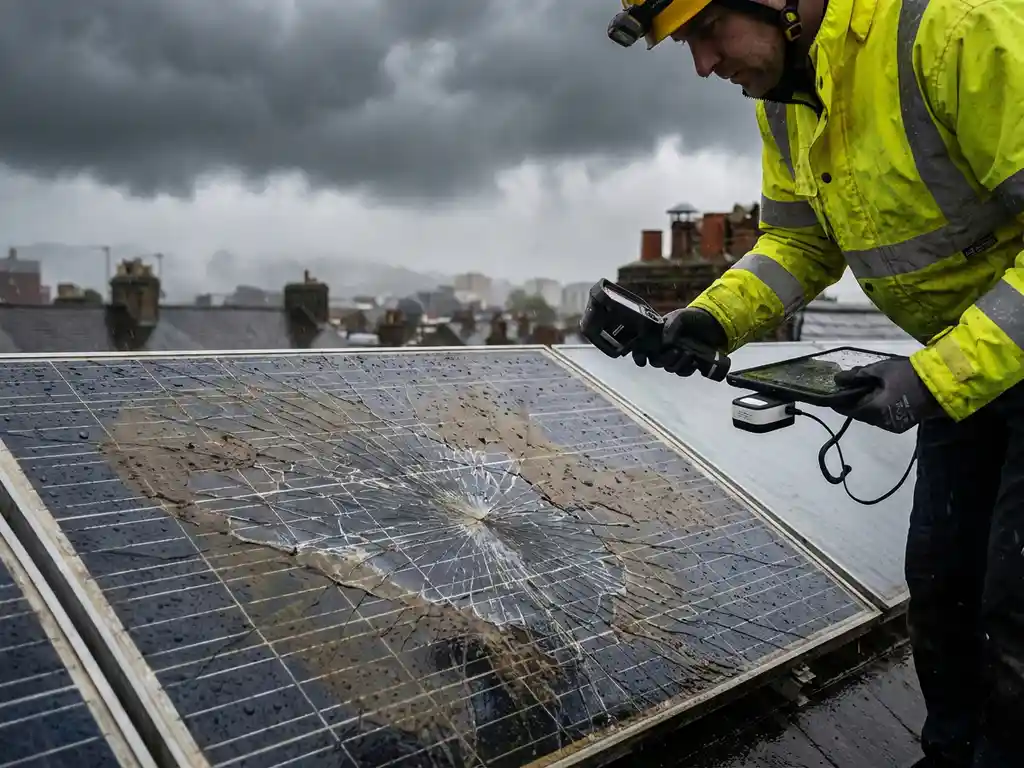
How do environmental factors threaten solar longevity?
Solar panels are built to withstand decades of outdoor exposure, but environmental factors pose significant threats to their longevity and performance. Understanding these challenges is crucial for developers, investors, and EPC contractors who need to protect their renewable energy investments. Weather-related degradation, temperature fluctuations, and atmospheric conditions can dramatically affect both the immediate performance and long-term durability of solar installations.
With proper risk assessment and environmental monitoring, many of these threats can be mitigated through strategic planning and protective measures. Early identification of environmental risks prevents minor issues from developing into costly problems that affect project yields and investor confidence.
What environmental factors pose the biggest threat to solar panel longevity?
The most significant environmental threats to solar panel longevity include extreme temperatures, UV radiation, moisture infiltration, hail damage, and high wind loads. These factors act individually and in combination to reduce panel efficiency and shorten operational lifespan, with temperature cycling and UV exposure causing the most gradual but persistent damage over time.
Temperature extremes create thermal stress that causes materials to expand and contract repeatedly, leading to microcracks in solar cells and solder-bond failures. This thermal cycling is particularly damaging in climates with large day-night temperature variations. UV radiation breaks down polymer materials in backsheets and encapsulants and can also contribute to potential-induced degradation in solar cells.
Moisture represents another critical threat, as water infiltration can cause corrosion of electrical components, delamination of panel layers, and ground faults that compromise system safety. Wind loading places mechanical stress on mounting systems and panel frames, while hail can cause immediate physical damage ranging from microcracks to complete cell destruction.
How does temperature affect solar panel performance and lifespan?
High temperatures reduce solar panel efficiency by approximately 0.3%–0.5% per degree Celsius above 25°C, while extreme temperature fluctuations cause thermal stress that leads to material fatigue, solder-bond failures, and microcracks in solar cells. Prolonged exposure to temperatures above 85°C can significantly accelerate degradation rates.
Solar panels generate less electricity as temperatures rise because increased thermal energy reduces the voltage output of photovoltaic cells. This temperature coefficient varies by technology, with crystalline silicon panels typically showing greater temperature sensitivity than thin-film alternatives.
Beyond immediate performance impacts, temperature cycling creates long-term reliability issues. Daily heating and cooling cycles cause different materials within the panel to expand and contract at different rates. Over thousands of cycles, this differential expansion creates stress that can break solder connections between cells, cause encapsulant materials to separate, and create pathways for moisture infiltration.
Cold temperatures can also pose challenges, particularly rapid freeze-thaw cycles that stress mounting hardware and electrical connections. Extreme cold can make materials brittle, increasing susceptibility to impact damage from hail or debris.
Why does UV radiation damage solar panels over time?
UV radiation causes photochemical degradation of polymer materials in solar panels, particularly backsheets and encapsulants, leading to discoloration, reduced light transmission, and eventual material breakdown. This UV-induced degradation typically manifests as yellowing or browning of panel materials and can reduce power output by 10%–20% over the panel’s lifetime.
The encapsulant material, typically ethylene-vinyl acetate (EVA), is particularly vulnerable to UV exposure. Over time, UV radiation breaks down the chemical bonds in these polymers, causing them to yellow and become less transparent. This discoloration reduces the amount of light reaching the solar cells and decreases overall system efficiency.
Backsheet materials also suffer UV degradation, which can lead to cracking and moisture infiltration. Modern panels use UV-stabilized materials and protective coatings to minimize this damage, but prolonged exposure in high-UV environments still causes gradual deterioration.
UV radiation can also contribute to potential-induced degradation (PID), in which electrical charges build up on the panel surface and create current-leakage paths. This phenomenon is more pronounced in high-temperature, high-humidity environments, where UV exposure compounds other stress factors.
How do moisture and humidity threaten solar system components?
Moisture infiltration can cause corrosion of electrical components, delamination of panel layers, ground faults, and potential-induced degradation, while high humidity accelerates these processes and can lead to arc faults that pose fire risks. Even small amounts of water ingress can cause significant long-term damage to solar installations.
Water can enter solar panels through compromised seals, damaged backsheets, or inadequate edge sealing. Once inside, moisture creates multiple failure modes. Corrosion affects metal components, including cell interconnects, junction-box terminals, and grounding equipment. This corrosion increases electrical resistance and can create hot spots that further damage the system.
Delamination occurs when moisture weakens the adhesive bonds between panel layers, causing the encapsulant to separate from the cells or glass. This creates air gaps that scatter light and reduce efficiency while providing pathways for further moisture infiltration.
High-humidity environments accelerate all moisture-related degradation processes. Humid conditions also promote potential-induced degradation, in which electrical charges accumulate on panel surfaces and create leakage currents that reduce performance and can cause permanent damage to solar cells.
What extreme weather events cause the most solar panel damage?
Hailstorms cause the most immediate and severe damage to solar installations, with hailstones larger than 25 mm capable of cracking or shattering panel glass and creating microfractures that reduce performance. High winds, hurricanes, and severe storms can also cause significant structural damage through debris impacts and mechanical stress on mounting systems.
Hail damage ranges from visible cracks and shattered glass to microscopic cell fractures that may not be immediately apparent but can reduce long-term performance. Modern panels are tested to withstand 25 mm hailstones at 80 km/h, but larger hail or higher velocities can exceed these design limits.
Wind damage typically affects mounting systems and panel frames rather than the panels themselves. High winds can lift panels from their mounts, twist racking systems, or drive debris into installations. Hurricane-force winds pose particular risks in coastal areas, where proper mounting-system design becomes critical for system survival.
Severe storms combine multiple threats, including wind, hail, and flooding. Lightning strikes, while less common, can cause catastrophic damage to electrical components and create fire risks. Snow loading in winter climates can stress mounting systems and cause structural failures if they are not properly designed for local conditions.
How can environmental monitoring protect solar investments?
Environmental monitoring systems track weather conditions, system performance, and component health in real time, enabling early detection of degradation patterns and weather-related damage before they become costly failures. These systems typically reduce maintenance costs by 15%–25% while extending system lifespan through proactive intervention.
Modern monitoring solutions combine weather stations, performance analytics, and thermal imaging to provide comprehensive oversight of solar installations. Weather monitoring tracks temperature, humidity, wind speed, UV levels, and precipitation to correlate environmental conditions with performance changes.
Performance monitoring identifies degradation patterns that may indicate environmental damage. A gradual decline in power output might signal UV degradation or soiling, while sudden drops could indicate moisture infiltration or physical damage. Advanced systems use machine learning to distinguish between normal environmental variations and concerning degradation trends.
Thermal imaging and drone inspections can detect hot spots, moisture infiltration, and physical damage that visual inspections might miss. Regular monitoring enables predictive maintenance strategies that address issues before they cause system failures or safety hazards.
How Solarif helps with environmental risk management
We provide comprehensive risk management solutions that protect solar investments against environmental threats through specialized insurance coverage, quality inspections, and risk assessment services. Our approach combines technical expertise with tailored insurance solutions to help ensure your projects remain profitable despite environmental challenges.
Our environmental risk management services include:
- Risk insurance coverage that protects against weather damage, equipment failure, and business interruption
- Scope 12 inspections by certified professionals to identify potential environmental vulnerabilities
- Performance insurance that helps ensure output guarantees despite environmental impacts
- Customized coverage for extreme weather events specific to your project location
- Expert risk assessments of environmental factors affecting project viability
With over 15 years of experience and 3.8 GW of insured capacity, we understand how environmental factors affect solar project performance and profitability. Our team works with developers, investors, and EPC contractors to identify risks early and implement protective measures that safeguard long-term returns.
Ready to protect your solar investment against environmental risks? Contact our risk management specialists today for a comprehensive assessment of your project’s environmental exposure and customized insurance solutions.
Insurance and inspection needs for your BESS?
Contact us today if you want to know more about the possibilities in BESS insurance and Scope inspections.
📧 Email: support@solarif.com
☎️ Phone: +31 (0)26 711 5050