


Hoe voorkomt u de diefstal van zonnepanelen?
Diefstal van zonnepanelen is wereldwijd een steeds serieuzer probleem geworden voor commerciële zonne-installaties. Naarmate projecten voor hernieuwbare energie in waarde en zichtbaarheid toenemen, hebben ze helaas de aandacht getrokken van dieven die dure, gemakkelijk toegankelijke apparatuur zien als lucratieve doelen. Voor projectontwikkelaars, investeerders en exploitanten is het essentieel om diefstalrisico's te begrijpen en uitgebreide beschermingsstrategieën te implementeren om deze waardevolle activa te beveiligen.
De financiële impact van diefstal van zonnepanelen reikt veel verder dan de vervangingskosten van gestolen apparatuur. Productieverliezen, eigen risico's van verzekeringen, verhoogde beveiligingsmaatregelen en mogelijke projectvertragingen kunnen het rendement op investeringen aanzienlijk beïnvloeden. Dit maakt diefstalpreventie een cruciaal onderdeel van risicobeheer voor elk commercieel zonnekrachtproject.
Wat maakt zonnepanelen aantrekkelijke doelwitten voor dieven?
Zonnepanelen zijn aantrekkelijke doelwitten voor diefstal omdat ze een hoge doorverkoopwaarde combineren met relatief gemakkelijke toegang en verwijdering. Moderne zonnepanelen bevatten waardevolle materialen, waaronder zilver, koper en aluminium, waardoor ze elk honderden tot duizenden dollars waard zijn op secundaire markten.
Het modulaire ontwerp van zonne-installaties maakt diefstal bijzonder aantrekkelijk voor criminelen. Panelen kunnen vaak met eenvoudig gereedschap in een mum van tijd worden losgekoppeld en verwijderd, vooral als veiligheidsmaatregelen ontoereikend zijn. Hun gestandaardiseerde montagesystemen betekenen dat dieven snel kunnen inschatten hoe ze apparatuur kunnen verwijderen zonder gespecialiseerde kennis.
Afgelegen locaties waar veel zonneparken gevestigd zijn, verergeren het probleem. Deze installaties hebben vaak geen directe beveiliging en kunnen gedurende langere perioden onbewaakt blijven. De isolatie geeft dieven de tijd om zonder ontdekking toe te slaan, terwijl de industriële aard van z.
Daarnaast creëert de groeiende secundaire markt voor gebruikte zonne-apparatuur kant-en-klare kopers voor gestolen panelen. Legitiem ogende online marktplaatsen en minder scrupuleuze dealers verifiëren niet altijd de herkomst van apparatuur, waardoor het voor dieven gemakkelijker wordt om gestolen panelen snel te gelde te maken.
Hoe vaak komt diefstal van zonnepanelen voor en wat zijn de risico's?
Diefstal van zonnepanelen komt regelmatig voor bij commerciële installaties wereldwijd, met incidenten variërend van opportunistische diefstallen van enkele panelen tot georganiseerde operaties gericht op volledige opstellingen. De werkelijke frequentie is moeilijk te kwantificeren, aangezien veel incidenten niet worden gemeld of worden geclassificeerd onder algemene statistieken van eigendoms criminaliteit.
Politierapporten wijzen erop dat georganiseerde dievenbendes vaak zonnestroominstallaties targeten, wat suggereert dat dit geen willekeurige criminaliteit is, maar een berekende criminele onderneming. Deze groepen kunnen locaties van tevoren verkennen, installaties met zwakke beveiligingsmaatregelen identificeren en de systematische verwijdering van waardevolle apparatuur plannen.
De financiële risico's reiken veel verder dan de kosten voor het vervangen van apparatuur. Productieverliezen in de periode tussen diefstal en vervanging kunnen aanzienlijk zijn, met name voor installaties die opereren onder stroomafnamecontracten met strikte leveringsvereisten. Eigen risico's, verhoogde premies en de kosten van verbeterde beveiligingsmaatregelen vormen een extra financiële last.
Diefstal creëert ook operationele risico's, waaronder projectvertragingen, verminderd investeerdersvertrouwen en mogelijke contractuele complicaties. Voor installaties die nog in aanbouw of ingebruikname zijn, kan diefstal cruciale projectplanningen ontsporen en financieringsovereenkomsten die afhankelijk zijn van operationele mijlpalen beïnvloeden.
Welke fysieke beveiligingsmaatregelen voorkomen diefstal van zonnepanelen?
Effectieve fysieke beveiligingsmaatregelen omvatten omheining, anti-diefstal bevestigingsmateriaal en een strategisch ontwerp van de locatie dat criminele activiteiten ontmoedigt. De meest succesvolle benaderingen combineren meerdere beschermingslagen in plaats van te vertrouwen op een enkele beveiligingsmaatregel.
Perimeterbeveiliging vormt de eerste verdedigingslinie tegen diefstal. Hoogwaardige afrastering met de juiste hoogte, dikte en anti-klim eigenschappen creëert een aanzienlijke barrière. Schrikdraad met prikkeldraad of scheermesdraad uitbreidingen, massieve paneelafrastering of gespecialiseerd anti-klim gaas kunnen effectief doorsnee dieven ontmoedigen en meer vastberaden criminelen vertragen.
Anti-diefstal bevestigingshardware vormt een andere cruciale beveiligingslaag. Gespecialiseerde bouten, sabotagebestendige bevestigingsmiddelen en vergrendelingsmechanismen maken het verwijderen van panelen aanzienlijk moeilijker en tijdrovender. Sommige systemen vereisen speciale gereedschappen voor demontage, terwijl andere geharde materialen gebruiken die bestand zijn tegen snijden of boren.
Toegangscontrolemaatregelen, waaronder afgesloten poorten, beperkte ingangen en protocollen voor bezoekersbeheer, helpen bij het controleren wie de locatie.
Fysieke barrières rond waardevolle apparatuur, zoals omvormers en transformatoren, bieden extra bescherming. Afsluitbare behuizingen, betonnen funderingen en strategische plaatsing kunnen deze componenten minder toegankelijk maken voor dieven, terwijl de nodige toegang voor onderhoudspersoneel behouden blijft.
Hoe beschermen surveillancesystemen zonne-installaties?
Moderne bewakingssystemen beschermen zonne-installaties door middel van realtime monitoring, geautomatiseerde waarschuwingen en bewijsverzameling die diefstal ontmoedigt en een snelle reactie op beveiligingsincidenten mogelijk maakt. Geavanceerde camerasystemen in combinatie met intelligente analyses bieden uitgebreide terreinbeveiliging.
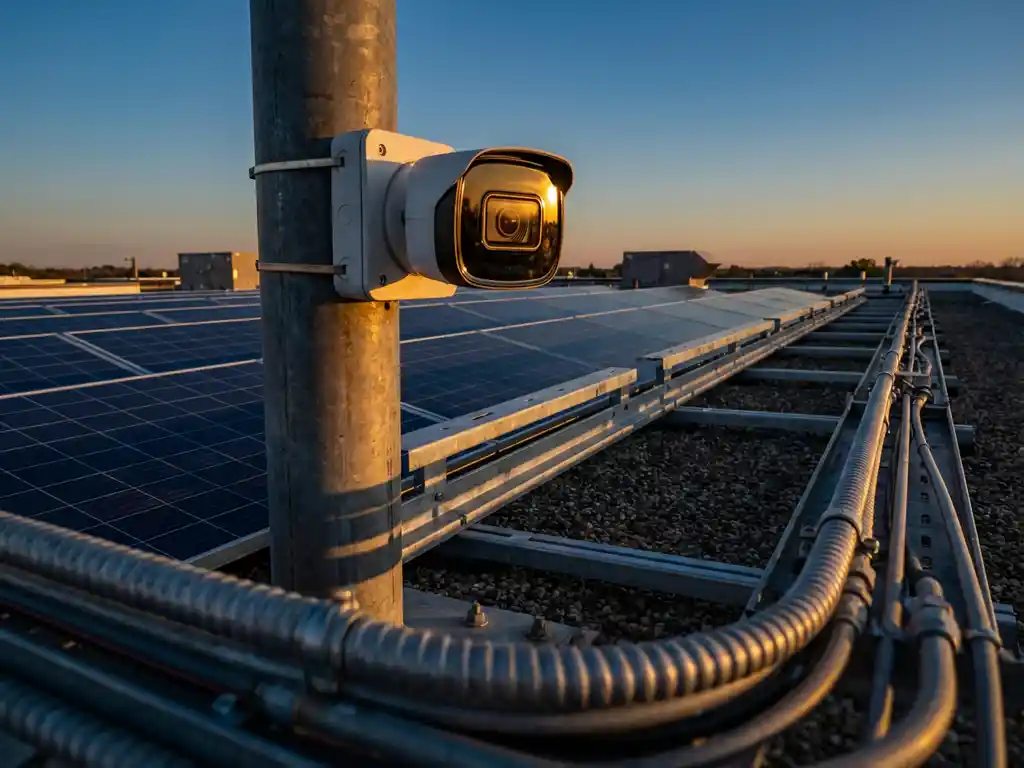
High-definition beveiligingscamera's met nachtzichtmogelijkheden bieden 24/7 monitoring van kritieke gebieden. Strategische plaatsing van camera's die perimetergebieden, apparatuurclusters en toegangspunten bestrijkt, zorgt voor een alomvattende dekking van de locatie. Moderne IP-camera's bieden mogelijkheden voor weergave op afstand, waardoor beveiligingspersoneel of locatiebeheerders installaties vanaf elke locatie kunnen monitoren.
Bewegingsdetectie en intelligente videoanalyse kunnen automatisch verdachte activiteiten identificeren en directe waarschuwingen activeren. Deze systemen kunnen onderscheid maken tussen normale activiteiten zoals onderhoudswerkzaamheden en potentiële beveiligingsdreigingen, waardoor valse alarmen worden verminderd en tegelijkertijd wordt verzekerd dat echte incidenten snelle aandacht krijgen.
Integratie met alarmsystemen en noodhulpverleningsprotocollen maakt snelle interventie mogelijk bij diefstal pogingen. Geautomatiseerde meldingen aan beveiligingsbedrijven, wetshandhavers of personeel ter plaatse kunnen de reactietijden aanzienlijk verkorten en de kans op het voorkomen van diefstal of het aanhouden van criminelen vergroten.
Externe bewakingsdiensten bieden professioneel toezicht voor installaties die geen beveiligingspersoneel ter plaatse kunnen handhaven. Deze diensten bewaken meerdere locaties tegelijk en kunnen passende reacties op beveiligingsincidenten coördineren, waaronder het inschakelen van beveiligers of het contacteren van de politie.
Welke rol speelt verzekering bij de bescherming tegen diefstal van zonnepanelen?
Verzekeren biedt financiële bescherming tegen diefstalverliezen, maar werkt het meest effectief wanneer gecombineerd met robuuste fysieke beveiligingsmaatregelen en gedegen risicobeheerpraktijken. Dekking omvat doorgaans apparatuurvervanging, bedrijfsonderbreking en extra kosten in verband met diefstalincidenten.
Zonnepanelenverzekeringen dekken diefstal over het algemeen onder de bepalingen voor schade aan eigendommen, maar de details van de dekking variëren aanzienlijk tussen verzekeraars en soorten polissen. Standaardpolissen kunnen eigen risico's, dekkingslimieten en specifieke eisen voor beveiligingsmaatregelen omvatten die moeten worden gehandhaafd om ervoor te zorgen dat de dekking geldig blijft.
Bedrijfsonderbrekingsdekking beschermt tegen inkomstenderving tijdens de periode tussen diefstal en de vervanging van apparatuur. Deze dekking kan bijzonder waardevol zijn voor commerciële installaties die opereren onder power purchase agreements, waar productietekorten leiden tot directe inkomstenderving.
Veel verzekeraars stellen specifieke beveiligingsmaatregelen eisen als voorwaarden voor dekking, waaronder minimale hekwerkstandaarden, bewakingssystemen en toegangscontrole. Deze vereisten komen vaak overeen met de best practices voor diefstalpreventie, wat stimulansen creëert voor een correcte implementatie van beveiliging.
Werken met gespecialiseerde makelaars in hernieuwbare energieverzekeringen zorgt voor de juiste selectie van dekking en helpt bij het identificeren van mogelijke dekkingshiaten. Deze professionals begrijpen de unieke risico's waarmee zonne-installaties te maken hebben en kunnen beleid aanbevelen dat uitgebreide bescherming biedt en tegelijkertijd voldoet aan projectspecifieke vereisten.
Hoe kan siteontwerp de risico's van diefstal van zonnepanelen verminderen?
Strategisch ontwerp van locaties vermindert diefstalrisico's door maximale zichtbaarheid, toegangscontrole en het creëren van natuurlijke barrières die criminele activiteiten ontmoedigen. Doordachte planning van de lay-out tijdens de ontwikkelingsfase kan de beveiliging aanzienlijk verbeteren zonder dat er ingrijpende extra investeringen nodig zijn.
Het positioneren van installaties met goed zicht vanaf openbare wegen of naburige eigendommen zorgt voor natuurlijke bewaking, wat diefstalpogingen ontmoedigt. Criminelen opereren liever ongezien, dus locaties die zichtbaar zijn voor passerend verkeer of nabijgelegen gebouwen lopen een lager diefstalrisico dan volledig geïsoleerde installaties.
Het creëren van duidelijke zichtlijnen binnen de installatie elimineert schuilplaatsen en zorgt ervoor dat beveiligingscamera's een onbelemmerd zicht hebben op kritieke gebieden. Het vermijden van dichte begroeiing, opslagruimtes of structuren die camouflage bieden, helpt om effectieve surveillance dekking over de hele locatie te behouden.
Ontwerp van toegangswegen moet operationele behoeften afwegen tegen veiligheidseisen. Enkele, gecontroleerde toegangspunten maken het eenvoudiger om de toegang tot de locatie te controleren, terwijl het verzekeren van wegen die niet gemakkelijk geblokkeerd kunnen worden, de toegang voor legitiem personeel en hulpdiensten helpt te handhaven.
Materiaallocatie strategieën kunnen diefstalrisico's verminderen door waardevolle componenten op veiligere of beter zichtbare plaatsen te positioneren. Het centraliseren van omvormers en andere waardevolle apparatuur in goed bewaakte gebieden, in plaats van deze over de hele installatie te verspreiden, concentreert beveiligingsinspanningen waar ze het meeste voordeel bieden.
Hoe Solarif helpt bij de beveiliging tegen diefstal van zonnepanelen
Wij bieden uitgebreide verzekeringsoplossingen, speciaal ontworpen voor zonne-energieprojecten, inclusief dekking voor diefstal en veiligheidsrisico's. Onze gespecialiseerde aanpak zorgt ervoor dat commerciële zonne-installaties passende bescherming ontvangen tegen diefstal, terwijl tegelijkertijd wordt voldaan aan de unieke vereisten van projecten voor hernieuwbare energie.
Onze diensten omvatten:
- Aangepaste zonnepanelenverzekering met diefstaldekking, afgestemd op projectspecificaties
- Risicobeoordeling en beveiligingsaanbevelingen door onze inspectiediensten
- Bedrijfsschadeverzekering ter bescherming tegen productieverlies door diefstalincidenten
- Deskundige begeleiding bij beveiligingseisen en best practices voor die prevention
- Claims op ondersteuning en snelle reactie om downtime na beveiligingsincidenten te minimaliseren
Met meer dan 15 jaar ervaring in verzekeringen voor hernieuwbare energie en meer dan 3,8 GW aan verzekerd vermogen, begrijpen we de beveiligingsuitdagingen waar zonneprojecten mee te maken hebben. Ons team werkt nauw samen met projectontwikkelaars, investeerders en exploitanten om uitgebreide beschermingsstrategieën te ontwikkelen die zowel de directe diefstalrisico's als de beveiligingsbehoeften op lange termijn aanpakken. Neem contact op met onze duurzame energie verzekeringsspecialisten vandaag om te bespreken hoe we uw zonne-investering kunnen beschermen tegen diefstal en andere veiligheidsrisico's.
Behoefte aan verzekeringen en Scope inspecties voor je BESS?
Neem vandaag nog contact met ons op als je meer wil weten over de mogelijkheden voor BESS verzekeringen en Scope inspecties.
E-mail: support@solarif.com
☎️ Telefoon: +31 (0)26 711 5050