


Wat zijn de tekenen van verslechtering van zonnepanelen?
Zonnepanelen zijn ontworpen om 25-30 jaar mee te gaan, maar ze blijven gedurende hun levensduur niet statisch. Net als elke technologie die wordt blootgesteld aan de elementen, ondergaan zonnepanelen geleidelijke slijtage die hun prestaties en energieopbrengst kan beïnvloeden. Het begrijpen van de tekenen van achteruitgang van zonnepanelen is cruciaal voor het handhaven van optimale systeemprestaties en het beschermen van uw investering in hernieuwbare energie.
Vroege detectie van achteruitgangsproblemen maakt tijdige onderhoud en reparaties mogelijk, waardoor kleine problemen geen kostbare systeemstoringen worden. Voor commerciële zonne-installaties is het herkennen van deze waarschuwingssignalen extra belangrijk, omdat deze direct van invloed zijn op de projectrendementen en verzekering dekkingseisen.
Wat is de degradatie van zonnepanelen en waarom gebeurt het?
Slijtage van zonnepanelen is de geleidelijke afname van de prestaties en de fysieke toestand die van nature in de loop van de tijd optreedt als gevolg van blootstelling aan omgevingsfactoren en materiaalveroudering. Zonnepanelen slijten doorgaans met een snelheid van 0,5–0,8% per jaar, wat betekent dat ze na 25 jaar gebruik nog ongeveer 80–85% van hun oorspronkelijke capaciteit behouden.
Deze achteruitgang gebeurt via verschillende mechanismen. Fotovoltaïsche cellen ondergaan thermische cycli doordat ze overdag opwarmen en ’s nachts afkoelen, waardoor materialen herhaaldelijk uitzetten en krimpen. UV-straling breekt geleidelijk polymeermaterialen in de constructie van het paneel af, terwijl vocht afdichtingen kan binnendringen en corrosie van elektrische componenten kan veroorzaken.
Weersomstandigheden versnellen het verouderingsproces. Extreme temperaturen, hagel, sterke wind en zware sneeuwbelasting veroorzaken fysieke stress op panelen. Zoute lucht in kustgebieden verhoogt de corrosiesnelheid, terwijl ophoping van stof en vuil lokale opwarming kan veroorzaken die cellen beschadigt. Productiefouten of slechte installatiepraktijken kunnen ook leiden tot voortijdige slijtage, die verder gaat dan normale verouderingspatronen.
Wat zijn de meest voorkomende visuele tekenen van schade aan zonnepanelen?
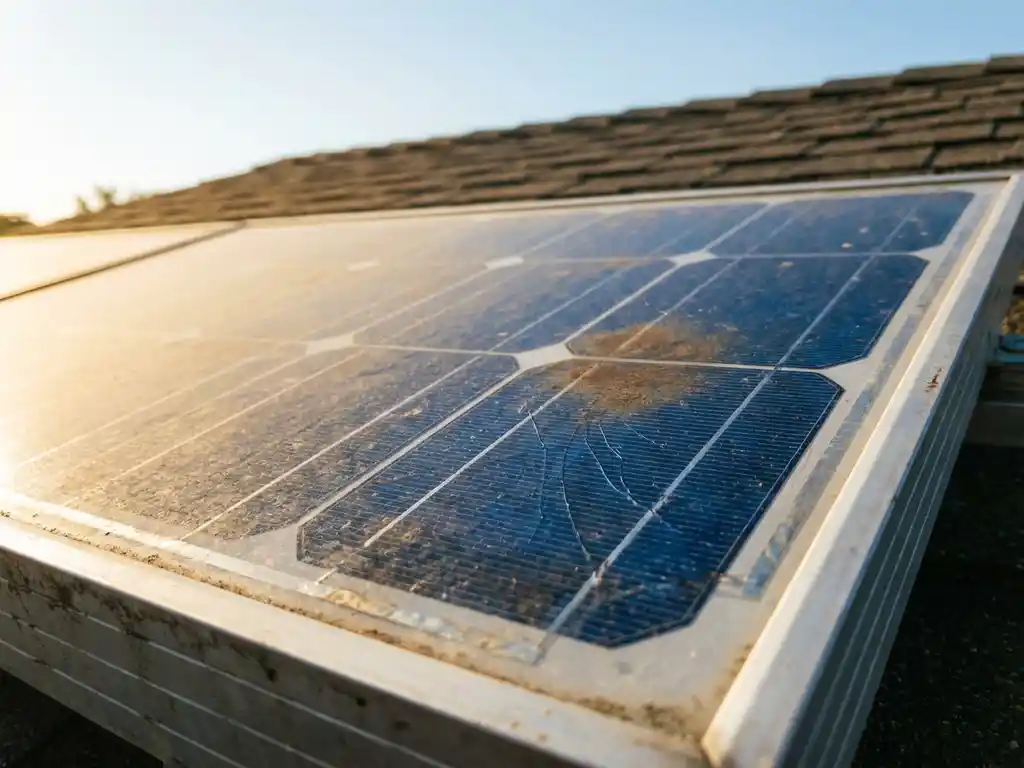
De meest zichtbare tekenen van schade aan zonnepanelen zijn gebarsten of gebroken glas, verkleurde cellen, brandplekken en fysieke vervorming van de paneelstructuur. Deze visuele indicatoren signaleren vaak onderliggende prestatieproblemen die onmiddellijke aandacht vereisen.
Gebarsten glas is een van de meest voor de hand liggende indicaties van schade. Zelfs kleine haarscheurtjes kunnen vochtinfiltratie veroorzaken, wat leidt tot verdere aantasting van interne componenten. Verkleuring verschijnt als bruine of gele vlekken op individuele cellen, wat doorgaans duidt op oververhitting of elektrische problemen in het fotovoltaïsche materiaal.
Brandplekken of schroeipatronen wijzen op ernstige elektrische problemen, mogelijk door vlamboogstoringen of componentdefecten. Deze vereisen onmiddellijke professionele beoordeling omdat ze veiligheidsrisico's met zich meebrengen. Fysieke deformatie - zoals kromgetrokken frames, verbogen montagehardware of panelen die niet meer plat liggen - duidt op structurele schade door weersomstandigheden of installatieproblemen.
Andere visuele tekenen zijn corrosie op metalen componenten, beschadigde aansluitdozen en loshangende of blootliggende bedrading. Delaminatie, waarbij de beschermende lagen zich losmaken van de fotovoltaïsche cellen, zorgt voor een gebobbelde uitstraling op het paneeloppervlak en tast zowel de prestaties als de weersbestendigheid aan.
Hoe kun je zien of zonnepanelen aan efficiëntie verliezen?
Detectie van verlies aan efficiëntie van zonnepanelen gebeurt door systematische monitoring van de energieproductie in vergelijking met de verwachte prestaties op basis van weersomstandigheden en historische gegevens. Een consistente daling in de energieopwekking die verder gaat dan normale degradatiesnelheden, duidt op efficiëntieproblemen die nader onderzoek vereisen.
Moderne zonne-installaties zijn uitgerust met monitoringsystemen die de dagelijkse, maandelijkse en jaarlijkse energieproductie bijhouden. Door de huidige opbrengst te vergelijken met de referentieprestaties, worden trends in de efficiëntie zichtbaar. Een plotselinge daling van de productie of een geleidelijke afname van meer dan 1% per jaar duidt op problemen die verder gaan dan normale slijtage.
Prestatiebewaking moet rekening houden met seizoensgebonden variaties en weerpatronen. Verminderde output tijdens bewolkte perioden is normaal, maar consistent lagere productie tijdens optimale omstandigheden duidt op problemen. Monitoring op stringniveau kan ondermaats presterende secties van een array identificeren, wat helpt bij het lokaliseren van specifieke beschadigde panelen.
Professionele energieaudits bieden uitgebreide efficiëntiebeoordelingen. Deze evaluaties meten de werkelijke versus de verwachte output onder gestandaardiseerde testomstandigheden, waarbij prestatiehiaten en hun oorzaken worden geïdentificeerd. Thermische beeldvorming tijdens inspecties onthult hete plekken die duiden op elektrische problemen of beschadigde cellen die de algehele systeemefficiëntie beïnvloeden.
Wat zorgt ervoor dat zonnepanelen sneller degraderen dan normaal?
Versnelde slijtage van zonnepanelen is het gevolg van extreme omgevingsomstandigheden, onjuiste installatie, fabricagefouten en onvoldoende onderhoud. Deze factoren kunnen de jaarlijkse slijtagepercentages verhogen van de normale 0,5–0,8% tot 1–2% of meer.
Omgevingsstressoren omvatten extreme temperatuurschommelingen, die herhaaldelijke uitzettingen en inkrimpingen van materialen veroorzaken. Hoge luchtvochtigheid en blootstelling aan zout versnellen de corrosie van elektrische componenten en bevestigingsmateriaal. Zware weersomstandigheden zoals hagel, harde wind en zware sneeuwlasten kunnen onmiddellijke schade veroorzaken of de structurele integriteit na verloop van tijd verzwakken.
Installatiekwaliteit beïnvloedt de degradatiesnelheid aanzienlijk. Slechte montage waardoor het paneel kan bewegen, kan spanningsscheurtjes veroorzaken. Onvoldoende elektrische verbindingen kunnen leiden tot boogfouten en oververhitting. Onjuiste aarding verhoogt het risico op corrosie, terwijl onvoldoende drainage wateraccumulatie toelaat die componenten beschadigt.
Productiefouten zoals slechte soldeerverbindingen, onvoldoende inkapseling of ondermaatse materialen kunnen voortijdige storingen veroorzaken. Een gebrek aan regelmatig onderhoud zorgt ervoor dat kleine problemen zich opstapelen. Ophopend vuil en puin kunnen hotspots creëren, terwijl beschadigde componenten blijven verslechteren zonder interventie, wat andere delen van het systeem aantast.
Wanneer moet u zonnepanelen professioneel laten inspecteren?
Professionele inspecties van zonnepanelen dienen jaarlijks te plaatsvinden voor commerciële installaties, onmiddellijk na zware weersomstandigheden, en telkens wanneer monitorsystemen prestatieproblemen aangeven. Regelmatige professionele beoordelingen identificeren problemen voordat ze aanzienlijke schade of efficiëntieverlies veroorzaken.
Jaarlijkse inspecties zijn bijzonder belangrijk voor commerciële zonne-energieprojecten, waar verzekeringsdekking en financiële rendementen afhankelijk zijn van de betrouwbaarheid van het systeem. Deze uitgebreide evaluaties controleren elektrische verbindingen, structurele integriteit en algehele systeemprestaties met behulp van gespecialiseerde apparatuur en expertise.
Inspecties na de storm zijn cruciaal na hagel, harde wind of ander zwaar weer. Zelfs als panelen onbeschadigd lijken, kunnen er microscheurtjes of losse verbindingen zijn ontstaan die mettertijd erger worden. Schadeclaims voor weersschade vereisen professionele documentatie van ontdekte problemen.
Prestatiegestuurde inspecties worden noodzakelijk wanneer monitoringdata onverklaarbare dalingen in energieproductie laten zien. Professionele technici kunnen de grondoorzaken identificeren die mogelijk niet zichtbaar zijn tijdens routine visuele controles, zoals elektrische storingen of verslechterde componenten die de systeemefficiëntie beïnvloeden.
Hoe voorkomt u voortijdige achteruitgang van zonnepanelen?
Preventief voortijdige verslechtering van zonnepanelen vereist een juiste installatie, regelmatig onderhoud, milieubeschermingsmaatregelen en de selectie van kwaliteitscomponenten. Proactieve zorg verlengt de levensduur van het systeem aanzienlijk en handhaaft optimale prestaties gedurende de operationele levensduur van de panelen.
Kwaliteitsinstallatie vormt de basis voor een gezonde installatie op lange termijn. Juiste montagesystemen houden rekening met thermische uitzetting en zorgen voor een veilige bevestiging. Correcte elektrische verbindingen voorkomen boogfouten en oververhitting. Voldoende afstand zorgt voor luchtcirculatie voor koeling, terwijl een goede aarding beschermt tegen elektrische problemen en corrosie.
Regelmatig onderhoud omvat het reinigen van panelen om vuil en puin te verwijderen die hot spots veroorzaken. Het controleren en vastdraaien van elektrische verbindingen voorkomt weerstandsverwarming. Het inspecteren van bevestigingsmateriaal identificeert losse onderdelen voordat ze schade veroorzaken. Het snoeien van begroeiing voorkomt schaduwvorming en fysiek contact met panelen.
Milieubescherming omvat strategisch systeemontwerp en componentkeuze. In kustgebieden zijn materialen van maritieme kwaliteit bestand tegen zoutcorrosie. In hagelseizoensgebieden biedt slagvast glas extra bescherming. Goede drainage voorkomt waterophoping, terwijl overspanningsbeveiligingsapparaten beschermen tegen elektrische schade door bliksem en netwerkfluctuaties.
Hoe Solarif helpt bij het beheer van degradatie van zonnepanelen
We bieden uitgebreide risicobeheer oplossingen die zonne-installaties beschermen tegen verliezen door slijtage en optimale systeemprestaties gedurende hun operationele levensduur garanderen. Onze gespecialiseerde diensten richten zich op zowel de preventie- als de beschermingsaspecten van slijtage van zonnepanelen.
Onze diensten omvatten:
- Scope 12 Inspecties: SCIOS-gecertificeerde inspecteurs voeren grondige beoordelingen uit om risico's op achteruitgang te identificeren en de verzekerbaarheid te waarborgen.
- Risicoverzekeringen Aangepaste dekking ter bescherming tegen schade door verval, weersinvloeden en defecten aan componenten.
- Prestatietoezegging Bescherming tegen efficiëntieverliezen en faillissement van de fabrikant die de systeemprestaties kunnen beïnvloeden.
- Solarif-Gecertificeerde Programma's: Kwaliteitscertificering die de systeem betrouwbaarheid verbetert en toegang biedt tot uitgebreide garantie dekking.
Als verzekeringsmakelaar gespecialiseerd in hernieuwbare energieprojecten begrijpen we dat effectief beheer van achteruitgang zowel preventieve maatregelen als uitgebreide bescherming vereist. Onze expertise helpt commerciële zonne projecten behouden optimale prestaties en beschermen investeringen tegen onvoorziene verslechteringsproblemen.
Klaar om uw zonne-investering te beschermen tegen risico's op waardevermindering? Neem vandaag nog contact op met onze specialisten in hernieuwbare energieverzekeringen voor een uitgebreide risicobeoordeling en een op maat gemaakte beschermingsstrategie.
Behoefte aan verzekeringen en Scope inspecties voor je BESS?
Neem vandaag nog contact met ons op als je meer wil weten over de mogelijkheden voor BESS verzekeringen en Scope inspecties.
E-mail: support@solarif.com
☎️ Telefoon: +31 (0)26 711 5050