


Wat zijn de risico's van het kiezen voor goedkope zonne-energieapparatuur?
De snelle groei van de zonne-energiesector heeft geleid tot hevige prijzenconcurrentie, waardoor veel projectontwikkelaars en investeerders hebben overwogen om goedkopere apparatuuropties te kiezen. Hoewel lagere initiële kosten aantrekkelijk kunnen lijken voor commerciële zonneprojecten, brengt goedkope zonneapparatuur vaak aanzienlijke verborgen risico's met zich mee die de projectopbrengsten kunnen vernietigen en ernstige operationele uitdagingen kunnen creëren.
Het begrijpen van deze risico's is cruciaal voor het nemen van weloverwogen investeringsbeslissingen. Van prestatievermindering tot veiligheidsrisico's en garantieproblemen, de werkelijke kosten van goedkope zonne-apparatuur reiken veel verder dan de initiële aankoopprijs en kunnen de haalbaarheid van investeringen in hernieuwbare energie op lange termijn in gevaar brengen.
Wat zijn de belangrijkste risico's van het gebruik van goedkope zonneapparatuur?
Goedkope zonne-apparatuur brengt verschillende kritieke risico's met zich mee, waaronder voortijdige defecten van componenten, verminderde energieopbrengst, veiligheidsrisico's, onvoldoende garanties en hogere operationele kosten op lange termijn. Deze risico's kunnen de winstgevendheid van projecten aanzienlijk beïnvloeden en aanzienlijke financiële blootstelling creëren voor investeerders en ontwikkelaars.
De belangrijkste risico's die gepaard gaan met goedkope zonne-energieapparatuur vloeien voort uit gecompromitteerde productieprocessen en inferieure materialen. Fabrikanten bezuinigen vaak door siliconen van lagere kwaliteit, dunnere beschermende films en minder robuuste elektrische componenten te gebruiken. Deze aanpak creëert eencascade van potentiële problemen die zich gedurende de operationele levensduur van het systeem kunnen manifesteren.
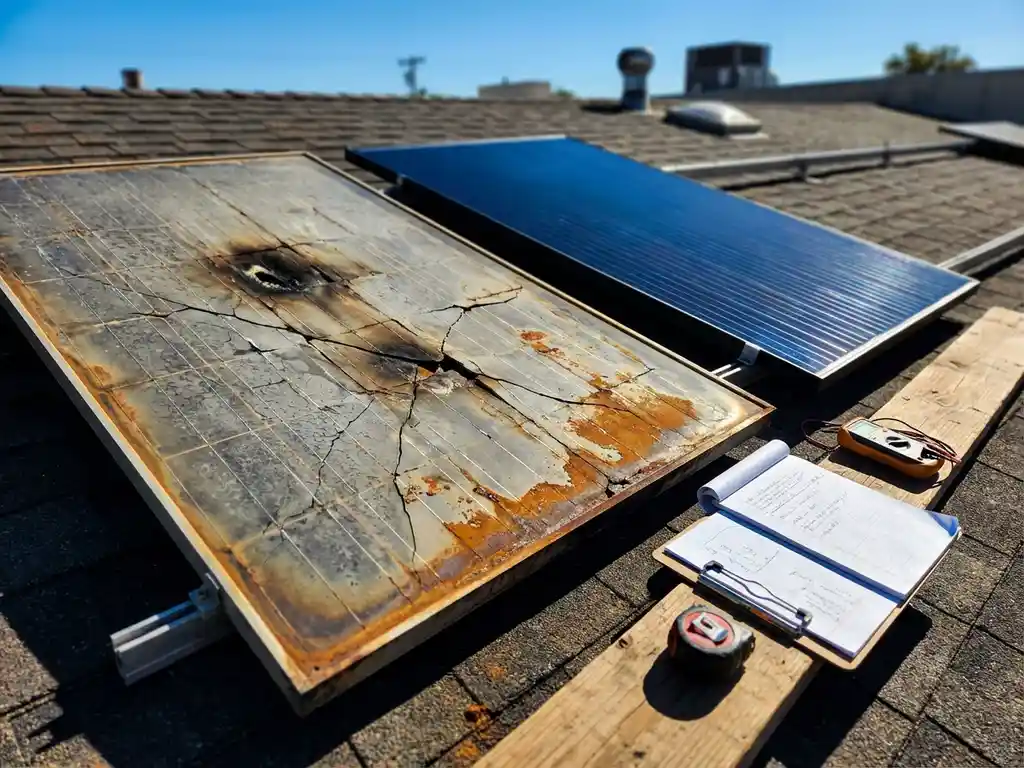
Componentbetrouwbaarheid is een van de belangrijkste zorgen. Goedkope omvormers vertonen vaker hogere storingen door onvoldoende thermisch beheer en elektronische componenten van lagere kwaliteit. Evenzo kunnen montagesystemen gemaakt van ondermaatse materialen te lijden hebben onder corrosie, structurele zwakte of verbindingsfouten die de systeemintegriteit in gevaar brengen.
Kwaliteitscontroleproblemen teisteren veel budgetfabrikanten, wat resulteert in inconsistente productprestaties en hogere defectpercentages. Zonder strenge testprotocollen kunnen deze fabrikanten niet garanderen dat hun producten zullen presteren zoals gespecificeerd onder real-worldomstandigheden, wat onzekerheid creëert voor projectbelanghebbenden.
Hoe beïnvloedt apparatuur van lage kwaliteit de prestaties van zonnepanelen op lange termijn?
Zonne-energieapparatuur van lage kwaliteit vertoont doorgaans een snellere prestatieafname, waarbij de jaarlijkse opbrengstverliezen kunnen oplopen tot 0,8–1,01 TP3T, tegenover 0,5–0,61 TP3T bij apparatuur van topkwaliteit. Deze versnelde afname leidt tot een aanzienlijke vermindering van de energieproductie gedurende de levensduur en van het rendement van het project over de gebruikelijke exploitatieperiode van 25 jaar.
Prestatievermindering in goedkope zonnepanelen treedt op via meerdere mechanismen. Potentieel Geïnduceerde Degradatie (PID) treft panelen met onvoldoende materialen of slechte productieprocessen, waardoor het energievermogen dramatisch daalt onder bepaalde spannings- en vochtigheidsomstandigheden. Licht Geïnduceerde Degradatie (LID) kan ook ernstiger zijn in panelen van mindere kwaliteit als gevolg van inferieure siliciumverwerking.
Prestatievermindering van omvormers vormt nog een kritieke zorg. Budgetomvormers missen vaak geavanceerde thermische beheersystemen, wat leidt tot hogere bedrijfstemperaturen die de veroudering van componenten versnellen. Deze thermische stress vermindert de efficiëntie en verkort de levensduur, waardoor frequentere vervangingen nodig zijn die de energieproductie verstoren.
Het cumulatieve effect van deze degradatieproblemen wordt in de loop van de tijd aanzienlijk. Een zonne-energieproject met een jaarlijkse degradatie van 1% in plaats van 0,5% zal over een periode van 25 jaar ongeveer 12% minder energie opwekken, wat rechtstreeks van invloed is op de berekeningen van de inkomsten en het rendement op de investering waarop projectontwikkelaars vertrouwen voor financiering en toezeggingen van investeerders.
Welke veiligheidsrisico's zijn er verbonden aan goedkope zonnepanelen en componenten?
Goedkope zonneapparatuur kan aanzienlijke veiligheidsrisico's met zich meebrengen, waaronder een verhoogd brandgevaar, risico op elektrische schokken, structurele storingen en blootstelling aan giftige materialen. Deze gevaren kunnen leiden tot schade aan eigendommen, persoonlijk letsel, aansprakelijkheidseisen en schendingen van regelgeving, waardoor projecteigenaren worden blootgesteld aan aanzienlijke juridische en financiële gevolgen.
Brandgevaar is de meest ernstige veiligheidszorg bij goedkope zonne-energiesystemen. Slecht geproduceerde elektrische verbindingen, ontoereikende isolatie en ondermaatse aansluitboxen kunnen hotspots en doorslagcondities creëren. In combinatie met ontoereikend thermisch beheer in goedkope omvormers verhoogt dit de kans op elektrische branden aanzienlijk, die zich kunnen verspreiden naar omliggende constructies.
Elektrische veiligheidsrisico's kunnen ontstaan door gecompromitteerde aardingssystemen, inadequate kabelbeheer en slechte verbindingskwaliteit bij goedkope installaties. Deze problemen kunnen gevaarlijke spanningspotentialen creëren op apparatuurframes en montageconstructies, wat de risico's op elektrocutie voor onderhoudspersoneel en hulpverleners vergroot.
Structurele integriteitsproblemen met goedkope montagesystemen kunnen leiden tot loslaten van panelen tijdens zware weersomstandigheden. Optrekkracht van de wind en thermische cycli kunnen leiden tot falen van inferieure montagematerialen, waardoor deze projectielen worden en mogelijk aangrenzende eigendommen beschadigen of personeel onder de installatie verwonden.
Veel verzekeraars erkennen deze verhoogde risico's en kunnen dekking weigeren voor installaties die gebruikmaken van onbewezen of ondermaatse apparatuur. Dit creëert extra uitdagingen voor projectfinanciering en risicobeheer, aangezien een uitgebreide verzekeringsdekking doorgaans vereist is voor commerciële zonneprojecten.
Waarom goedkope zonnepaneelgaranties je vaak niet beschermen
Goedkope zonneapparatuurgaranties bieden vaak geen zinvolle bescherming vanwege beperkte financiële middelen, restrictieve voorwaarden, korte dekkingsperioden en instabiliteit van de fabrikant. Deze garantiebeperkingen stellen projecteigenaren bloot aan aanzienlijke vervangings- en reparatiekosten wanneer apparatuur voortijdig defect raakt.
Financiële stabiliteit van de fabrikant is een kritieke garantiebezorgdheid. Veel leveranciers van budgetapparatuur opereren met krappe winstmarges en beperkte kapitaalreserves, waardoor ze kwetsbaar zijn voor marktdalingen of verstoringen in de toeleveringsketen. Wanneer deze bedrijven falen of de markt verlaten, worden hun garanties waardeloos, ongeacht de oorspronkelijke voorwaarden.
Garantievoorwaarden voor goedkope apparatuur bevatten vaak tal van uitsluitingen en beperkingen die de daadwerkelijke dekking verminderen. Dit kunnen beperkingen zijn met betrekking tot omgevingsomstandigheden, installatievereisten of onderhoudsprotocollen die in de praktijk moeilijk te vervullen zijn. Dergelijke beperkingen kunnen garantieclaims ongeldig maken, zelfs wanneer apparatuur defect raakt als gevolg van fabricagefouten.
Het claimproces voor garanties op budgetapparatuur is doorgaans complexer en minder responsief dan dat van premium fabrikanten. Beperkte klantenservicebronnen, taalbarrières en bureaucratische procedures kunnen garantiezaken vertragen of compliceren wanneer tijdige reparaties nodig zijn om de energieproductie te herstellen.
Prestatiegaranties, wanneer aangeboden door fabrikanten van goedkope apparatuur, bieden doorgaans lagere garanties en kortere dekkingsperiodes. Deze verminderde bescherming sluit niet aan bij de projectfinancieringsvereisten en de verwachtingen van investeerders voor zekerheid op het gebied van langetermijnprestaties.
Hoeveel meer zal goedkope zonneapparatuur u op de lange termijn kosten?
Goedkope zonne-energie-installaties kosten over de gehele levensduur van het systeem doorgaans 15–30% meer, wanneer rekening wordt gehouden met een lagere energieopbrengst, hogere onderhoudskosten, een vroegere vervangingsbehoefte en hogere verzekeringspremies. Deze verborgen kosten overschrijden vaak de aanvankelijke besparingen al binnen de eerste tien jaar van gebruik.
Energieverlies is de grootste verborgen kostenpost van goedkope zonne-energie-installaties. Prestatieverlies, storingen en een verminderde beschikbaarheid van het systeem hebben een directe invloed op de inkomsten. Bij een commercieel zonne-energieproject kan zelfs een afname van 5% in de totale energieopbrengst over de levensduur leiden tot honderdduizenden dollars aan gederfde inkomsten.
Onderhouds- en reparatiekosten lopen aanzienlijk op bij budgetapparatuur door hogere faalpercentages en kortere levensduren van componenten. Vervanging van omvormers, reparatie van panelen en systeemdiagnostiek vereisen zowel directe kosten voor onderdelen en arbeid, als indirecte kosten door productieverlies tijdens stilstand.
Verzekeren implicaties voegen nog een laag van verborgen kosten toe. Projecten die gebruikmaken van onbewezen of ondermaatse apparatuur kunnen te maken krijgen met hogere premies, uitsluitingen in dekking of moeilijkheden bij het verkrijgen van een uitgebreide verzekering. Deze verzekeringsuitdagingen kunnen de financiering van projecten beïnvloeden en leiden tot extra financiële blootstelling voor eigenaren.
Vervangingstijd wordt cruciaal, aangezien goedkope apparatuur doorgaans 10-15 jaar eerder vervanging behoeft dan premium alternatieven. Deze versnelde vervangingscyclus verstoort de kasstroomprognoses en kan zich voordoen terwijl de projectfinanciering nog openstaat, wat aanvullende kapitaalvereisten creëert die niet waren voorzien in de oorspronkelijke projectmodellen.
Hoe Solarif helpt bij risicobeheer van zonneapparatuur
Wij helpen commerciële zonneprojecten bij het beperken van apparatuurrisico's door middel van uitgebreide risicobeoordelingen, gespecialiseerde verzekeringsoplossingen en diensten voor kwaliteitsverificatie. Onze aanpak zorgt ervoor dat uw zonne-investering wordt beschermd tegen de verborgen kosten en gevaren die gepaard gaan met ondermaatse apparatuur.
Onze diensten voor risicobeheer omvatten:
- Scope 12-inspecties die de kwaliteit van de apparatuur en installatienormen verifiëren voordat een verzekeringsdekking van kracht wordt
- Gespecialiseerde zonne-energieapparatuurverzekering die prestatierisico's, apparatuurstoringen en operationele onderbrekingen dekt
- Solarif-gecertificeerde apparatuurverificatie die betrouwbare fabrikanten identificeert en verbeterde garantiebescherming biedt
- Risico-evaluatieconsultaties die materiaalkeuze en de impact daarvan op de verzekerbaarheid van projecten beoordelen
Met ruim 15 jaar ervaring in het verzekeren van 3,8 GW aan zonne-energiecapaciteit begrijpen we hoe de kwaliteit van apparatuur de projectsucces en de verzekeringsvereisten direct beïnvloedt. Onze SCIOS-gecertificeerde inspecteurs kunnen potentiële risico's van apparatuur identificeren voordat ze kostbare problemen worden, terwijl onze verzekeringsoplossingen uitgebreide bescherming bieden die is afgestemd op de specifieke behoeften van uw project.
Klaar om uw zonne-investering te beschermen tegen apparatuurrisico's? Neem contact op met onze Zonne-energieverzekering experts vandaag om te bespreken hoe we kunnen helpen de langetermijnsucces en winstgevendheid van uw project te garanderen.
Behoefte aan verzekeringen en Scope inspecties voor je BESS?
Neem vandaag nog contact met ons op als je meer wil weten over de mogelijkheden voor BESS verzekeringen en Scope inspecties.
E-mail: support@solarif.com
☎️ Telefoon: +31 (0)26 711 5050