



Kan vibratiesprestaties BESS beïnvloeden?
Battery Energy Storage Systems (BESS) are becoming increasingly critical to renewable energy projects, but their performance can be significantly compromised by an often-overlooked threat: vibration damage. As these sophisticated systems store and discharge massive amounts of electrical energy, even minor vibrations can cascade into major performance issues, safety risks, and costly downtime.
Understanding how vibration damage affects BESS performance is essential for project developers, investors, and operators who want to protect their energy storage investments. From loose electrical connections to damaged battery cells, vibration-related issues can undermine the reliability and safety of these complex systems.
What is vibration damage in BESS, and how does it occur?
Vibration damage in BESS refers to the physical deterioration of battery components, electrical connections, and control systems caused by repetitive mechanical motion or shock. This damage occurs when external forces create oscillations that exceed the design tolerances of sensitive battery system components.
Several factors contribute to vibration damage in battery energy storage systems. Environmental sources include seismic activity, nearby construction work, heavy vehicle traffic, and industrial machinery operation. Internal sources can include cooling fan vibrations, transformer hum, and thermal expansion cycles within the battery containers themselves.
The damage mechanism typically begins with small, repetitive movements that gradually loosen connections or create microfractures in battery components. Over time, these minor issues compound into significant problems. Electrical connections may develop increased resistance, battery cell casings can crack, and control system components may shift out of alignment.
Transportation and installation phases present particularly high vibration risks. Battery modules experience significant mechanical stress during shipping and crane operations. Improper handling during these phases can introduce damage that may not manifest until the system is operational, making vibration damage a concern throughout the entire BESS lifecycle.
How does vibration damage affect BESS performance and safety?
Vibration damage reduces BESS performance through decreased efficiency, shortened lifespan, and increased failure rates. Safety risks include thermal runaway events, electrical faults, and fire hazards that can result from compromised battery integrity and loose electrical connections.
Performance impacts manifest in several measurable ways. Damaged electrical connections create resistance that reduces charging and discharging efficiency, leading to energy losses and heat generation. Battery cells with compromised casings may experience electrolyte leakage, reducing their capacity and creating imbalanced charge states across the battery pack.
The Battery Management System (BMS) becomes less reliable when vibration damage affects sensors and control circuits. This can result in inaccurate monitoring of cell voltages, temperatures, and current flows. Without precise BMS control, the system may operate outside safe parameters or fail to detect developing problems before they become critical.
Safety implications are particularly concerning for verzekering en risicobeheer. Vibration-damaged battery cells are more susceptible to thermal runaway, a condition in which batteries overheat and can ignite. Loose electrical connections create arc-flash risks and potential ignition sources. These safety risks not only threaten personnel and equipment but can also affect insurance coverage and project financing.
What are the most vulnerable components in BESS to vibration damage?
The most vulnerable BESS components to vibration damage are electrical connections, battery cell casings, BMS sensors, and mounting hardware. These components experience the highest mechanical stress and have the least tolerance for movement or displacement during system operation.
Electrical connections represent the primary point of vulnerability. High-current connections between battery modules, DC contactors, and power conversion equipment are particularly susceptible. These connections rely on precise contact pressure and alignment to maintain low resistance. Even minor vibrations can cause micro-movements that increase resistance, generate heat, and accelerate corrosion.
Battery cell casings, especially in large-format lithium-ion cells, can develop stress fractures from repeated vibration cycles. The aluminum or steel casings that contain the electrochemical components are designed for electrical performance rather than mechanical resilience. Cracks in these casings can lead to electrolyte leakage and compromised cell performance.
BMS sensors and control circuits are vulnerable due to their precision requirements. Temperature sensors, voltage measurement circuits, and communication cables can be displaced or damaged by vibrations. Since the BMS relies on accurate sensor data for safe operation, any vibration-induced sensor errors can compromise the entire system’s safety and performance.
Mounting and structural components also face significant stress. Battery racks, container mounting points, and equipment foundations must withstand not only static loads but also dynamic forces from vibrations. Inadequate mounting systems can amplify vibrations rather than dampen them, creating a cascading effect throughout the installation.
How can you test BESS systems for vibration resistance?
BESS vibration resistance testing involves controlled laboratory tests following IEC 62133 and UN 38.3 standards, field vibration monitoring during operation, and comprehensive inspections of mechanical connections and mounting systems. These tests evaluate both component-level resilience and system-wide vibration response.
Laboratory testing typically includes sine-wave vibration tests, random vibration exposure, and shock testing. Battery modules undergo standardized vibration profiles that simulate transportation and operational conditions. Test parameters include frequency ranges from 7 Hz to 200 Hz, acceleration levels up to 15 g, and test durations ranging from several hours to several days.
Field testing involves installing vibration monitoring equipment on operational BESS installations. Accelerometers placed at critical points measure actual vibration levels during normal operation. This data helps validate design assumptions and identify unexpected vibration sources that laboratory tests might miss.
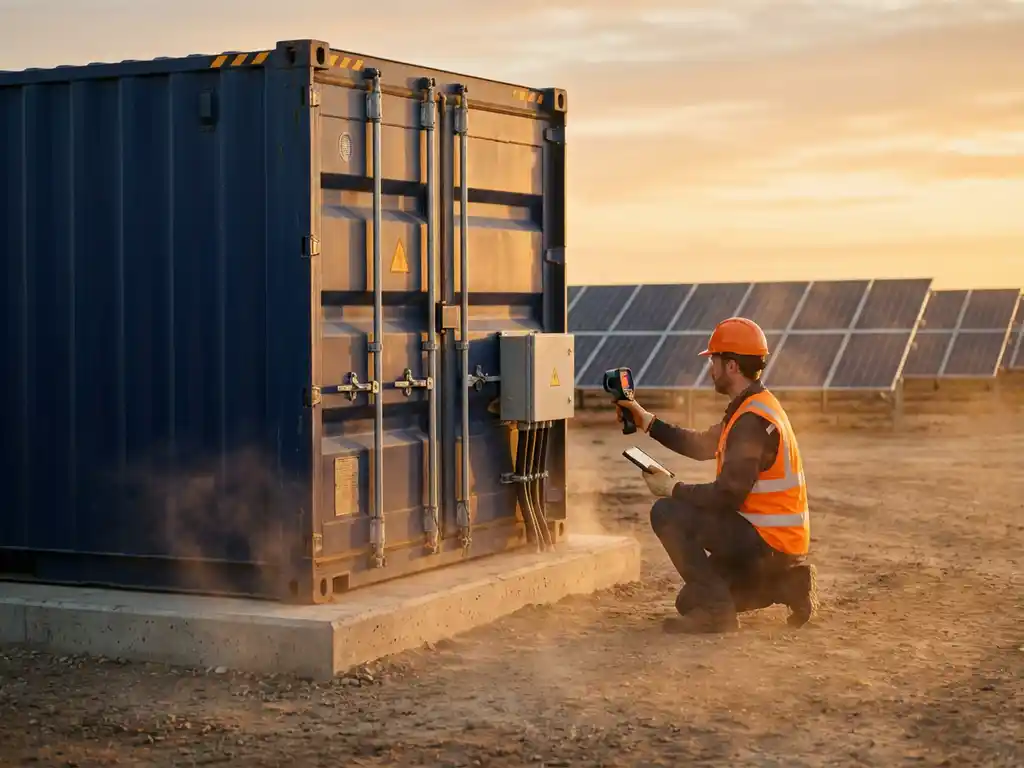
Inspection protocols focus on visual examination of connections, torque verification of bolted joints, and thermal imaging to detect resistance increases from loose connections. Regular inspection schedules should include quarterly visual checks, annual torque verification, and thermal imaging during peak load conditions.
Quality control testing during installation is equally important. This includes verification of mounting system integrity, proper torque application on all connections, and baseline vibration measurements before system commissioning. Documentation of these baseline conditions enables future comparison and trend analysis.
What protection strategies prevent vibration damage in BESS?
Effective vibration protection strategies include proper foundation design, vibration isolation systems, robust mounting hardware, and regular maintenance protocols. These approaches work together to minimize vibration transmission and ensure long-term system reliability.
Foundation design forms the first line of defense against vibration damage. Proper concrete foundations with adequate mass and reinforcement help absorb and dissipate vibrations before they reach sensitive equipment. Foundation designs should account for local soil conditions, seismic requirements, and potential vibration sources in the surrounding area.
Vibration isolation systems use specialized mounts, dampers, and flexible connections to reduce vibration transmission. Anti-vibration mounts under battery containers, flexible conduit connections, and shock-absorbing hardware help isolate sensitive components from external vibrations. These systems must be designed for the specific frequency ranges and amplitudes expected at each installation site.
Robust mounting and connection systems ensure that unavoidable vibrations do not cause damage. This includes using appropriate fastener grades, applying proper torque specifications, and implementing redundant connection designs. Electrical connections should incorporate strain relief and flexible elements to accommodate minor movements without losing contact integrity.
Preventive maintenance protocols establish regular inspection and maintenance schedules to identify and address vibration-related issues before they cause failures. This includes periodic torque verification, thermal imaging surveys, and vibration monitoring to track system condition over time.
How Solarif helps with BESS vibration damage prevention
We provide comprehensive risk management and quality inspection services specifically designed to protect BESS investments from vibration damage and related performance issues. Our specialized approach combines technical expertise with insurance knowledge to ensure your battery energy storage systems maintain optimal performance and safety standards.
Our BESS protection services include:
- Scope 12 quality inspections that evaluate vibration resistance and mounting system integrity
- Risk assessments covering mechanical design, installation quality, and operational vulnerabilities
- Insurance solutions tailored for BESS projects, with comprehensive vibration damage coverage
- Ongoing monitoring protocols to detect early signs of vibration-related deterioration
As an insurance broker specializing in renewable energy projects, we understand that insurers often require detailed vibration protection measures for BESS coverage. Our technical inspections help demonstrate compliance with industry standards while identifying potential issues before they affect your project’s performance or insurance status.
Protect your BESS investment from vibration damage with our specialized inspection and insurance services. Contact our experts in duurzame energie today to discuss comprehensive protection strategies for your battery storage project.
Behoefte aan verzekeringen en Scope inspecties voor je BESS?
Neem vandaag nog contact met ons op als je meer wil weten over de mogelijkheden voor BESS verzekeringen en Scope inspecties.
E-mail: support@solarif.com
☎️ Telefoon: +31 (0)26 711 5050