


Hoe kan weerschade een impact hebben op zonne-energiesystemen?
Zonne-installaties vertegenwoordigen aanzienlijke investeringen in hernieuwbare energie-infrastructuur, maar ze worden voortdurend blootgesteld aan natuurlijke elementen die aanzienlijke schade kunnen veroorzaken. Weergerelateerde incidenten zijn verantwoordelijk voor een aanzienlijk deel van de verzekering claims in de zonne-energiesector, waardoor het essentieel is voor projectontwikkelaars, investeerders en EPC-aannemers om deze risico's te begrijpen.
Van verwoestende hagelbuien die panelen kunnen verbrijzelen tot harde wind die montagesystemen kan vernietigen, weerschade aan zonne-energiesystemen kan leiden tot aanzienlijke financiële verliezen, productiestilstand en gecompromitteerde projecthaalbaarheid. Het begrijpen van deze risico's en het implementeren van effectieve beschermingsstrategieën is cruciaal voor het handhaven van winstgevende en betrouwbare zonne-energieoperaties.
Welke soorten weer kunnen zonnepanelen beschadigen?
Zonnepanelen lopen gevaar door diverse weersomstandigheden, waaronder hagel, harde wind, blikseminslag, extreme temperaturen, zware sneeuwlast en overstromingen. Elk type weer veroorzaakt specifieke schade patronen die zowel individuele componenten als de algehele systeemprestaties kunnen aantasten.
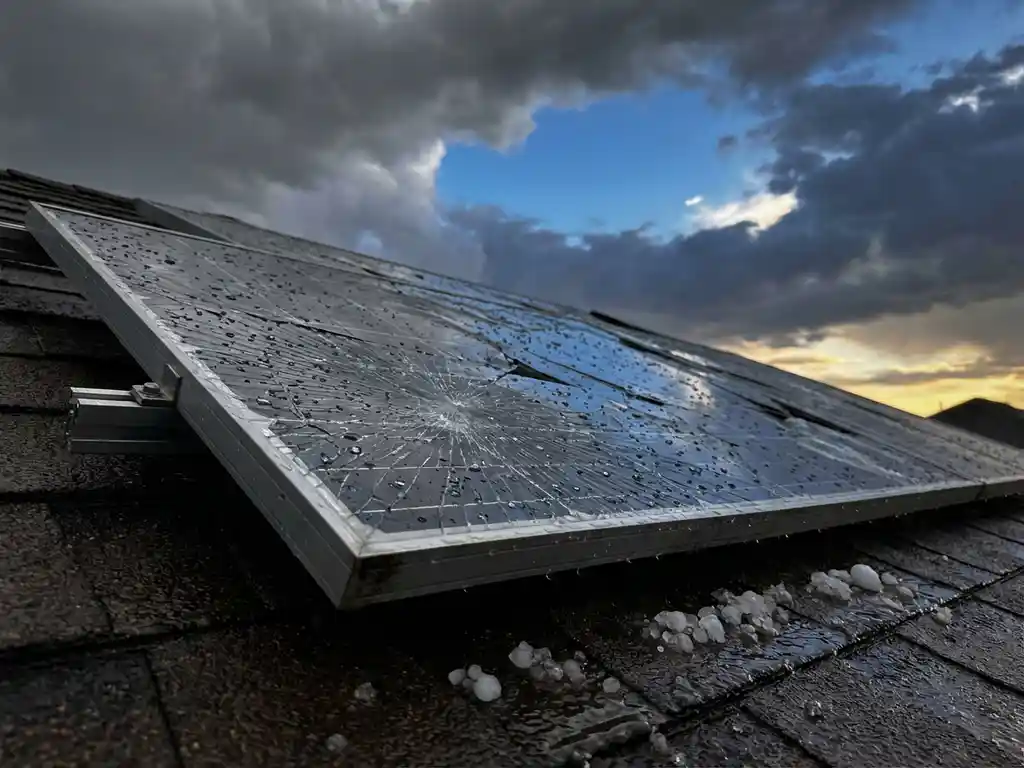
Hagelbuien vormen een van de meest directe en zichtbare bedreigingen voor zonne-installaties. Zelfs kleine hagelstenen kunnen microcracks veroorzaken in fotovoltaïsche cellen, terwijl grotere hagelbollen gehardglazen oppervlakken kunnen verbrijzelen. De schade strekt zich vaak uit tot buiten de panelen zelf en omvat omvormers, monitoringapparatuur en elektrische verbindingen die aan impact zijn blootgesteld.
Extreme temperatuurschommelingen creëren thermische spanning die plaatuitscheuring, defecten in soldeerverbindingen en problemen met frame-expansie kan veroorzaken. Snelle temperatuurveranderingen, vooral veelvoorkomend tijdens extreme weersomstandigheden, versnellen deze degradatieprocessen en kunnen leiden tot voortijdige systeemstoringen.
Zware sneeuw- en ijsaccumulatie creëren structurele belastingen die montagesystemen mogelijk niet aankunnen. Bovendien kan ijsvorming drainage blokkeren en waterinfiltratie in elektrische componenten veroorzaken wanneer het smelt.
Hoe beïnvloedt hagelschade de prestaties van zonnepanelen?
Hagelschade aan zonnepanelen uit zich doorgaans in de vorm van scheurtjes in het oppervlak, breuken in de cellen en glasbreuk, waardoor het vermogen onmiddellijk afneemt en er op lange termijn betrouwbaarheidsproblemen ontstaan. Zelfs lichte hagelschade kan de energieopbrengst met 20–30% verminderen en hotspots veroorzaken die verdere achteruitgang versnellen.
De meest voorkomende hagelschade ontstaat wanneer ijsdeeltjes microcracks veroorzaken in fotovoltaïsche cellen die niet onmiddellijk zichtbaar zijn, maar wel aanzienlijke gevolgen hebben voor de elektrische prestaties. Deze microcracks verstoren de stroom door de cel, verminderen de stroomopbrengst en creëren gebieden met verhoogde weerstand die warmte genereren.
Beschadiging van het glas aan de oppervlakte door hagel creëert meerdere problemen naast direct stroomverlies. Gebarsten glas laat vocht binnendringen, wat interne componenten kan aantasten, terwijl beschadigde oppervlakken gemakkelijker vuil en puin verzamelen, wat de lichttransmissie en energieproductie verder vermindert.
Hagelschade veroorzaakt vaak kettingreacties van storingen in zonne-installaties. Beschadigde cellen kunnen een terugwaartse stroom veroorzaken die hele paneelreeksen beïnvloedt, terwijl aangetaste afdichtingen waterinfiltratie mogelijk maken die schakelkasten, bedrading en andere elektrische componenten in het hele systeem kunnen beschadigen.
Kunnen harde winden zonne-installaties vernielen?
Hoge winden kunnen zonne-installaties vernietigen door opwaartse krachten, structurele storingen en impact van puin, vooral wanneer de windsnelheden de ontwerpspecificaties van montagesystemen overschrijden. Correcte engineering en installatie zijn cruciaal voor windbestendigheid, maar extreme weersomstandigheden kunnen zelfs goed ontworpen systemen overweldigen.
Windschade treedt doorgaans op via verschillende mechanismen die verschillende systeemcomponenten kunnen beïnvloeden. Opwaartse krachten, gegenereerd door wind die over en onder zonnepanelen stroomt, kunnen de houdcapaciteit van montagemateriaal overschrijden, waardoor panelen loskomen van dakvlakken of grondmontagestructuren. Dit type storing creëert vaak een domino-effect, aangezien het verlies van één paneel de belasting op aangrenzende componenten vergroot.
Structurele storingen in montagesystemen vormen een ander significant risico met betrekking tot wind. Hoge winden kunnen metaalmoeheid, losraken van bevestigingen en structurele vervorming veroorzaken, waardoor de integriteit van complete zonnepanelen installaties in het gedrang komt. Bodemmontagesystemen met een onvoldoende funderingsontwerp zijn bijzonder kwetsbaar voor structurele schade door wind.
Rondvliegende brokstukken tijdens windstormen vormen een extra risico voor zonne-installaties. Takken, dakmaterialen en andere projectielen kunnen zonnepanelen en elektrische apparatuur raken, wat onmiddellijke schade veroorzaakt en veiligheidsrisico's creëert voor onderhoudspersoneel dat beoordelingen na de storm uitvoert.
Wat gebeurt er als bliksem inslaat op zonnepanelen?
Blikseminslagen kunnen catastrofale schade veroorzaken aan zonne-energiesystemen door directe inslagen, elektromagnetische pulsen en grondstoringen die elektronische componenten vernietigen, branden veroorzaken en complete installaties in gevaar brengen. Het uitgebreide metalen frame en de elektrische systemen in zonnepanelen maken ze bijzonder gevoelig voor bliksemgerelateerde schade.
Directe blikseminslagen op zonne-installaties resulteren doorgaans in onmiddellijke en ernstige schade aan meerdere systeemcomponenten. De elektrische piek kan omvormers, monitorsystemen en veiligheidsapparatuur vernietigen, terwijl brandgevaren ontstaan die zich buiten de zonne-installatie naar aangrenzende structuren kunnen verspreiden.
Elektromagnetische pulsen die worden opgewekt door nabijgelegen blikseminslagen kunnen gevoelige elektronische apparatuur beschadigen, zelfs zonder direct contact. Omvormers, optimizers en bewakingssystemen bevatten delicate circuits die kunnen uitvallen wanneer ze worden blootgesteld aan de elektromagnetische interferentie die wordt veroorzaakt door bliksemactiviteit in de omgeving.
Grondgolven vormen een andere significante bliksemgerelateerde bedreiging voor zonne-energiesystemen. Wanneer bliksem in de nabijgelegen grond of constructies inslaat, kan de elektrische energie zich via aardingssystemen en nutsaansluitingen verplaatsen, zonne-installaties via hun elektrische aansluitingen binnendringen en wijdverbreide componentstoringen veroorzaken.
Hoe kan weerschade aan zonne-installaties worden voorkomen?
Het voorkomen van we.
Locatiekeuze en beoordeling vormen de basis voor de preventie van weerschade. Inzicht in lokale weerpatronen, historische stormgegevens en microklimaatomstandigheden maken een passend systeemontwerp mogelijk dat bestand is tegen verwachte weersomstandigheden. Dit omvat bij het ontwerpen van installaties rekening houden met factoren zoals heersende windrichtingen, hagelfrequentie en overstromingsrisico.
Ontwerp en materiaalkeuze moeten rekening houden met lokale weersomstandigheden en bouwvoorschriften. Dit omvat het gebruik van montagesystemen die bestand zijn tegen verwachte wind- en sneeuwbelastingen, het selecteren van panelen met geschikte slagvastheidsklassen en het zorgen voor een correcte aarding en overspanningsbeveiliging.
Regelmatige onderhouds- en inspectieprogramma's helpen potentiële kwetsbaarheden te identificeren voordat ze kritieke storingen worden. Dit omvat het controleren van de vastzetting van bevestigingsmiddelen, het inspecteren van afdichtingen en afvoersystemen, en het testen van elektrische verbindingen die door blootstelling aan weersinvloeden kunnen worden aangetast.
Dekt de verzekering weerschade aan zonnepanelen?
De verzekeringsdekking voor weersschade aan zonnepanelen is afhankelijk van de specifieke polisvoorwaarden, maar de meeste uitgebreide zonne-energieverzekeringen bieden bescherming tegen hagel, wind, bliksem en andere weersgerelateerde gevaren. De dekkingsvereisten en uitsluitingen verschillen echter aanzienlijk per verzekeraar en type polis.
De meeste commerciële zonne-energieverzekeringen dekken weersschade als een gedekt gevaar onder de eigendomsschadeclausules. Dit dekt doorgaans directe fysieke schade door hagel, wind, bliksem en andere natuurrampen, inclusief zowel de kosten voor paneelvervanging als de bedrijfsonderbrekingsverliezen als gevolg van verminderde energieproductie.
Verzekeringsdekking vereist vaak specifieke risicobeperkende maatregelen om geldig te blijven. Veel verzekeraars eisen regelmatige inspecties, gedocumenteerd onderhoud en naleving van de installatievoorschriften van de fabrikant. Het niet voldoen aan deze vereisten kan leiden tot afwijzing van claims, zelfs wanneer er weerschade optreedt.
Beleidsuitsluitingen omvatten doorgaans schade door overstromingen, aardbevingen en geleidelijke achteruitgang die kan worden versneld door blootstelling aan weersinvloeden. Het begrijpen van deze uitsluitingen is cruciaal voor projectontwikkelaars en operators om adequate bescherming te waarborgen door middel van geschikte dekkingskeuzes en risicobeheer strategieën.
Hoe Solarif helpt bij bescherming tegen weerschade
Wij bieden uitgebreide verzekeringsoplossingen en risicobeheerdiensten, specifiek ontworpen om zonne-installaties te beschermen tegen weerschade. Onze expertise op het gebied van hernieuwbare energieverzekeringen zorgt ervoor dat uw projecten de juiste dekking krijgen, terwijl we preventieve maatregelen implementeren om weersgerelateerde risico's te verminderen.
Onze diensten voor bescherming tegen weerschade omvatten:
- Op maat gemaakte verzekeringen die hagel, wind, bliksem en andere weersinvloeden dekken
- Scope 12-inspecties die kwetsbaarheden voor het weer identificeren en verzekerbaarheid waarborgen
- Risicobeoordelingsdiensten die locatie-specifieke blootstelling aan weersomstandigheden evalueren
- Claimsondersteuning en coördinatie van schadebeoordeling met gecertificeerde experts
- Prestatieverzekering die beschermt tegen weersgerelateerde productieverliezen
Met meer dan 15 jaar ervaring in de bescherming van 3,8 GW aan zonne-energiecapaciteit, begrijpen we de specifieke weersrisico's waarmee projecten voor hernieuwbare energie te maken hebben en bieden we oplossingen op maat om ervoor te zorgen dat uw investeringen beschermd blijven. Neem contact op met onze specialisten in verzekeringen voor hernieuwbare energie vandaag om uitgebreide weerschadebescherming voor uw zonne-installaties te garanderen.
Behoefte aan verzekeringen en Scope inspecties voor je BESS?
Neem vandaag nog contact met ons op als je meer wil weten over de mogelijkheden voor BESS verzekeringen en Scope inspecties.
E-mail: support@solarif.com
☎️ Telefoon: +31 (0)26 711 5050