



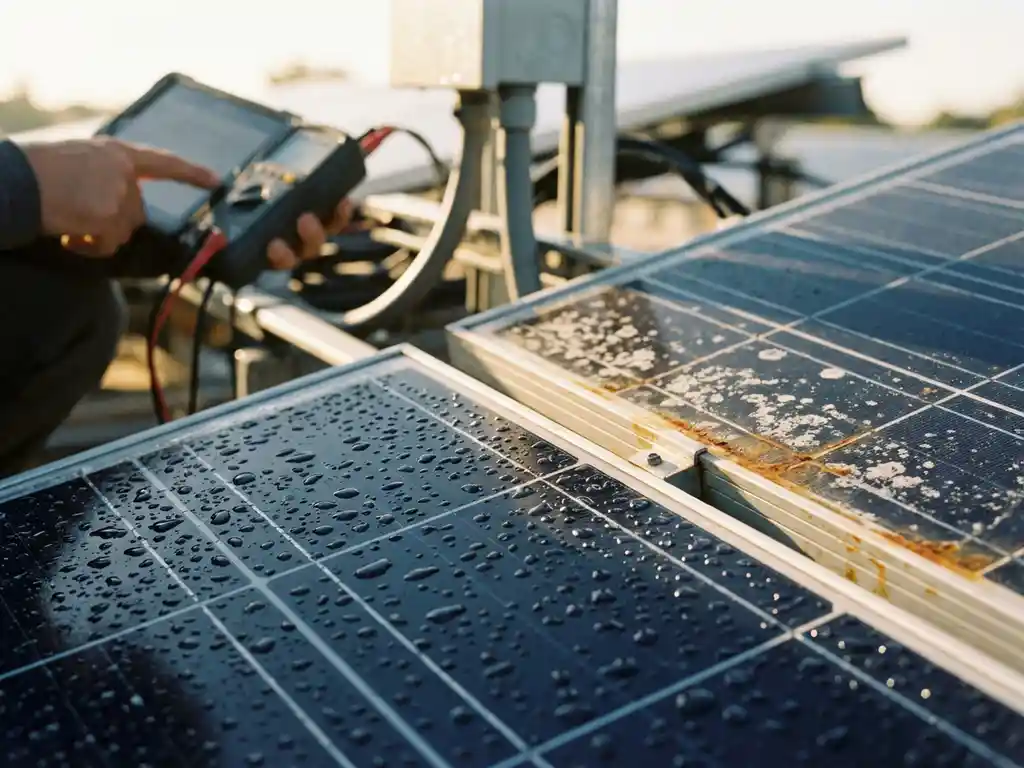
How do you prevent corrosion in solar installations?
Solar installations represent significant investments in renewable energy infrastructure, but corrosion poses a serious threat to their long-term performance and profitability. When metal components deteriorate due to environmental exposure, the results can be devastating: reduced energy output, safety hazards, costly repairs, and shortened system lifespans that undermine project economics.
Understanding and preventing corrosion in solar installations is essential to protecting your investment and ensuring reliable energy production. From aluminum frames and steel mounting structures to electrical connections and grounding systems, every metallic component in a solar installation faces potential corrosion challenges that require proactive risicobeheer.
What causes corrosion in solar installations?
Corrosion in solar installations occurs when metal components undergo chemical reactions with environmental elements—primarily oxygen and moisture—leading to material degradation. This electrochemical process accelerates when different metals come into contact, creating galvanic corrosion that can rapidly deteriorate critical system components.
Several factors contribute to corrosion in solar systems. Moisture exposure from rain, humidity, and condensation creates the electrolyte necessary for corrosion reactions. Salt air in coastal environments significantly accelerates the process, while atmospheric pollutants and acid rain introduce additional corrosive agents. Temperature fluctuations cause thermal expansion and contraction, creating stress points where moisture can penetrate protective coatings.
Galvanic corrosion presents a particularly serious threat when dissimilar metals are in direct contact. For example, aluminum frames in contact with steel mounting hardware can create an electrochemical cell that rapidly deteriorates the more reactive aluminum. Poor installation practices, such as inadequate sealing or improper material selection, often exacerbate these natural corrosion processes.
Which solar components are most vulnerable to corrosion?
Aluminum frames, steel mounting structures, and electrical connections are the solar components most vulnerable to corrosion. These elements face direct environmental exposure and often involve contact between dissimilar metals, creating ideal conditions for accelerated deterioration.
Aluminum panel frames are particularly susceptible to pitting corrosion and galvanic corrosion when in contact with steel hardware. Despite aluminum’s natural oxide layer, aggressive environments can breach this protection, leading to structural weakening. Steel mounting rails and hardware are subject to uniform corrosion from moisture exposure, especially when protective coatings are damaged during installation or maintenance.
Electrical components present unique corrosion challenges. Copper conductors can develop a green patina that increases resistance, while grounding equipment made of different metals creates galvanic corrosion risks. Junction boxes, combiner boxes, and inverter enclosures are vulnerable at seal points where moisture can penetrate. Fasteners and bolts, often overlooked during material selection, can become corrosion initiation points that compromise entire mounting systems.
How do environmental conditions affect solar corrosion rates?
Environmental conditions dramatically influence solar corrosion rates, with coastal locations, high-humidity areas, and industrial environments experiencing corrosion rates up to ten times higher than those in dry, clean-air locations. Temperature cycling, precipitation patterns, and atmospheric pollutants all accelerate the electrochemical processes that drive metal degradation.
Coastal environments pose the greatest corrosion threat due to salt spray and high humidity levels. Chloride ions from seawater penetrate protective coatings and create aggressive corrosion cells that can destroy unprotected metals within months. Even installations several miles inland can experience accelerated corrosion from salt-laden air carried by prevailing winds.
Industrial areas introduce additional corrosive agents, including sulfur compounds, nitrogen oxides, and particulate matter, which create acidic conditions on solar equipment surfaces. Urban environments with high pollution levels similarly accelerate corrosion through acid rain formation and atmospheric deposition of corrosive particles.
Temperature extremes and cycling create physical stress that cracks protective coatings and allows moisture penetration. Freeze-thaw cycles are particularly damaging, as ice formation can mechanically damage seals and coatings. High temperatures accelerate chemical reaction rates, doubling corrosion rates for every 10-degree Celsius increase in many cases.
What materials and coatings prevent solar corrosion?
Stainless steel, anodized aluminum, and hot-dip galvanized steel provide superior corrosion resistance for solar installations. Advanced polymer coatings, zinc-rich primers, and marine-grade finishes offer additional protective layers that significantly extend component lifespans in challenging environments.
Material selection forms the foundation of corrosion prevention. Stainless steel grades 304 and 316 offer excellent corrosion resistance, with 316 providing superior performance in marine environments due to its molybdenum content. Anodized aluminum creates a thick, durable oxide layer that resists both uniform and galvanic corrosion when properly maintained.
Hot-dip galvanizing provides sacrificial protection for steel components, with the zinc coating corroding preferentially to protect the underlying steel. This process offers decades of protection when applied to the proper thickness. For electrical components, tin or nickel plating on copper conductors prevents oxidation and maintains low electrical resistance.
Advanced coating systems include fluoropolymer finishes that resist UV degradation and chemical attack, zinc-rich primers that provide cathodic protection, and ceramic coatings that offer exceptional durability. Marine-grade coatings specifically formulated for saltwater exposure provide enhanced protection for coastal installations. Proper surface preparation before coating application is critical to achieving specified performance levels.
How should solar installations be designed to minimize corrosion?
Solar installations should be designed using material compatibility matrices, proper drainage systems, and electrical isolation between dissimilar metals to minimize corrosion. Strategic component placement, adequate ventilation, and accessible maintenance points are essential design elements that prevent moisture accumulation and enable early intervention.
Material compatibility planning prevents galvanic corrosion by avoiding direct contact between dissimilar metals or by using appropriate isolation materials. Using stainless steel fasteners with aluminum components, or galvanized steel with proper isolation gaskets, helps prevent electrochemical reactions. When dissimilar metals must be used together, selecting materials close together on the galvanic series reduces corrosion potential.
Drainage design prevents water accumulation that accelerates corrosion processes. Mounting systems should incorporate drainage channels and weep holes to eliminate standing water. Panel mounting should avoid creating water traps between frames and mounting hardware. Proper slope design ensures rapid water runoff from all system components.
Electrical isolation through proper grounding design and bonding techniques helps prevent stray electrical currents that accelerate corrosion. Equipment grounding conductors should use compatible materials and proper connection techniques to avoid creating additional galvanic cells. Cable routing and protection systems should prevent moisture intrusion into electrical enclosures.
What maintenance practices prevent corrosion in solar systems?
Regular visual inspections, protective coating maintenance, and prompt repair of damaged components are essential maintenance practices that prevent corrosion progression in solar systems. Scheduled cleaning, drainage system maintenance, and electrical connection checks should be performed at least annually, with increased frequency in aggressive environments.
Visual inspection protocols should focus on early corrosion indicators, including discoloration, pitting, flaking coatings, and white or green corrosion products. Mounting hardware, electrical connections, and frame joints require particular attention, as these areas typically show the first signs of deterioration. Documentation with photographs enables tracking of corrosion progression over time.
Protective coating maintenance involves cleaning surface contaminants that accelerate corrosion and repairing damaged coatings before the underlying metal is exposed. Touch-up painting of scratched or worn coatings should use compatible materials applied according to manufacturer specifications. Sealant replacement at panel-to-frame interfaces prevents moisture intrusion.
Drainage system maintenance ensures water-management systems continue functioning effectively. Cleaning debris from drainage channels, checking weep-hole functionality, and verifying proper water-flow paths prevents moisture accumulation. Electrical maintenance includes torque-checking connections, cleaning oxidation from contact surfaces, and applying appropriate protective compounds to prevent future corrosion.
How do you identify early signs of corrosion in solar installations?
Early signs of corrosion in solar installations include surface discoloration, white or green corrosion products on metal surfaces, and loose or deteriorating fasteners. Regular inspection for pitting, flaking protective coatings, and galvanic corrosion at dissimilar-metal joints enables intervention before structural damage occurs.
Visual indicators vary by material type and corrosion mechanism. Aluminum corrosion typically appears as white, powdery deposits or dark pitting on the surface. Steel corrosion manifests as brown or orange rust stains that may streak down from affected components. Copper corrosion creates a distinctive green or blue-green patina that, while sometimes protective, can indicate underlying problems.
Structural indicators include loose mounting hardware, gaps in panel-to-frame interfaces, and deflection or movement in mounting systems. These symptoms often indicate advanced corrosion that has compromised mechanical integrity. Electrical symptoms include increased resistance at connections, intermittent electrical faults, and ground-fault indicators that may signal corrosion-related failures.
Systematic inspection techniques include using magnification to identify early pitting, measuring coating thickness to assess remaining protection, and electrical testing to identify high-resistance connections. Thermal imaging can reveal hot spots indicating corroded electrical connections, while ultrasonic thickness testing can assess remaining material thickness in critical structural components.
How Solarif helps with solar corrosion prevention
We understand that corrosion prevention is critical to protecting your zonne investment and maintaining long-term project profitability. Our comprehensive approach combines expert risk assessment, quality inspections, and specialized insurance solutions to safeguard your solar installations against corrosion-related losses.
Onze diensten omvatten:
- Scope 12 inspecties by SCIOS-certified inspectors who identify corrosion risks and material compatibility issues before they become costly problems
- Risk assessment services that evaluate environmental conditions and recommend appropriate corrosion protection strategies for your specific location
- Verzekeren oplossingen that provide comprehensive coverage against corrosion-related damage, including business interruption protection
- Solarif-Certified programs that ensure your components meet strict quality standards for corrosion resistance and long-term durability
With over 15 years of experience protecting 3.8 GW of solar capacity, we provide the expertise and coverage you need to prevent corrosion from undermining your renewable energy investments. Contact our specialists today to discuss how we can protect your solar project against corrosion risks and ensure reliable long-term performance.
Behoefte aan verzekeringen en Scope inspecties voor je BESS?
Neem vandaag nog contact met ons op als je meer wil weten over de mogelijkheden voor BESS verzekeringen en Scope inspecties.
E-mail: support@solarif.com
☎️ Telefoon: +31 (0)26 711 5050