


Wat zijn de gevaren van defecte zonne-energiebedrading?
Zonne-energiesystemen vormen een aanzienlijke investering in duurzame technologie, maar defecte bedrading kan deze voordelige installaties veranderen in serieuze veiligheidsrisico's. Elektrische problemen in fotovoltaïsche systemen leiden tot risico's die variëren van brand en elektrocutie tot schade aan apparatuur en systeemuitval. Het begrijpen van deze gevaren is cruciaal voor ontwikkelaars, EPC-aannemers en facility managers die toezicht houden op commerciële zonne-installaties.
Professionele installatie en regelmatige inspecties zijn essentiële waarborgen tegen deze risico's. Wanneer de bedrading van zonnepanelen beschadigd raakt, kunnen de gevolgen veel verder gaan dan de kosten voor het vervangen van de apparatuur, en kunnen ze mogelijk de projectplanning beïnvloeden, verzekering dekking en het vertrouwen van belanghebbenden.
De belangrijkste elektrische gevaren van defecte bedrading van zonnepanelen zijn: * **Elektrische schokken:** Beschadigde of slecht geïnstalleerde bedrading kan leiden tot blootliggende draden, wat een ernstig risico op elektrische schokken vormt voor personen die het systeem aanraken, inclusief installateurs en bewoners. * **Brandgevaar:** Losse verbindingen, oververhitting en kortsluitingen als gevolg van defecte bedrading kunnen vonken veroorzaken en branden starten, vooral in daken of muren. * **Schade aan apparatuur:** Defecte bedrading kan leiden tot spanningspieken of -dalen, waardoor omvormers, batterijen en andere aangesloten apparatuur beschadigd raken. * **Stroomuitval/vermogensverlies:** Een onderbroken of slecht functionerende verbinding kan leiden tot onderbrekingen in de stroomtoevoer, waardoor het zonne-energiesysteem niet optimaal presteert of helemaal geen stroom levert. * **Arcing:** Dit is een gevaarlijk elektrisch fenomeen waarbij stroom door de lucht springt tussen twee geleiders. Arcing kan extreem heet worden en branden veroorzaken, en kan optreden bij losse verbindingen of beschadigde isolatie. * **Onveilige spanningen:** Zelfs als het systeem niet functioneert, kunnen bepaalde delen van de bedrading nog steeds gevaarlijke spanningen bevatten, vooral direct na het afsluiten van het systeem of bij onderhoud. * **Aarding/beveiliging falen:** Corrosie of slechte verbindingen in de aardingsdraden kunnen ervoor zorgen dat het systeem niet goed geaard is, wat de bescherming tegen elektrische schokken en overspanning vermindert.
Defecte zonnebekabeling veroorzaakt meerdere elektrische gevaren, waaronder boogfouten, aardfouten, risico op elektrocutie en schade aan apparatuur. Deze gevaren komen voort uit onjuiste verbindingen, verslechterde isolatie, binnendringend vocht en ontoereikende aardingssystemen die de elektrische integriteit van fotovoltaïsche installaties aantasten.
Boogfouten vormen een van de gevaarlijkste gevaren in zonne-energiesystemen. Wanneer elektrische verbindingen losraken of corroderen, creëren ze punten met een hoge weerstand die intense hitte en elektrische bogen genereren. Deze bogen kunnen temperaturen bereiken die 3.000 graden Fahrenheit (ongeveer 1.650 graden Celsius) overschrijden, waardoor nabijgelegen brandbare materialen gemakkelijk tot ontbranding komen.
Aardfouten ontstaan wanneer elektrische stroom een onbedoeld pad naar aarde vindt, vaak via beschadigde isolatie of binnendringend vocht. Dit creëert schokgevaren voor onderhoudspersoneel en kan schade aan apparatuur veroorzaken. Bij zonne-installaties zijn aardfouten bijzonder zorgwekkend omdat systemen vaak werken met hoge DC-spanningen die blijven bestaan, zelfs wanneer de hoofd-AC-schakelaar is uitgeschakeld.
De risico's op elektrocutie nemen aanzienlijk toe bij defecte bedrading, vooral tijdens onderhoudswerkzaamheden. Zonnepanelen blijven elektriciteit opwekken wanneer er licht aanwezig is, waardoor geleiders constant onder spanning komen te staan. Slechte bedradingspraktijken, onvoldoende markering of beschadigde isolatie van geleiders kunnen personen blootstellen aan gevaarlijke spanningsniveaus.
Hoe kan een defecte zonne-energiebekabeling branden veroorzaken?
Defecte zonne-installatiebedrading veroorzaakt branden door elektrische vonkvorming, oververhitting van verbindingen en isolatieafbraak die ontstekingsbronnen creëert. Slechte verbindingen genereren overmatige hitte, terwijl beschadigde geleiders vonken kunnen veroorzaken die dakbedekking, elektrische componenten of nabijgelegen brandbare stoffen doen ontbranden.
Losse verbindingen zijn belangrijke brandbeginners in zonne-installaties. Wanneer draadverbindingen losraken door thermische cycli, trillingen of onjuiste installatie, neemt de elektrische weerstand dramatisch toe. Deze weerstand zet elektrische energie om in warmte, waardoor de verbindingspunten temperaturen bereiken die plastic componenten kunnen smelten en omringende materialen kunnen ontsteken.
DC-boogfouten vormen unieke brandrisico's omdat ze zichzelf gemakkelijker kunnen in stand houden dan AC-boogfouten. Zodra een DC-boog tot stand is gekomen, heeft deze de neiging zichzelf in stand te houden, zelfs bij relatief lage stroomniveaus. Deze aanhoudende bogen genereren continue hoge temperaturen die zich snel kunnen verspreiden naar brandbare dakbedekkingsmaterialen of elektrische behuizingen.
Isolatieafbraak verhoogt de brandrisico's door het creëren van meerdere potentiële ontstekingspunten. Blootstelling aan uv-straling, thermische stress en vocht kunnen de isolatie van geleiders na verloop van tijd aantasten. Wanneer de isolatie faalt, kunnen geleiders metaalbevestigingssystemen of andere geleiders raken, wat kortsluiting veroorzaakt die intense hitte en vonken genereert.
Wat zijn de waarschuwingssignalen van gevaarlijke zonnebedrading?
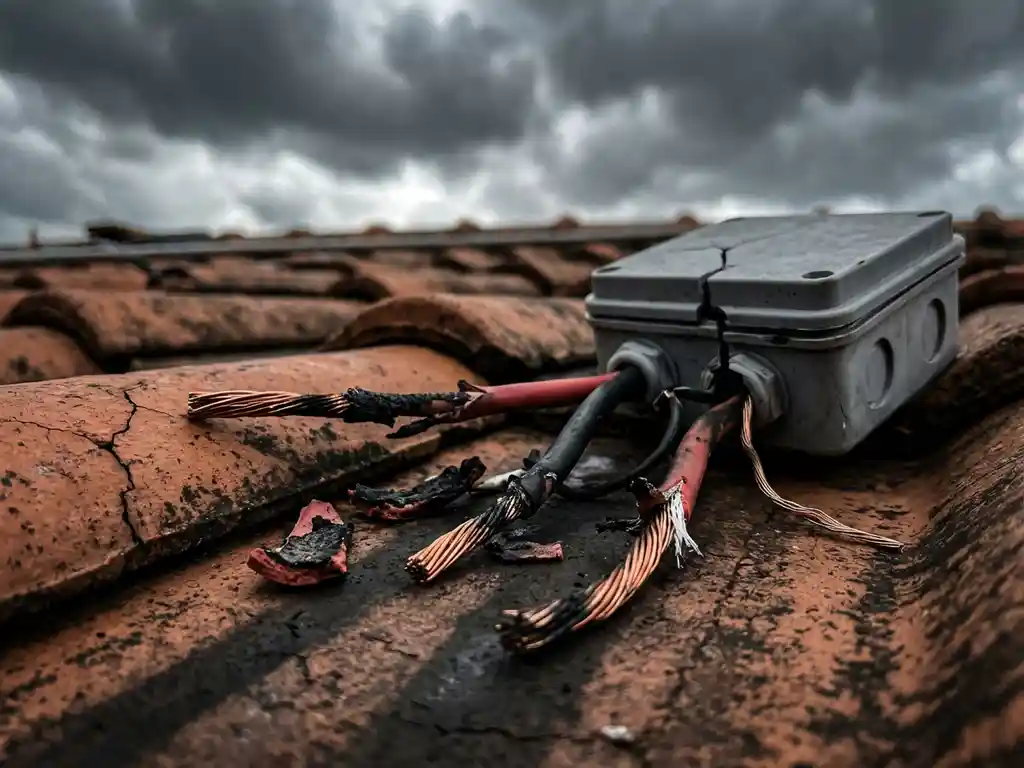
Waarschuwingssignalen van gevaarlijke zonnebedrading zijn onder meer zichtbare brandplekken, gesmolten componenten, ongebruikelijke geuren, verminderde systeemprestaties en het activeren van aardfoutindicatoren. Deze symptomen wijzen op elektrische problemen die onmiddellijke professionele aandacht vereisen om veiligheidsrisico's en schade aan apparatuur te voorkomen.
Visuele indicatoren geven vaak het eerste bewijs van bedradingsproblemen. Brandplekken rond verbindingspunten, verkleurde of gesmolten aansluitdozen en verkoolde geleiderisolatie duiden op gevaarlijke oververhittingsomstandigheden. Corrosie op elektrische verbindingen, met name witte of groene afzettingen, duidt op vochtdoorslag die de elektrische integriteit aantast.
Prestatieanomalieën kunnen verborgen bedradingsproblemen aan het licht brengen voordat deze zichtbaar worden. Onverklaarbare dalingen in energieproductie, intermitterende systeemuitschakelingen of onregelmatige monitoringsgegevens wijzen vaak op problemen met elektrische verbindingen. Monitoring systemen op stringniveau kunnen helpen specifieke circuits te identificeren die problemen met de bedrading ondervinden.
Elektrische symptomen vereisen onmiddellijk onderzoek. Frequente aardlekschakelaar-trips, alarmen van foutstroomdetectoren of ongebruikelijke elektrische metingen tijdens het inbedrijfstellen van het systeem duiden op ernstige bedradingsfouten. Vreemde geuren, met name de geur van brandend plastic of ozon, wijzen op actieve elektrische problemen die een direct brandgevaar vormen.
Hoe leidt slechte installatie tot bedradingsproblemen?
Slechte installatie leidt tot bedradingsproblemen door onvoldoende verbindingsmethoden, onjuiste geleidingsroutering, ontoereikende weersbestendigheid en het niet naleven van elektrische voorschriften. Deze installatiegebreken creëren omstandigheden voor voortijdige componentstoringen, veiligheidsrisico's en verminderde systeembetrouwbaarheid.
De verbindingskwaliteit heeft directe invloed op de veiligheid en prestaties van het systeem op lange termijn. Onjuist aanhaalmomenten van verbindingen creëren verbindingen met een hoge weerstand die tijdens bedrijf warmte genereren. Te strak aangedraaide verbindingen kunnen geleiders of aansluitklemmen beschadigen, terwijl te losse verbindingen geleidelijk losraken door thermische cycli. Beide omstandigheden leiden tot gevaarlijke oververhitting.
Fouten in de geleiderroutering stellen bedrading bloot aan onnodige spanning en gevaren voor het milieu. Slechte routering kan scherpe bochten veroorzaken die de isolatie van de geleider beschadigen, bedrading blootstellen aan overmatige UV-straling, of waterophoping in elektrische behuizingen toestaan. Onvoldoende trekontlasting op verbindingspunten laat mechanische spanning elektrische verbindingen geleidelijk degraderen.
Falen van naleving van de code introduceert systematische veiligheidsrisico's. Correcte elektrische installaties volgen de vereisten van de National Electrical Code voor de afmetingen van geleiders, overstroombeveiliging, aarding en de afstand tussen apparatuur. Wanneer installateurs afwijken van deze normen, creëren zij omstandigheden die brandrisico's verhogen en de veiligheid van personen in gevaar brengen.
Welke veiligheidsnormen voorkomen gevaren bij zonnebekabeling?
Veiligheidsnormen die gevaren bij zonne-energiebedrading voorkomen, zijn onder meer de vereisten van de National Electrical Code, UL-certificeringsnormen en professionele inspectieprotocollen zoals Scope 12-beoordelingen. Deze normen stellen minimumeisen aan de afmetingen van geleiders, verbindingsmethoden, aardingssystemen en installatiepraktijken die een veilige werking garanderen.
De National Electrical Code (NEC) biedt uitgebreide vereisten voor het elektrische ontwerp en de installatie van fotovoltaïsche systemen. Artikel 690 behandelt specifiek zonne-installaties, waaronder de stroomvoerend vermogen van geleiders, overstroombeveiliging, aardingsvereisten en methoden voor het loskoppelen van apparatuur. Naleving van deze normen vermindert elektrische gevaren aanzienlijk.
UL-certificeringen zorgen voor de kwaliteit en compatibiliteit van componenten. UL 4703 behandelt fotovoltaïsche bedrading, UL 2703 behandelt montagesystemen en UL 1741 behandelt omvormers. Deze normen verifiëren dat componenten omgevingsbelastingen en elektrische belastingen kunnen weerstaan zonder veiligheidsrisico's te creëren.
Professionele inspectieprotocollen bieden kwaliteitsborging voor installatiewerkzaamheden. Hoewel niet wettelijk verplicht in Nederland, zijn Scope 12-inspecties vereist door de meeste verzekeraars voor commerciële installaties. Deze inspecties verifiëren de naleving van veiligheidsnormen, identificeren potentiële gevaren en zorgen voor een correcte ingebruikname van het systeem voordat het onder spanning wordt gezet.
Hoe Solarif helpt met de veiligheid van zonne-installaties
We begrijpen dat elektrische veiligheid essentieel is voor succesvolle solarprojecten. Met onze uitgebreide aanpak helpen we uw investering te beschermen en te zorgen voor naleving van de industrienormen:
- Risicobeoordeling diensten die potentiële elektrische gevaren identificeren voordat ze kostbare problemen worden
- Scope 12 inspecties door SCIOS-gecertificeerde professionals om de installatiekwaliteit en naleving van veiligheidsvoorschriften te verifiëren
- Gespecialiseerde verzekeringsdekking dat beschermt tegen elektrische brandschade en apparatuurstoringen
- Deskundige begeleiding inzake veiligheidsnormen en best practices voor commerciële zonne-installaties
Met meer dan 15 jaar ervaring in zonrisicobeheer en 521 voltooide Scope 12-inspecties, bieden we de expertise die nodig is om uw zonne-investering te beschermen. Onze verzekeringsoplossingen zijn specifiek ontworpen voor de unieke elektrische risico's van fotovoltaïsche systemen, waardoor een uitgebreide bescherming voor uw project wordt gegarandeerd.
Klaar om uw zonne-investering te beschermen met goed risicobeheer? Neem contact op met onze specialisten om vandaag een consult te plannen over beoordelingen van elektrische veiligheid en verzekeringsdekking, afgestemd op uw projectbehoeften.
Behoefte aan verzekeringen en Scope inspecties voor je BESS?
Neem vandaag nog contact met ons op als je meer wil weten over de mogelijkheden voor BESS verzekeringen en Scope inspecties.
E-mail: support@solarif.com
☎️ Telefoon: +31 (0)26 711 5050